
One moment, Convertini affectionately recalled the many stories that her mother used to share during her childhood.
The next, she spoke to about how her mother gave her three first names.
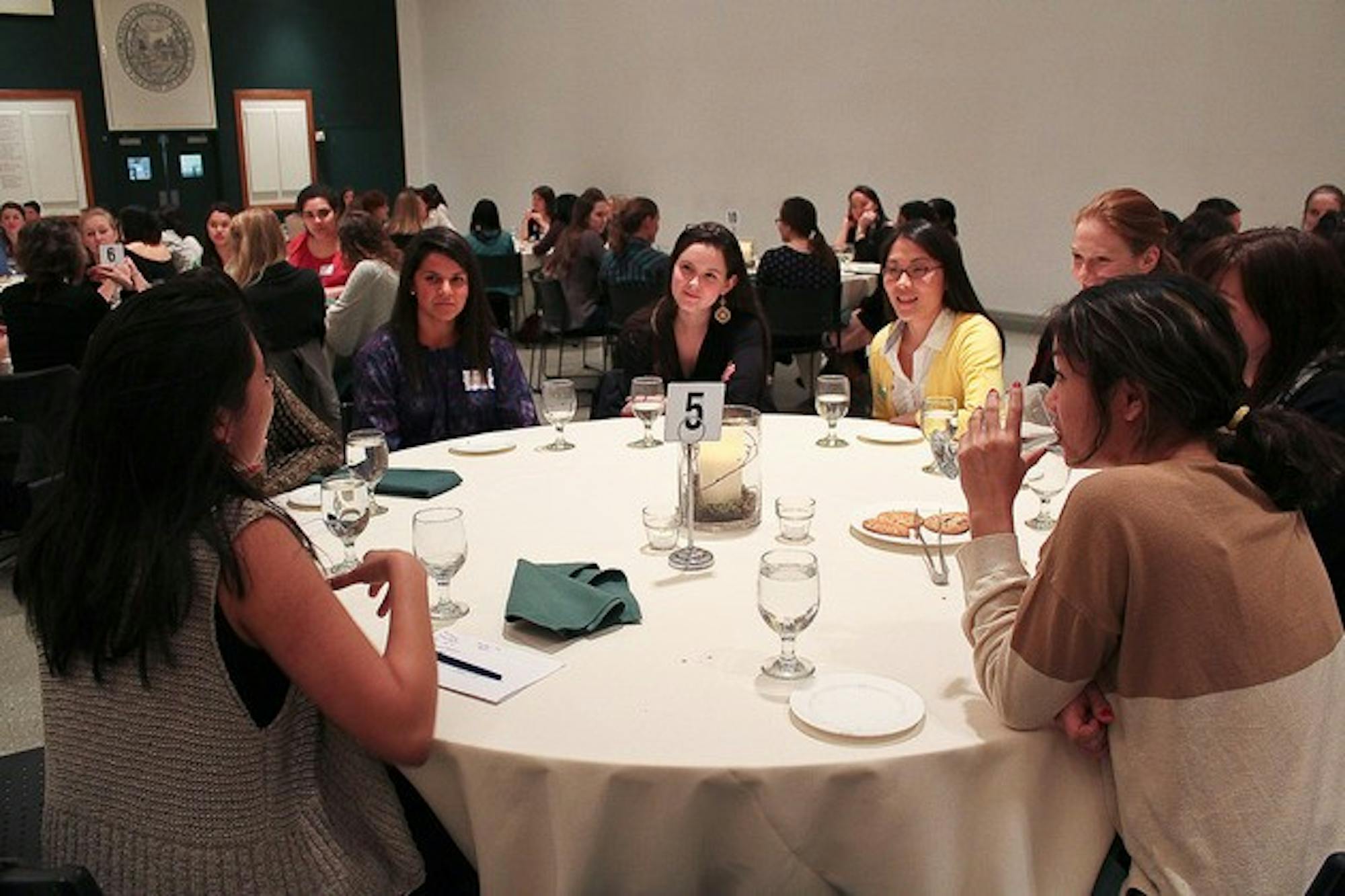
Convertini encouraged the attendees at the Link Up event to take advantage of the facilitated table discussions to speak openly and empathize with one another about various personal experiences through storytelling.
"Stories really empower us and allow us to create a connection," she said. "I don't think that we tell stories enough."
Stories are "magical" because they enable storytellers to recreate their experiences and share them with others, she said.
Not only do stories give women strength, but they expose people's weaknesses because of the vulnerability required to tell a story.
While recounting the origins of her three names, Convertini explained that her names caused her pain throughout her life because she did not think her mother took enough time and effort to name her.
Convertini's mother was first inspired to name her based on a Russian book that featured a character named Tania. During her childhood, however, her mother began calling her Kiki because her mother did not consider Tania an adequate name for a child. Several years later, a mistake on Convertini's birth certificate transformed Tania Convertini into Tonia Convertini.
Near the end of her story, she said that her mother passed away a year ago and that while going through the things her mother left behind, she found a notebook with numerous names brainstormed on a page that might have become Convertini's name.
"I had blamed my mother for years for negligence," she said. "At that point, I realized that she really had given some thoughts about my name."
Topics that expanded beyond gender abounded at the facilitated table discussions following Convertini's lecture.
Across tables, students discussed their lack of time to interact with one another or to get to know others better through storytelling.
Margaret Allyn '15, a member of Link Up, said the women at her table discussed how they seem to grow progressively similar to their mothers as years pass.
The professors at her table mentioned that women seem to have a greater propensity for storytelling than men, she said.
"I think there's a part about women that is generative and creative," Convertini said. "Whenever we generate life, there's a new story coming about."
She also said that mothers and grandmothers tend to be family storytellers.
Cally Womick '13, who has attended almost every Proud to be a Woman dinner, said that she enjoyed the event because it gave her the opportunity to meet people whom she otherwise would not have met.
"I always leave with a renewed sense of the right way to meet people," Womick said. "The most important thing is to invest time, honesty and interest."
She said that it might be worth looking into inviting men to the dinner, which is held once a term.
Link Up president Thea Stutsman '13 said the group considers inviting men every term.
"But the usual response we get is that there are certain issues and topics that women would not feel comfortable discussing around men," she said.
Convertini said she does not object to bringing men into the discussion but that doing so would significantly alter the event's character. While women interact with men in their everyday lives, the Proud to be a Woman dinner is an opportunity for them to have time to themselves, she said.


