
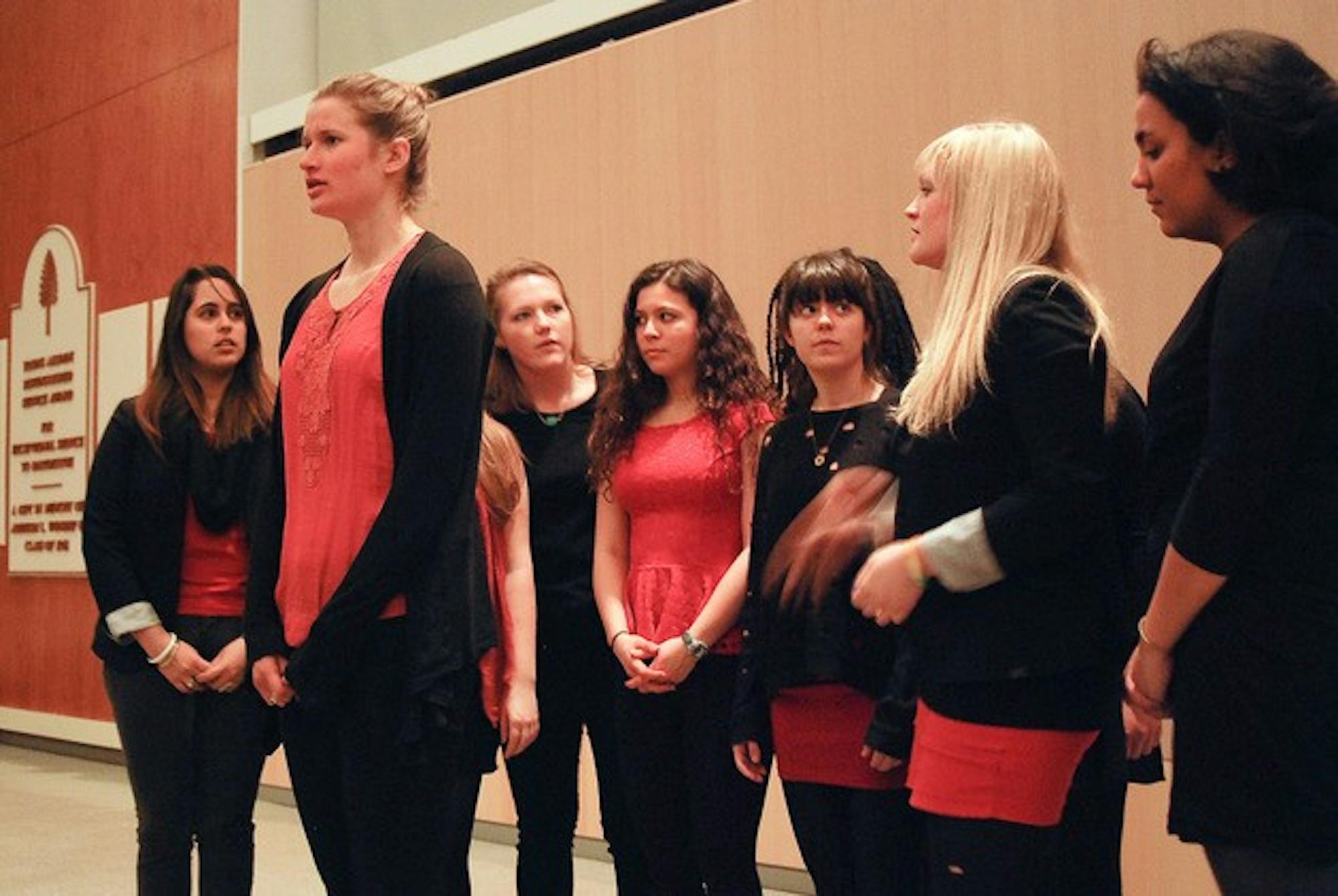
Paige was one of six speakers who shared their stories at Speak Out, an event designed to enable survivors of sexual assault and abusive relationships to share their experiences out in the open, putting a "human face" to the campaign against sexual assault and unhealthy relationships, said Rebekah Carrow, Sexual Assault Awareness Program co-coordinator and a Sexual Assault Peer Advisor.
Over 150 students and staff listened attentively as Paige shared her story.
When she managed to return to her dorm room after the traumatic incident, she began vomiting and found herself physically injured, but the long-term repercussions of the assault proved far more serious than her initial symptoms. In the following weeks, Paige visited Dick's House and Dartmouth-Hitchcock Medical Center almost daily.
"I am still finding ways to live and learn to love myself again," she said.
Sebastian '14, the only male student who spoke at the event, talked about the impact that his verbally and psychologically abusive girlfriend had on him in high school.
Choking up many times throughout his speech, he said he has only recently started to recover from the relationship abuse. Humor has helped him to regain confidence since he ended the relationship, he said.
Though his experience did not involve any form of physical or sexual abuse, hearing disparaging comments from his girlfriend on a daily basis reduced his self-esteem to the point where his parents noticed a considerable change in his personality, Sebastian said.
Victims of relationship abuse should respect and protect themselves when they realize that their partners are hurting them, he said.
"It's our responsibility to put faith in those who have faith in us," he said.
Another speaker, who asked to remain anonymous, said her experience of sexual assault differed from societal expectations of what a typical sexual assault experience is.
During the summer after her senior year of high school, the speaker discovered one morning that she been sexually assaulted the previous night by someone she knew.
Nevertheless, she said she did not feel traumatized by the incident and felt that her experience differed greatly from societal portrayals of rape victims, she said.
She has not talked about the incident over the past few years because she does not view herself as a "victim" as defined by societal standards and did not feel guilt or shame, she said.
"That's what rape did to me," the speaker said. "It took away my agency, not because he took away my choice, but because today's interpretations of rape took away my ability to determine how I view rape."
She said society assumes that female rape victims would be completely broken apart by their experiences of sexual assault because culture places high value on women's purity and virginity.
"To me, sexual assault was kind of like being beaten up," she said. "It was assault, it hurt me, but it's not going to change my life."
Amanda '13 said that she was sexually assaulted by a coworker while working for the Dartmouth Outing Club during the summer after her freshman year and that she was not able to face her trauma until over a year later, when she ran into the person who raped her in a restaurant.
Contrary to her initial belief that if she ever were to be sexually assaulted, she would not hesitate in reporting the incident, she actually found herself unable to even recognize her experience of sexual assault until after the encounter, she said.
Afterwards, she confided in her friends about the experience and received support and understanding. Last year's Speak Out motivated her to share her story at this year's event, she said.
Speak Out was held in Alumni Hall, a less visible location than the venue for last year's, which took place in Collis Common Ground. SAAP intern Divyanka Sharma '13 said she was glad to see a large number of people come to the event.
SAAP co-coordinator Amanda Childress said Speak Out aims to raise awareness about sexual and relationship abuse in order to reduce the attached social stigma.
She believes hearing the personal stories of survivors encourages others to talk about their experiences as well.
SAAP and SAPA hope to encourage a variety of speakers to speak out about their sexual assault and relationship abuse experiences in the coming years, Carrow said.
Speak Out is an annual V-Week event co-sponsored by SAAP and SAPA.


