How did you get into sailing?
MW: I started when I was about six out of my home yacht club in Sea Cliff, N.Y. My dad was really into it and he sailed at University of Michigan.
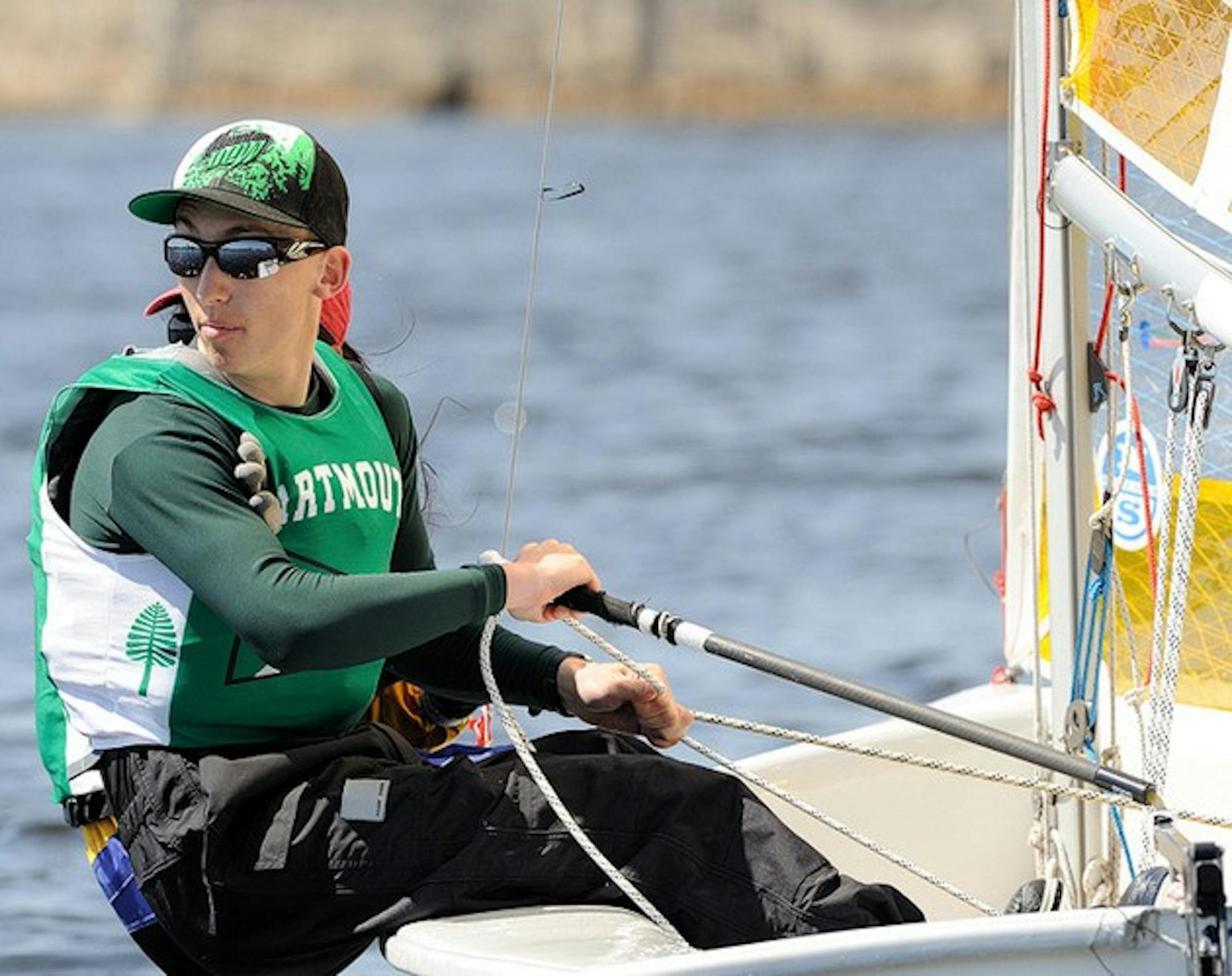
I just fell in love with the sport. I love being out on the water, away from everything on land and hearing all that is happening around me.
What do you enjoy most about sailing?
MW: The sport is great because you can take it as leisurely or as seriously as you'd like and experience it in many different ways. The training aspect is great and there are endless ways to improve. The racing aspect puts your skills to the test and you learn what to work on in practice. There's also endless traveling and I get to experience places I never would go to otherwise.
What do you think people would find most surprising about sailing?
MW: I don't think people realize that it is very complicated and involves lots of variables. It is also more physically demanding than people think and, depending on the conditions, demands a lot of back and upper body strength.
Also, the mental side of the sport involves not only being in the boat but also keeping in mind what is going on around youyour head is constantly on a swivel. You're always multi-tasking and thinking a few steps ahead.
Where's the coolest place that you have ever sailed?
MW: Lake Garda, Italy. I was there for two events as part of the International 420 World Championships in 2009 with my partner, Jordan, who's a junior at University of Vermont.
The team has been on an upswing for the past couple of seasons. What do you think has contributed most to this success?
MW: Starting last fall, we drastically changed how the team operates and our approach to practice and competition. The general mentality is to focus on the "process" and the small details. If we improve on the details, everything builds on itself and the results come from there. We don't focus on just looking at the results but at getting the little things right.
Are you enjoying coaching one of the sailing PE classes this summer?
MW: I love teaching the class. It's a great way to get new people involved by just getting them out on the water and giving them a taste of what sailing is really like. It's nice to give that back to people who did it for me early on.
We teach general sailing concepts that they can apply to any boat, even a powerboat, and are for any skill level. They get to learn from the instructors and from each other, which is one of the best parts.
How do you and your teammates train and practice over the summer to stay in shape for the upcoming season?
MW: We spend a lot of time in the gym. Twice a week we have lift sessions in Floren Varsity House, where we work on general strength and fitness. We're trying to create a base to build off of once the season starts. The PE class is nice to get some time on the water, and we also do a Tuesday night sailing series down at the lake.
What are your aspirations for your sailing career after Dartmouth?
MW: I'm not really sure yet. Jordan and I are in the process of figuring out what sailing we want to do together. We've talked about the possibility of an Olympic campaign in 2016 but are not fully committed yet because of school. Our priority right now is to finish school and get our degrees.
We know what it will take to make the Olympic team and we can see where the scene is going and who will keep sailing after this year's Olympics. If the team that is in the Olympics this year in our event retires after this year, there will be a void in the boat we sail, and it's possible that we'll pursue it and fill that void for the United States.
It's exciting, but there is also an element of pressure to pursue the Olympic dream that we've always had. We have the skills necessary and, once we're done with school, we will have the time if that's what we want to do. It will be a full-time job with nine months of travel, lots of time fundraising and a lot of sacrifices involved.