Would you feel cheated? Would you think that you were missing out on an experience because of deceptive advertising?
The trend in deceptive advertising in experience-based activities is something that Dartmouth economics professors Jon Zinman and Eric Zitzewitz explored in a recent paper titled, "Snowed: Deceptive Advertising by Ski Resorts." The paper was the subject of an article on Grantland.com last week, a branch of ESPN focused on sports and popular culture. The article, written by Tyler Cowen and Kevin Grier, was titled "Would I Lie to You?: The problem with buying sports experiences'" and placed Zinman and Zitzewitz's study into a larger context of consumer action involving sporting events.
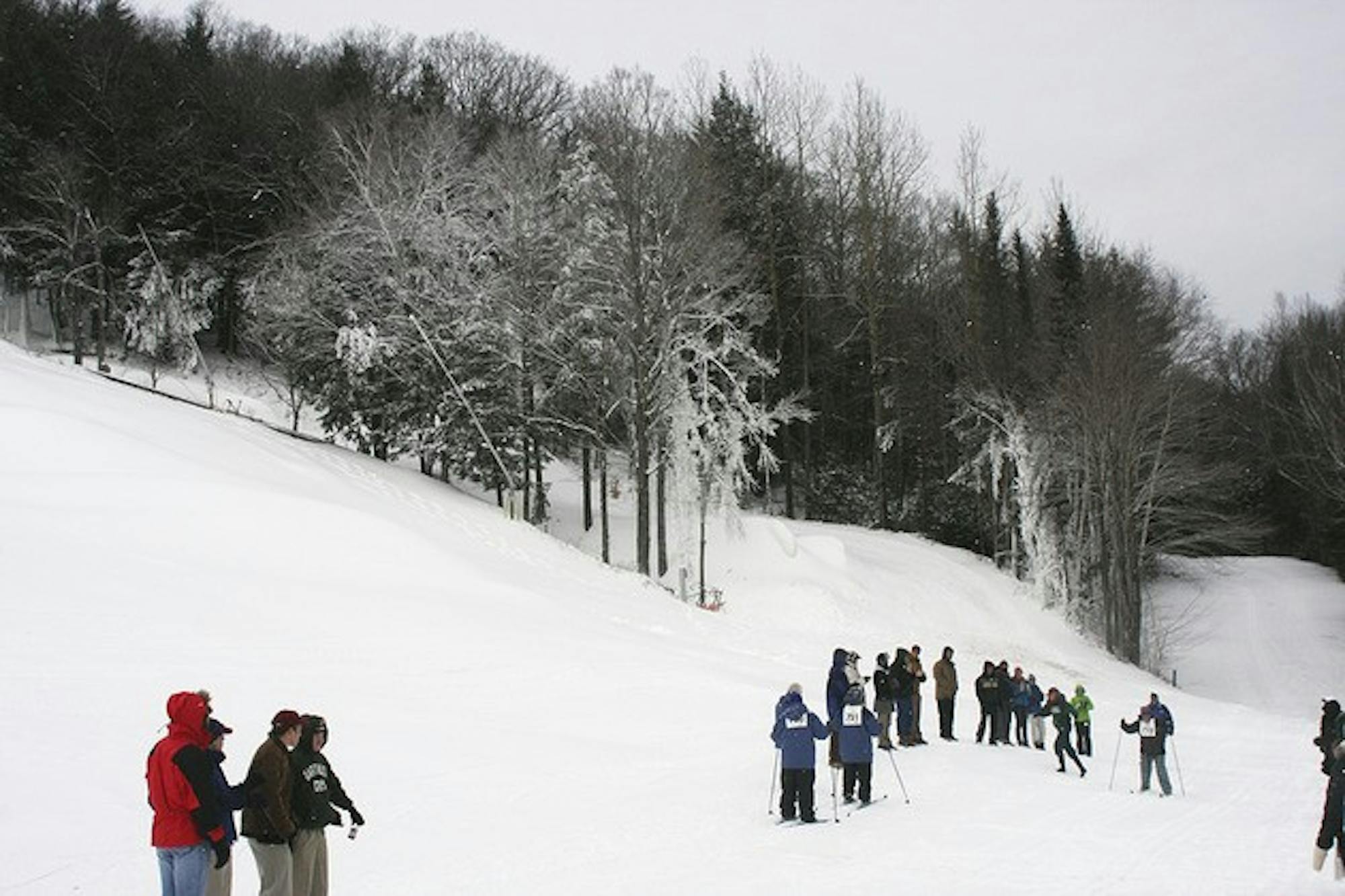
Similar to the hypothetical Red Sox fan, Zinman and Zitzewitz had a negative experience on a ski trip to Vermont because of deceptive advertising, Zitzewitz said.
"In our first year here, we made a pact to, when there was a big powder day, take off work and go skiing," Zitzewitz said.
Both Zitzewitz, a skier, and Zinman, a snowboarder, said they were attracted to hit the slopes when they heard reports of up to six inches of snow.
"When we got there, however, to our eyes and our edges, it was significantly less," Zitzewitz said.
Despite the lackluster snow and false advertising, the two men stayed to enjoy the slopes.
"What do economists do when they're riding chairlifts all day on a bad snow day?" Zitzewitz said. "We discuss the economics of powder inflation."
Zinman said that their paper approaced a novel topic that had not received much academic attention.
"One reason we wrote this paper is because there has not been much that is well-documented about advertising, whether deceptive or true," Zinman said. "This was an unusual opportunity to measure product quality."
After completing their research, the findings of the study were surprising to the two economists, Zinman said.
The study traces developments in advertising for over 400 ski resorts across the United States and Canada. Zinman and Zitzewitz found that the process of "powder inflation" was extremely common for ski resorts as a way of enticing skiers to come but that the trend had all but disappeared with the advent of apps and smartphones that allow consumers, in this case skiers, to provide the actual reports in real-time.
"What was the most surprising thing about the data?" Zitzewitz said. "It was a tie between the fact that we can document that there was exaggeration by ski resorts, and that it also goes away with the iPhone app."
Zitzewitz said many resort websites would display the consumer reports on the page right next to their own report so the prospective consumer could not help but see the real-time reports as well as the "official" report from the mountain.
"The potential for [the exposing of deceptive advertising] to happen changed the calculus for exaggeration," he said. "The threat of a reputation hit has increased while the potential reward has decreased."
Zitzewitz also said that the worst offenders the pair found were resorts around Lake Tahoe on the California-Nevada border, such as Squaw Valley, Heavenly Ski Resort and Diamond Peak Resort. Zitzewitz said he believes that the high number of mountains and resorts, as well as its close proximity to San Francisco, contributed to the higher incidence of deceptive advertising among ski resorts in this area.
On average, resorts exaggerated their snow reports by 23 percent, often adding several inches to the actual report, according to Grantland.
Grantland also reported that people are more likely to pay top dollar for one-time "experiences," such as going to a baseball game or hitting the slopes. People generally do not think things through when buying an experience and are willing to overlook certain drawbacks to take part in the experience, according to Grantland.
Zinman said that deceptive advertising in experienced-based events is relatively uncommon, though the Grantland article said that sites like StubHub often neglect to mention more about the seat than the row, number and price, which can lead to people to buy on impulse or speculation.
"It's surprising to find such deceptive advertising in a product based so much on experience," Zinman said.
Zinman added that because of the "visceral" nature of skiing and other experience-based activities, people tend to overlook the actual reports when they get there and enjoy the fact that they are there, as Zinman and Zitzewitz did when they first developed the idea for the paper.
"You learn very quickly to discount the mountain reports as a skier," Zinman said.