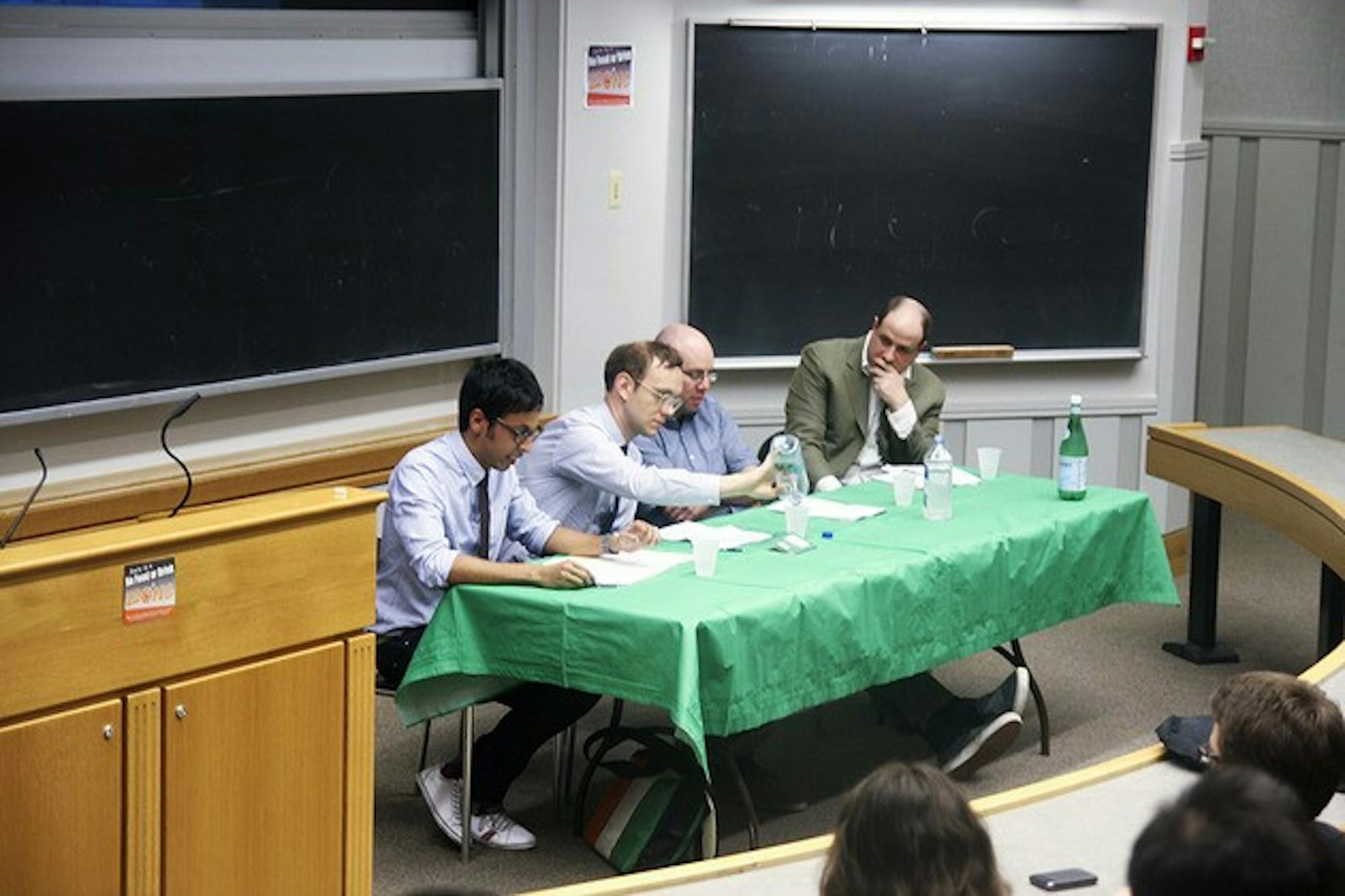
Kindley, alongside N+1 editor Nikil Saval and C. Max Magee of The Millions literary magazine, spoke at yesterday's New Literary Media panel, hosted by the English department lecture committee, in Carson Hall. Moderated by creative writing professor Jeff Sharlet, the three editors discussed how their periodicals are adapting to the changing media climate. The Los Angeles Review of Books is primarily a book review website; The Millions writes about books, culture and arts; and N+1 covers a variety of cultural and political news in a literary style.
Sharlet opened the panel by invoking Charles Dickens' famous line "It was the best of times, it was the worst of times" to describe magazines and periodical publishing.
As many mourn the death of newspapers and watch magazines barely avoid the brink of bankruptcy, these publications refuse this fate. Both the Los Angeles Review of Books and The Millions are based solely online, while N+1 prints journals three times a year in addition to producing online content.
Kindley said that editor Tom Lutz started the Los Angeles Review of Books as he watched the book review sections of newspapers shut down, seeing an opportunity to fill that void. Saval and Magee echoed this story, saying that when N+1 and The Millions were created, the founders felt there was a demand for such publications as older magazines were failing.
Saval said he and other writers were initially baffled by discussions about the death of books. They thought it couldn't be true, because, after all, they liked books.
Magee said that as newspapers began to hit financially challenging times, book reviews were the first section to go. In their final days, many reviews became formulaic and short, but he said book reviews can be well worth reading when writers are more innovative with their approach and get readers excited about engaging in discussions.
"We want our reviews to have a real point of view," he said. "We want them to be creative in form."
This creative form is exactly what the editors aim to preserve, and keeping their content creative is how they plan to do it.
"If the magazine [N+1] believes in one thing, it's a certain belief in progress," Saval said.
Saval suggested that N+1 actually has an ironically hostile relationship with the Internet. He said they proudly boasted what they thought was "the ugliest website on the Internet," until the publication's editors realized in 2008 that this approach was not good for their readership. Kindley, Saval and Magee all understand the importance of the Internet to their publications, but they differ, however, in their own personal opinions on how readers should be able to interact with their content.
Saval said he is staunchly against allowing comments on his website N+1's time and resources can be better utilized with things other than moderating the comments made by readers, he said. By contrast, Magee likes the permanence of the conversation when it is contained in the original website. This discussion, he believes, gets lost when limited to 140 characters on a Twitter feed. Kindley, however, said that Twitter is the ideal location for one reader to spread the word of the Los Angeles Review of Books to his or her followers, who otherwise may not have known about the publication.
Each publication has also taken a different approach to ensuring its financial stability: The Los Angeles Review of Books relies on grants and donations and will soon ask loyal readers for subscriptions all content will remain free, so these subscriptions will be more like donations; N+1 started off on a subscription model but became non-profit in 2006; and The Millions is a for-profit, revenue-based website.
So what is the ever-elusive business model of the media world? These editors don't have one answer, but they're all finding success, albeit on a smaller scale than the media giants of today.