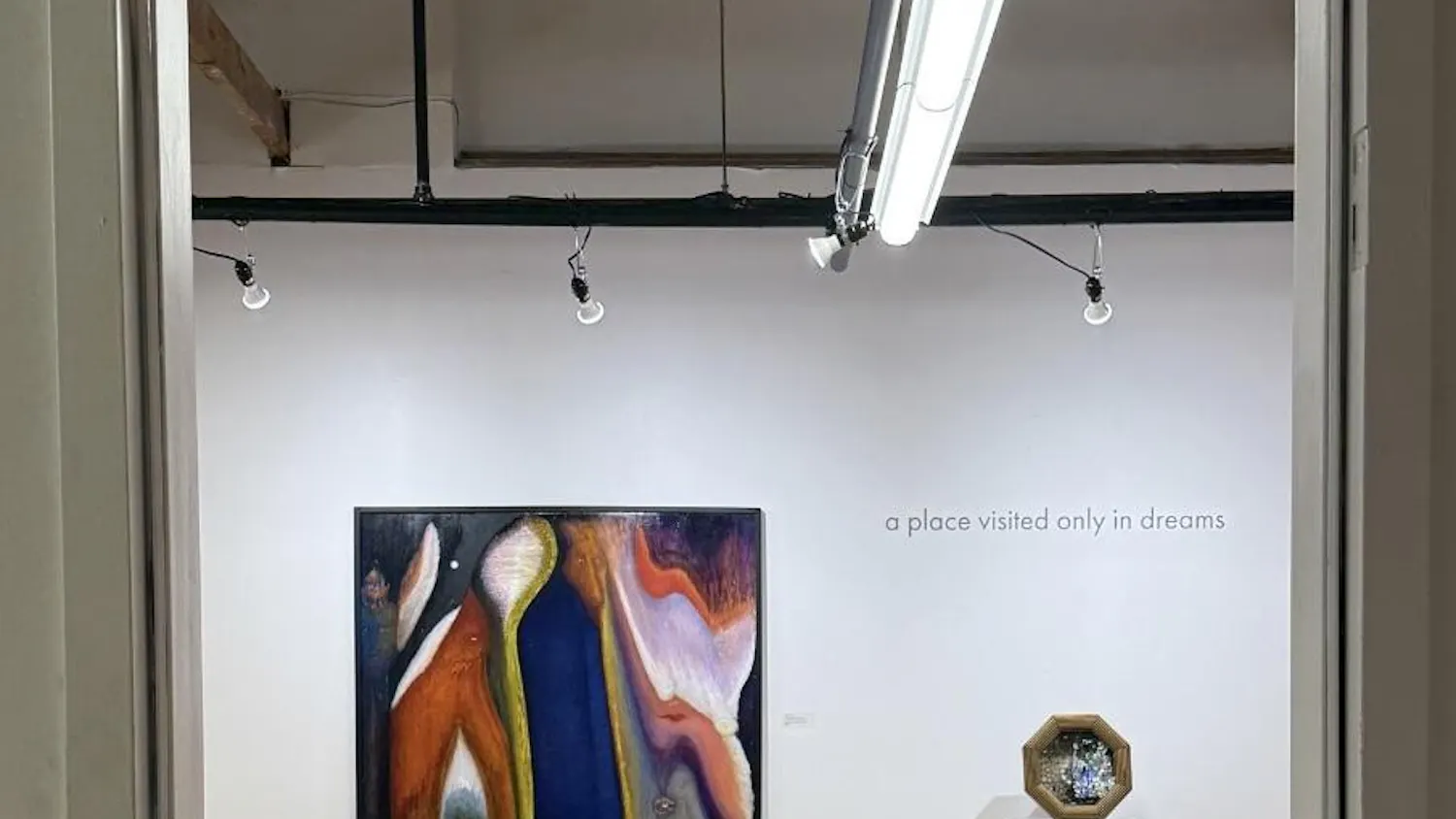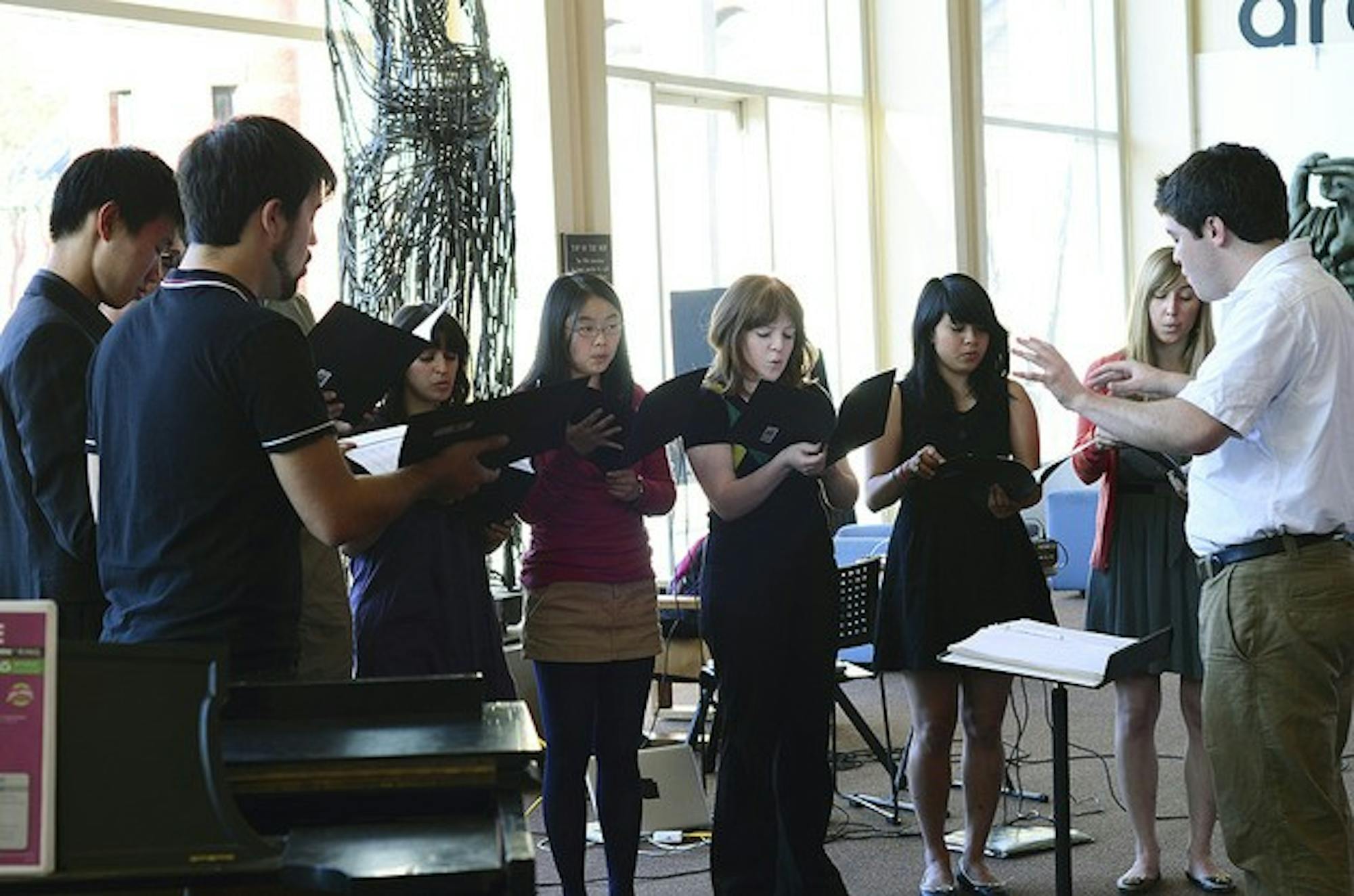
A campus-wide email was sent out during Fall term encouraging students to submit original compositions, which were then read by a three-person festival committee and chosen for the concerts, Chuaqui said. The first concert, held on April 26 at the Spheris Gallery in downtown Hanover, featured music by graduate students. The second, held on Sunday at the Top of the Hop, featured music written and performed mostly by undergraduates. The festival will culminate in a concert at Spaulding Auditorium on May 1, featuring several graduate and faculty-written pieces as well as a performance by the Dartmouth Aires.
"Many of the pieces that will be performed are premieres, as the music festival has traditionally had a strong focus on new works," David Kant, a second-year graduate student in Dartmouth's digital music program who is also helping organize the festival, said.
The "Song and Sound" festival features a program that aims to reflect the relationship between old and new music, he said. Kant added that he is serving as the "spokesperson" for graduate students in an effort to "represent the musical diversity of the College." The major difference between the graduate concert at the Spheris Gallery and the undergraduate performances at the Hopkins Center was the focus of the graduate program on digital music and electronics, according to Kant.
"The graduates are heavily interested and work a lot with technology, so our music is different in format," Kant said.
While the graduate students performed a few pieces featuring electronic improvisation, the undergraduate students showcased more traditional musical forms on Sunday. The program included "Give a Rouse," a dance-style remix of Dartmouth's alma mater, written by Alexander Shen '15, and "String Quartet," written by Austin Greenfield '12 and performed by the Dartmouth Vibes, a student string quartet ensemble.
"Give a Rouse," a snazzy, modern interpretation of the melody that the undergraduate audience knew well, fit perfectly with the Top of the Hop setting overlooking the Green and Baker Tower.
The two main choral pieces in Sunday's undergraduate performance, "Awepu" and "This Must Be the Place," composed by Kianna Mist Burke '12 and Billy Zou '12, respectively, were performed by several of Dartmouth's student choirs. "Awepu" (which translates to "A Calm"), composed in C minor and described as the "time of tranquility directly before the tumult of a storm" by Burke, is a relatively short piece consisting of no more than 60 measures.
"The libretto is adapted from the lyrics of the Talking Heads' song of the same name," Zou said of his composition "This Must Be the Place." "I wanted to write a love song paired with the physical power of a big vocal ensemble, which I think is the most powerful type of sound from an emotional level."
The piece builds to a climax, recedes and "then builds up again, repeating, She lifted up her wings,' arriving at this must be the place' at triple forte," he said. Zou has been composing since high school and has always had a "knack for melodies," he said.
"I think it's really cool to create something from nothing just the idea that you can create this whole world and this whole experience," Zou said.
On Sunday, graduate student Alexander Dupuis also showcased his composition "Diving Bell," which was a distorted recording of four digital wind chimes in feedback loops. The individual sounds of the bells seemed random and unorganized but were cohesive as a whole.
The Aires are scheduled to open the third and final concert at Spaulding Auditorium with the premiere of "October," written by Nic Chuaqui '12 and inspired by Robert Frost's poem of the same name.
Other performances will feature several graduate and faculty-written pieces for the visiting ensemble Callithumpian Consort, a small chamber ensemble from Boston, including "Duet in D minor" for cello and piano by Will Lowry '13 and "Waltz Quartet" by Evan Ross '13. Evan Griffith '15 also wrote a piece called "Minuet and Trio," which is scheduled to be performed on the Spaulding organ.
"I think this festival is really cool because this kind of event doesn't happen often at other schools," Chuaqui said. "The great thing about a liberal arts school that isn't a conservatory is that things like this are open to everybody."
Music professor Kui Dong, the only faculty member involved in the decision-making progress, has been a director of the festival multiple times in the past years, he said.
"Although the festival theme differs every year, the core value is promoting student works that don't necessarily come from the music department," Dong said.
Dong, Chuaqui and Kant, who made up the panel that chose this year's pieces, worked as a three-person team that shared equal responsibility, according to Dong.
"We come up with the ideas from scratch, and it's been really rewarding working with my two associate directors," Dong said.
Lowry is a former member of The Dartmouth Staff.