
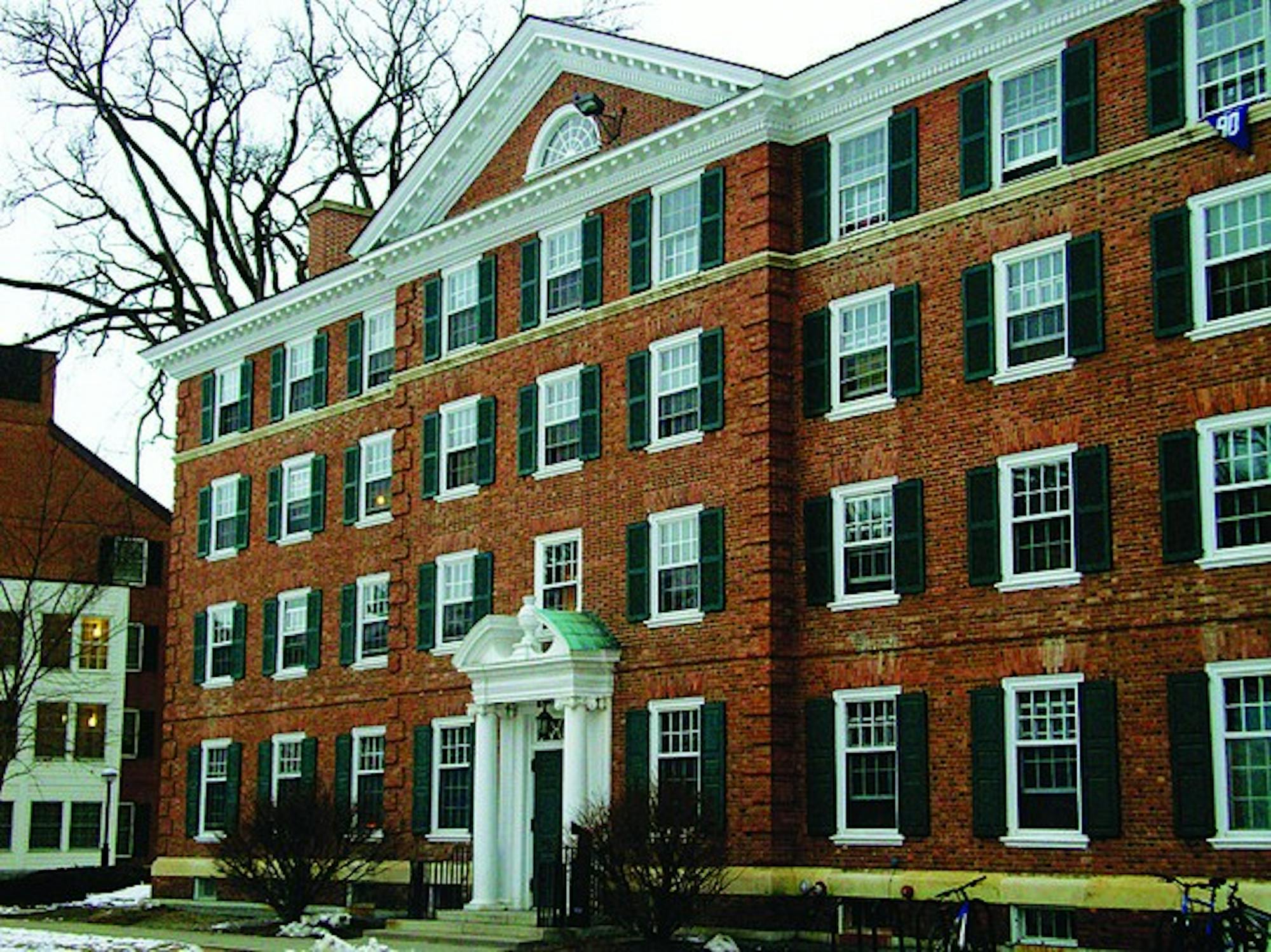
This procedure changes current UGA roles by requiring advisors to actively seek out rule-breaking and report it. Currently, UGAs are encouraged to make decisions about policy violations as they develop, but the new procedure provides more defined rules, according to Wooten.
Many of the students reported at Russell Sage pregame events will be referred to the Brief Alcohol Screening and Intervention of College Students the College's 20-minute online alcohol survey and a 30-minute meeting with a community director to discuss drinking habits, according to Wooten.
However, this new program is not focused on penalizing underage drinkers, he said.
"The focus of the program is, of course, care and concern," Wooten said. "The idea of penalizing them is the last thing that we're interested in."
Aurora Matzkin '97, special assistant to the president for student health, said sober attendants of shut-down pregame events may also be referred to BASICS, which is "appropriate for any level of drinker."
In addition to receiving additional training, Russell Sage UGAs will be paid 150 percent of the current rate to perform "community walkthroughs," Wooten said. Two of the residence hall's four UGAs will be on duty throughout peak pregaming hours during weekend nights and certain weeknights.
This procedure is the second phase of the 18-month DCHIP initiative, which aims to gather data about the effectiveness of walkthroughs in curbing binge drinking. If the walkthroughs prove effective, the program may be extended beyond Russell Sage, according to Wooten.
DCHIP is the Dartmouth branch of a 32-college collaborative created in May that is tasked with reducing high-risk drinking at its respective institutions.
Data from the initiative demonstrates that over half the members of the Dartmouth community would support a higher degree of interaction between staff including UGAs and intoxicated students in order to improve conditions, Wooten said.
"We also know I think this is worth stating that alcohol has not only individual effects in our community, but it has community effects," Wooten said. "So, we know that the majority of the vandalism and the dirty bathrooms and the windows that get broken, all those sorts of things, happen mostly as a result of alcohol. We're also trying to make sense of that what does it mean to live in a community?"
During the current phase, DCHIP is focusing on the environment in which drinking occurs.
According to DCHIP member and Director of Media Relations for the College Justin Anderson, much of the high-risk drinking at the College occurs in residence halls, especially among first-year students.
"What we're doing here is part of a much larger effort," Anderson said. "What DCHIP is trying to do is to reduce the harm associated with high-risk drinking."
Matzkin said the new procedure will clarify how UGAs are supposed to respond to pregames. As a former UGA at the College, she said UGAs are sometimes put in compromising situations and this procedure more clearly outlines their duties.
Russell Sage UGA Anneliese Sendax '13 said the new explanation of her job description originally made her nervous, but that she has become more confident since learning about the new procedure three weeks ago.
"I think ultimately what really struck me was the fact that, as tough as this change might be, it might ultimately help some students out," she said. "That's why I became a UGA in the first place."
According to Matzkin, DCHIP leaders chose to test the procedure at Russell Sage due to its size, proximity to the Greek organizations located on Webster Avenue and reputation as "Sussell Rage."
Russell Sage resident Caela Murphy '15 said she does not think her residence hall has more pregame events than other freshman residence halls and worries that the new procedure may backfire and increase high-risk drinking.
"I think people will feel pressure to [pregame] more quickly and get out of the dorms before they get in trouble," she said. "It would end up having a negative effect in that people are drinking the same amount but quicker."
Russell Sage resident Chris Pullerits '15 also said he does not think the new procedure will stop pregaming but will instead encourage Russell Sage residents to pregame elsewhere.
"It's just going to move from one dorm to someone else's off-campus apartment or to the frats in general," he said.
Pullerits said he is worried that the new procedure will affect his daily life. He called DCHIP's step "invasive" and said he hopes it does not keep him from having friends over to play board games and other activities that do not involve alcohol.
"I don't want to have other people questioning what I'm doing in my room because I feel like it's my space," he said. "It makes me feel like I have to monitor what I do even if I'm not doing anything wrong."
Pullerits said he thinks DCHIP's goal is valid but could be reached via other methods. In the Choates residential cluster, for example, a program provided free food in common areas on Friday nights to ensure that students ate before drinking, he said.
"People are going to be much more turned off by the prospect of not being able to do something," he said. "That's going to create a lot more discontent."
Murphy said the new procedure might undo UGAs' abilities to foster trusting relationships with residents, a critical role of the position.
"I think it kind of has a way of making people's relationships with their UGAs more estranged and less comfortable," she said. "I think once policies become more strict, people become more concerned to talk to their UGAs about issues of importance."
Sendax said, however, that the procedural shift may not mark a significant change for her relationship with her residents.
"It's never really a comfortable situation to tell someone, Hey, you're violating policy here,' but I'm hoping that the relationships that I've forged with these residents at this point are based on mutual respect," Sendax said. "I hope that my residents will understand that this comes from a place of care and concern."
Pullerits said he thinks the mid-year timing of the procedure's implementation will limit its success.
Changing the policy at the start of Spring term may be less effective than Fall term implementation would have been, given that freshmen are approaching the end of their first year, Sendax said.
"It's always tricky to rework something once you're in the middle of something," she said. "I know it's going to be a challenge, finessing these relationships and working with this new job description in the middle of the year ... but at the end of the day, if this pilot stands a chance of helping freshmen and safeguarding their heath, I don't feel like there's any reason for me to express any qualms."
Although starting a new procedure at the start of Spring term may not be ideal, the change could not wait, according to Matzkin.
The procedure is being implemented with the community's best interest in mind, rather than for the sake of imposing authority, according to Wooten.
"Another concern that I have is that this is perceived simply as about authority that it's about The Man,' some sort of Draconian rigidity that will squelch community at Dartmouth," Wooten said. "This is about community, a chance for us to really explore what we say we are."
The procedure is unlikely to be implemented across campus, but DCHIP may test an altered version during Summer term and another version of the new guidelines in the fall, according to Matzkin.
"By doing this pilot program, we're hoping that we can gain valuable understanding of what works," Anderson said. "If it does work, then we've learned something that we're hopefully able to use for good somewhere else. This is very much of a learning experience for us."


