
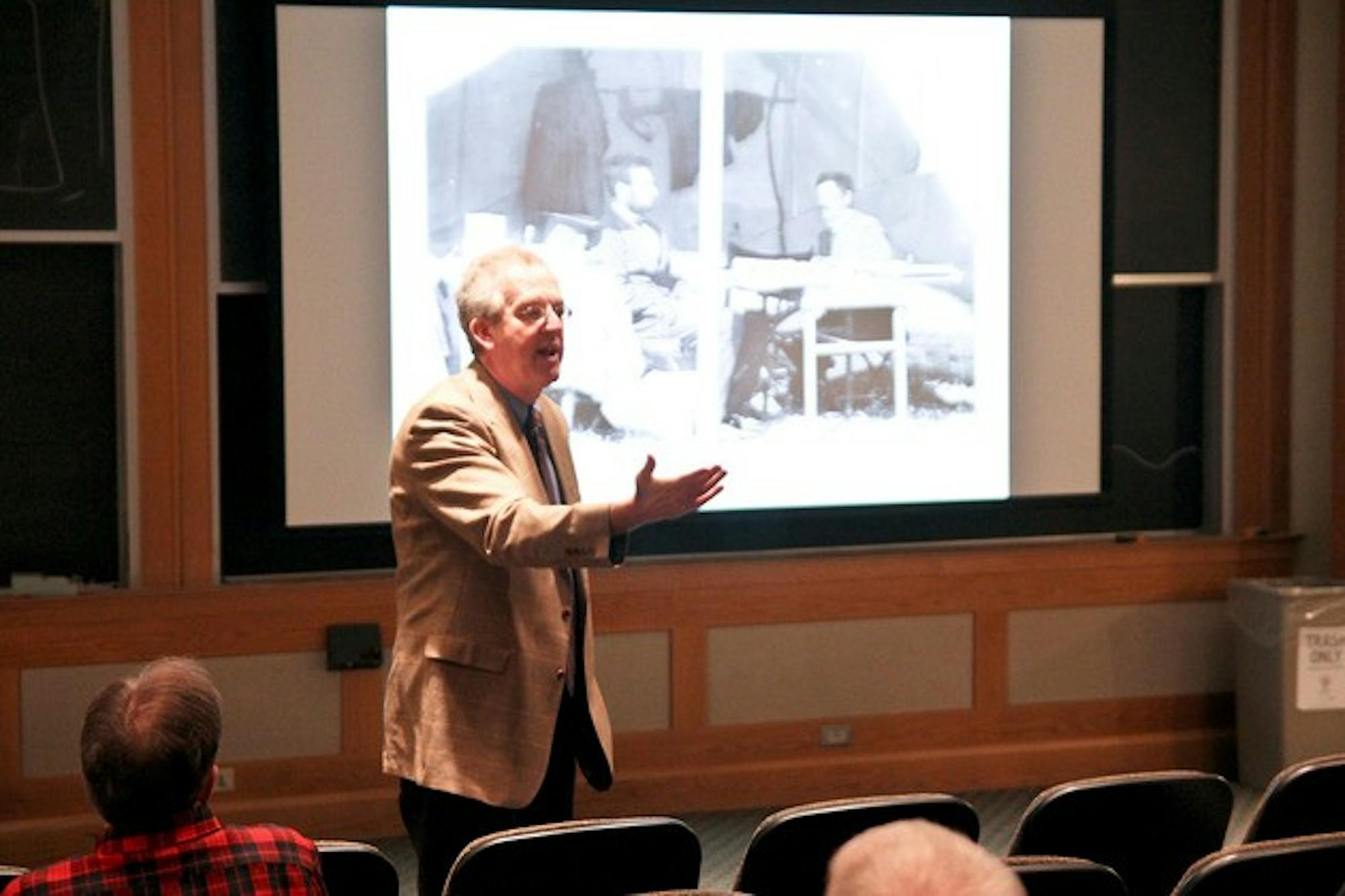
People have "diminished and derided" the proclamation for not truly freeing the slaves, Masur said. Martin Luther King, Jr.'s assertion of slavery's continued existence during the Civil Rights movement serves as an example of the criticism of the document's ineffectiveness, he added.
The historic debate over who really freed the slaves Lincoln or the enslaved themselves reflects a failure to distinguish between a declaration and a definition of freedom, according to Masur, the author of the upcoming book "Lincoln's Hundred Days."
Many criticized Lincoln for his reluctance to issue the Emancipation Proclamation, as well as its limited effect after its issuance. Masur cited critics such as William Lloyd Garrison, a prominent abolitionist, and Charles Sumner, a senator from Massachusetts, who disapproved of Lincoln's expanded timeline in issuing the executive order. Lincoln announced his plan to end slavery in the South to his cabinet in June 1862 but did not publicize the Emancipation Proclamation until Sept. 22 of that year and did not bring the document into effect until Jan. 1 of the following year.
"Lincoln the Emancipator was Lincoln the Procrastinator," Masur said.
Lincoln's lack of decisive action was a result of three primary factors his refusal to overstep his constitutional power, his fear of ostracizing the border states that still practiced slavery and his concern for the aftermath of freeing the slaves, according to Masur.
Aware of the limits of his authority, Lincoln knew his only power to free slaves rested in his title of commander-in-chief of the armed forces, enabling him to act only in response to military circumstances, Masur said.
Lincoln also realized that the border states were sensitive to slavery and crucial to the Union war effort, and he has been quoted as saying, "I'd like to have God on my side, but I must have Kentucky," Masur said.
Military doctrine seemed appropriate to win the war only after both Congress and representatives of the border states Kentucky, Missouri, Maryland and Delaware refused his appeals for gradual emancipation.
"[Lincoln] started off thinking trickle-down from the border states in the North to the South would work," but realized that he would have to initiate emancipation with the South to gain northern attention, Masur said.
In the 100 days between Sept. 22, 1862 and Jan. 1, 1863, Lincoln was perceived to lean toward both undoing and supporting the Emancipation Proclamation, according to Masur.
"People didn't know how to read him," he said. "He was a skilled politician."
This confusion added to the tense atmosphere before the document's inception, creating "a Y2K-like anticipation and nervousness as people wondered if the world would end."
Lincoln was decidedly against slavery, Masur said. His racial thinking like that of most Americans was concerned with the fallout from the unprecedented social situation.
"Lincoln and everyone else were asking themselves Can blacks and whites live together in this country?'" Masur said.
The propaganda printed in the 100-day interim, including cartoons and paintings that oppose emancipation and vilify Lincoln, reflects the fear of upheaval, according to Masur.
Eventually, even Garrison, Lincoln's most aggressive critic, came to see the wisdom of the president's slow progress and recanted his earlier criticism, Masur said.
However, while Lincoln compared his reluctance to enforce emancipation to the patience required to pick a fully ripened pear from a tree, Masur said such extreme caution may not always be the wisest option.
When dealing with concepts like liberty, "you can't let it just sit, or the fruit will rot," he said.


