The talented Nordic and alpine squads, coming off of their best season since the 2007 championship run, are hoping for more snow and even better results heading into the carnival race season.
The experienced Nordic ski team, considered among the top teams in the nation, must stay healthy and maintain its fitness levels in order to succeed at the national level.
"We're excited to start racing and competing against college teams," men's captain Eric Packer '12 said. "We're really happy with where we are at."
Due to a lack of snow, the team has spent extra time dry-land training, according to women's co-captain Steph Crocker '12.
The team had to postpone its annual winter trip to Canada, and instead spent winter break training here in Hanover, according to Crocker. The team split time between runs and roller skis, using two time trials as a way to gauge early season fitness. Some members of the team went to Quebec to train, but many went home after the Hanover training, Crocker said.
Since this year's NCAA Championships are in Bozemon, Mont., a high altitude location, Crocker believes that the extra dry-land training can give the team a fitness advantage heading into the season.
"Not many of us race at altitude, so it's a challenge coming from sea level, but I think that everyone who will end up going will be able to overcome that," Nordic skier Sam Tarling '13 said.
A large group of skiers spent the first week of winter term at the U.S. National Championships in Rumford, Maine. Packer finished third in the 30k classic race, while Erika Flowers '12, traditionally a skate skier, turned in an impressive 13th place performance in the classic race, according to Crocker.
"The depth we have as a team this year is impressive," former academic All-American Flowers said. "While only six skiers compete each week, 10 girls have the potential to compete. It's a huge part of our ability to do well in the race."
Packer said he believes that the team must stay healthy in order to succeed this year.
"We're racing in the type of climate where if you catch a cold you can be out for two weeks," he said. "Team health is always a big goal."
In addition to a strong upperclassman group, Packer believes that David Sinclair '14 for the men and Annie Hart '14 for the women, who both "raced really well" at nationals, have the capability to make strong contributions to the team.
Crocker said she is also excited to see how freshmen Michaela Frias '15, Karina Packer '15, Julia Harrison '15 and Carly Wynn '15, a former biathlete, will fair in their first Dartmouth races.
Both Crocker and Packer believe that the unique co-ed nature of the sport, among both alpine and cross-country teams, contributes to strong team chemistry.
"We all love cheering for each other at the races," Crocker said. "We have a lot of fun."
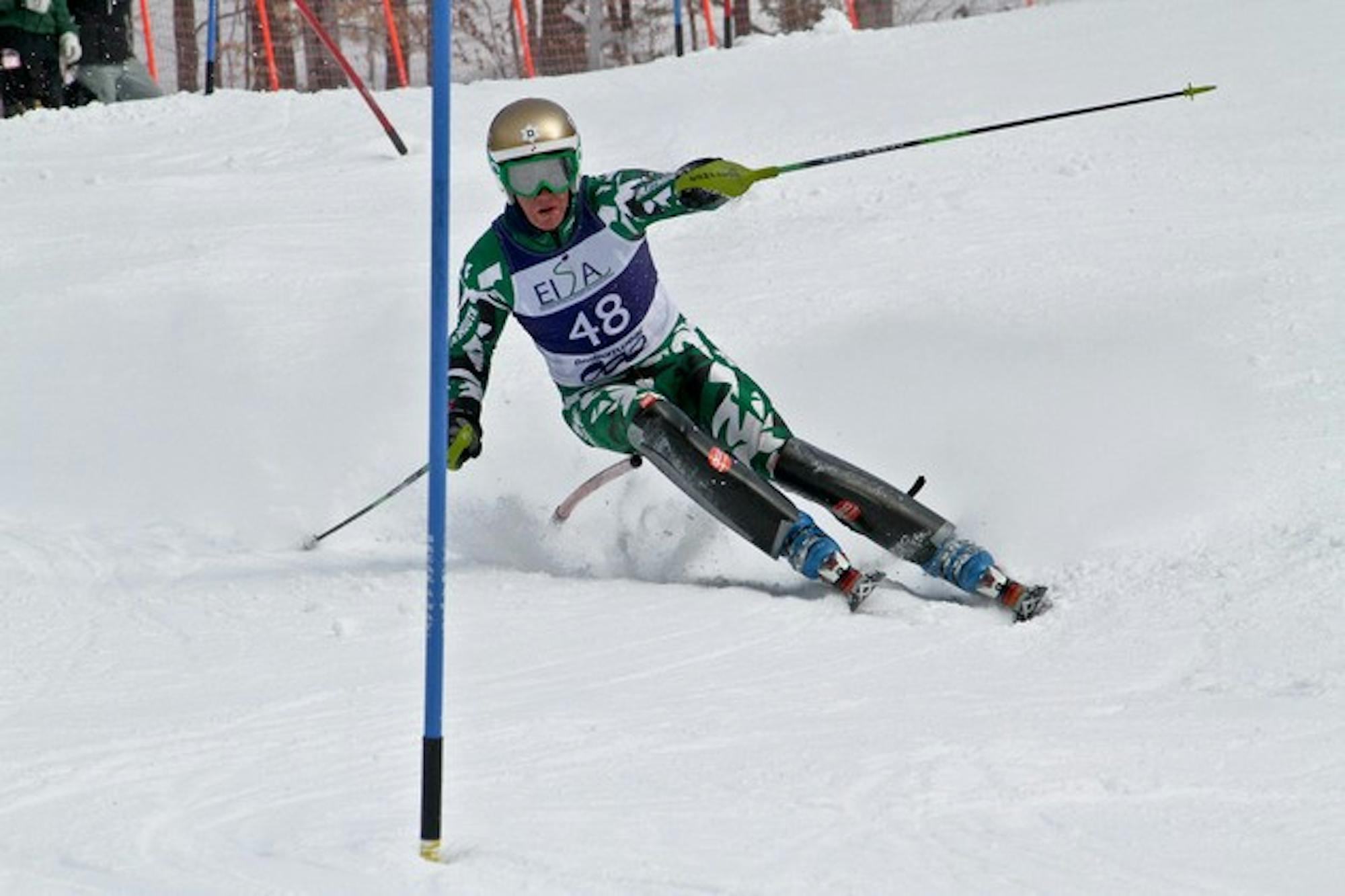
A traditionally strong slalom team, Dartmouth alpine will look to continue to improve in grand slalom events and have skiers qualify early for the NCAA Championships, according to men's captain Trevor Leafe '12.
"In order to do really well at NCAAs, you need to bring a full team of 12," Leafe said. "This year, we have a much deeper alpine team, and knowing that anyone can qualify on any given day really helps."
After flying under the radar last year to the likes of powerhouse squad University of Vermont, the team used performances by Leafe, Evan Diamond '13 and Peter Ankeny '11 on the men's side and women's co-captain Erin Fucigna '12 on the women's side, to finish second to Colorado University in the slalom event at last year's Championships.
"We have some fast freshmen coming in, and we're excited to see how they're going to step up," Leafe said.
Leafe earned First Team All-American honors at the NCAA Championships slalom event last year.
The team trained throughout the fall on land, running intervals and conducting regular lift sessions. Over Thanksgiving, the squad travelled west to Colorado, followed by a winter break trip to Quebec and Maine, according to Leafe.
"In Quebec, the races were like a time trial amongst the team, but over in Maine we raced against some of the other college athletes," Leafe said.
Similar to the Nordic squad, the alpine team has also been affected by the lack of snow.
"We can usually rely on man-made snow, but some of the mountains we were at have been closed," Leafe said.
The team also plans on travelling to nearby Burke and Stratton mountains in Vermont in order to take advantage of better conditions, according to Leafe.
The team expects University of Vermont to again be one of its biggest eastern rivals.
"UVM has a very strong team," Leafe said. "They've focused a lot on bringing in international skiers, so any race where we beat them is huge for us."
While late-season success is a possibility, it will not come without hard work.
"It's going to take everyone skiing at their best," Leafe said.