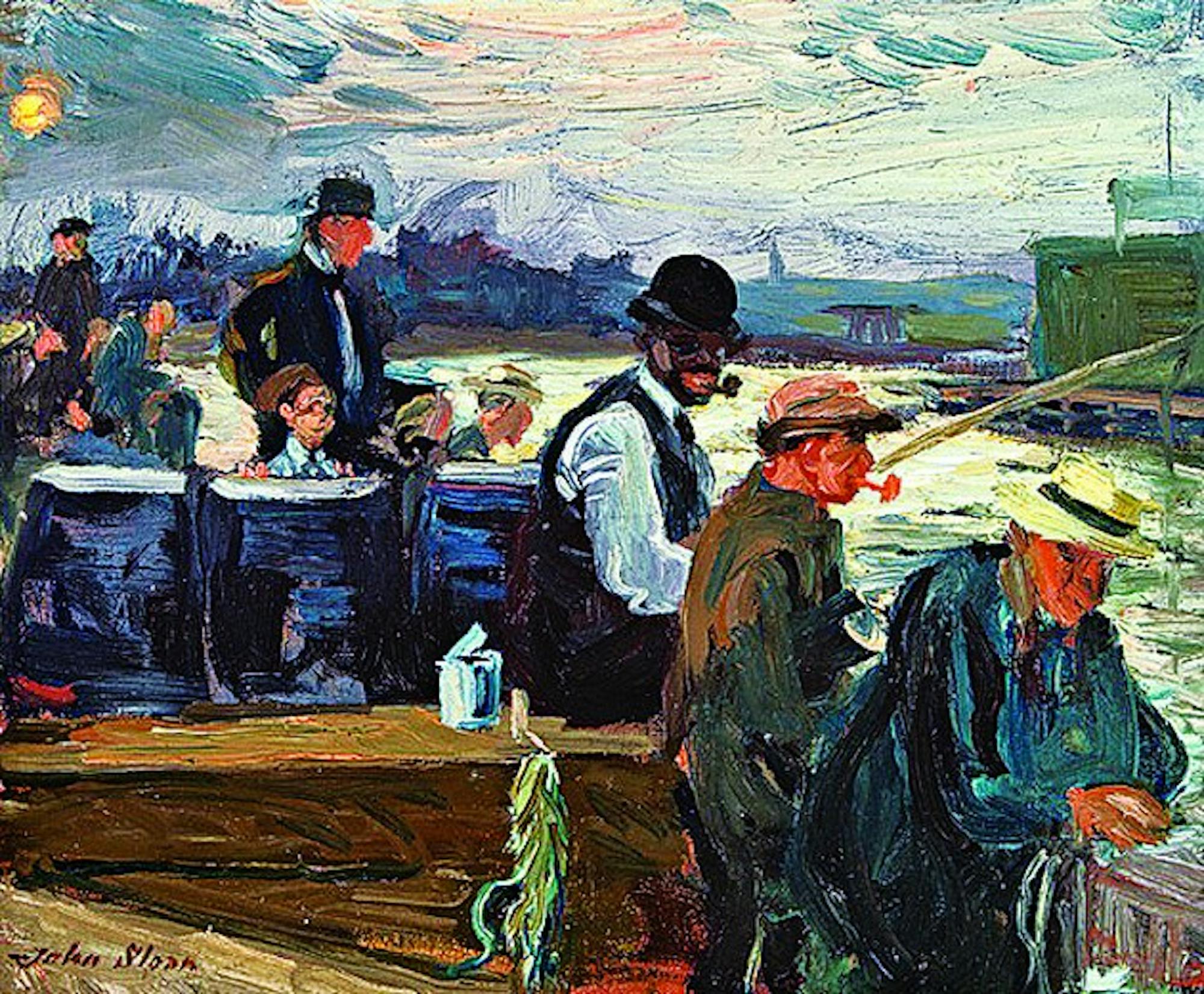
The exhibition "Embracing Elegance 1885-1920: American Art from the Huber Family Collection," which features over 30 pieces in the style of American impressionist and realist artwork by well-known artists of the late 19th and early 20th century, will be on display from June 11 through Sept. 4, according to the Hood's website.
Jack Huber '63 and his wife Russell Huber have collected these rare pieces in Atlanta, Ga., and have "generously" allowed the Hood to use them for this exhibition, Barbara MacAdam, the Hood's curator of American art, said in an interview with The Dartmouth.
The Hood has put the exhibit together in conjunction with the High Museum of Art in Atlanta. After the exhibition at the Hood concludes, the collection will be moved to the High Museum for display, acording to MacAdam.
The exhibition is organized in three sections with the first section devoted specifically to the representation of women in the time period. Portraits that depict women in slender forms and subtle gradations of tone directly display the specified, prescriptive gender roles of the Victorian value system, according to "Embracing Elegance," the exhibition catalog.
This ideology is illustrated by J. Alden Weir's pastel and charcoal painting that he completed in 1889, "The Window Seat," which features meditatively posed women to create a "highly-sophisticated aestheticism," according to MacAdam.
The period's artwork, which was created in the face of "modernization," displays the Victorian artists' response to the growing industrialization and political upheaval of the of the 20th century, MacAdam said.
"There was a feeling of real instability," MacAdam said. "Massive immigration was going on and a lot of people were feeling under siege and [through their art] were trying to create a very soothing aesthetic."
The second section of the exhibition focuses on the Hubers' collection of frames. A majority of the works are in their original frames representing a trend in frame construction as an integral aspect of the artist's composition, MacAdam said.
Works not in their original frame were selected by the Hubers to complement the works as additions to the creative process, according to MacAdam.
"It was a period in which the frame was seen as a really important bridge between the artwork and the surroundings," MacAdam said. "Sophistication in craftsmanship of frames really took a leap forward."
Frames designed by Stanford White of the famous American architectural trio McKim, Mead and White display the growing cultural significance of craftsmanship during this time of industrialization, according to MacAdam.
While the earlier part of the exhibition is focused on late Victorian, Dutch-influenced portraiture, the final room of the exhibition is devoted to exploration of the American landscape by various American artists.
In direct response to the strains of the urban city, many artists fled to the countryside to seek solace in its simplicity, according to the exhibition catalog. Abandoning their formal style of training, these artists looked to their colleagues in France who were painting in the Impressionist style, according to MacAdam.
The Hood Museum will kick off the exhibit with a keynote lecture and reception given by MacAdam, titled "Grace and Grit in American Art, 1885-1920: The Huber Family Collection."
Throughout Summer term there will be a series of interdisciplinary events focusing on the late Victorian to Edwardian era such as a screening of "The Age of Innocence," which extends the exhibit's focus to different mediums, MacAdam said.
On June 28, Professor Louise Hamlin will give a lunchtime gallery talk teaching the techniques used by the artists at the turn of the century and on July 15 and 16, "An Evening of American Opera and Art" will examine the music of the period, setting the scene for the cultural context in which these works were created.