Rwandan director and actor Hope Azeda uses performance to deal with tough issues like genocide and domestic violence, coping with the negative impacts of these events through her art. Azeda will discuss her play "Rwanda My Hope" in "Visualizing and Performing Violence: Local and Global Acts," a panel discussion that will be held in the Haldeman Center on Monday.
The founder of Mashirika Creative and Performing Arts, one of the major theater companies in Rwanda, Azeda first came to Hanover in the summer of 2008. Azeda represented Rwanda in Dartmouth's summer arts festival, which brought 10 East African theater artists to Dartmouth.
Azeda collaborated with students in acting workshops during the festival and made quite an impression, according to theater professor Laura Edmondson.
"The students described [Azeda] as one of the most inspirational people they had worked with during their time at Dartmouth," Edmondson said. "I was able to use some funding in the theater department to bring her back for these three weeks to work with my African theater class."
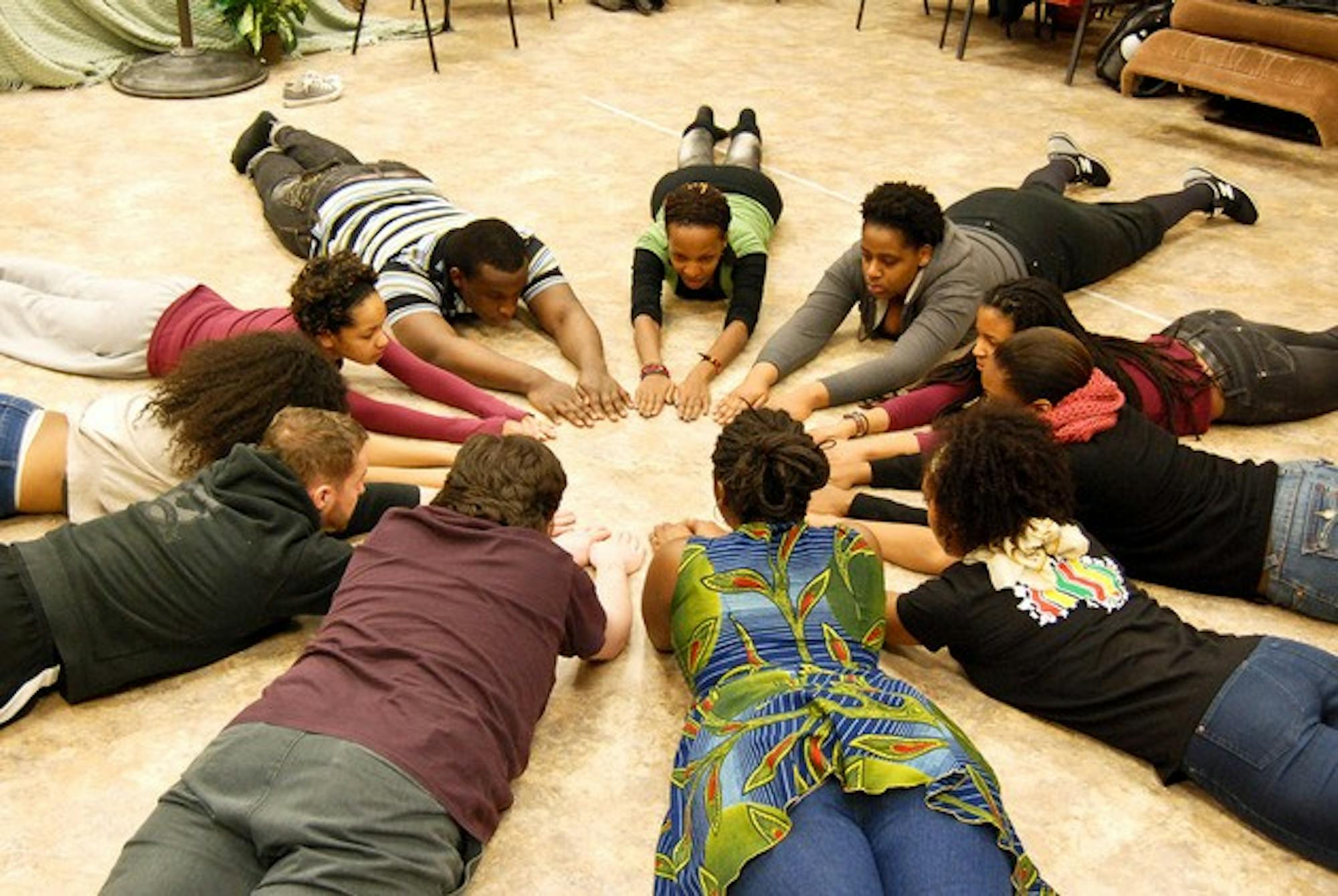
Returning to the College as an artist-in-residence in the theater department this Winter term, Azeda has spent the past two weeks meeting with various groups across campus such as the newly-formed African chorus and the Fire and Skoal senior society and working with the students in Edmondson's African theater and performance class, Theater 23.
Azeda said she was thrilled to return to Hanover.
"I couldn't turn down the invitation to come back because it feels like coming home," Azeda explained.
Most of Azeda's work is inspired by her experiences as an exile from Rwanda. The daughter of Tutsi parents who were prosecuted by the Hutu government, Azeda grew up in Uganda and did not return to Rwanda until six years after the 1994 war.
While she lived in Uganda, Azeda majored in drama and minored in music and dance at Makerere University in Kampala, Uganda. According to Azeda, her studies in the arts proved useful when she returned to her home country.
"Going back to Rwanda, I used what I learned as a tool for social transformation," Azeda explained. "I've been dealing with really dark subjects genocide, AIDS, domestic violence because theater helps me speak up about what I feel."
Azeda's work with Edmondson's class has served a similar function, allowing students to explore subjects they find compelling and express their emotions through art.
On Thursday, March 3, the students will put on a collaborative performance that they have created in class with Azeda and Edmondson.
The performance will be held at 4:30 p.m. in the Top of the Hop.
According to Edmondson, Azeda asked each student to bring in a song, quote or poem to use in the performance. Azeda then studied these pieces to find common themes the students could explore in their performance.
"The students are actively involved in this," Edmondson said. "African theater tends to be characterized more generally by that collaborative spirit, so getting the students to understand that they can speak out, have a voice and be expressive is very important."
Although Azeda served as the director of the performance, she pushed students to take ownership of the piece because she wants the performance to embody their ideas.
Students were not pressured to structure the performance in a certain way or participate in ways that would make them uncomfortable, according to Azeda. The performance was all about "what [the students] want to do," Azeda said.
Azeda added that her love for collaboration inspired her to adopt an organic directing style.
"[The collaborative spirit] shaped me more as a director who facilitates than a director who says, go left and go right,'" Azeda explained. "It's all a give-and-take and a two-way collaboration."
The students' work includes elements of song, poetry and movement that the students none of whom are theater majors have worked on throughout the term.
Azeda praised the student performers for their willingness to delve into the realm of theater and performance art. "I'm excited for people to see that Dartmouth students who don't necessarily perceive themselves as artists can create and you don't have to be a theater or visual arts major to produce amazing work," she explained.
Azeda added that a compelling performance owes less to trained acting skills than to the ability to truly engage with the themes being explored.
"It's not about performing, but feeling and bringing justice to the kind of subject they're coming up with," Azeda explained.
Azeda will open the show with a solo performance of "Echoes from a Thousand Hills," an original 20-minute piece about the journey of a Rwandan woman that she has performed at various universities across the country.
The panel discussion which will be held at 4:30 p.m. on Monday, Feb. 28 will focus on the portrayal of violence in the visual and performing arts.
Dartmouth Dance Ensemble director Ford Evans and art history professor Mary Coffey will join Azeda on the panel. Edmondson will moderate the discussion.
Edmondson said she hopes the discussion will give students from across campus the chance to learn about Azeda's experiences.
"I find [Azeda] to be very inspiring," Edmondson said. "I think it will help create a more complex, multi-faceted understanding of what Rwanda is today for students to meet someone who is actively committed to the reconciliation and the rebuilding of Rwandan society."