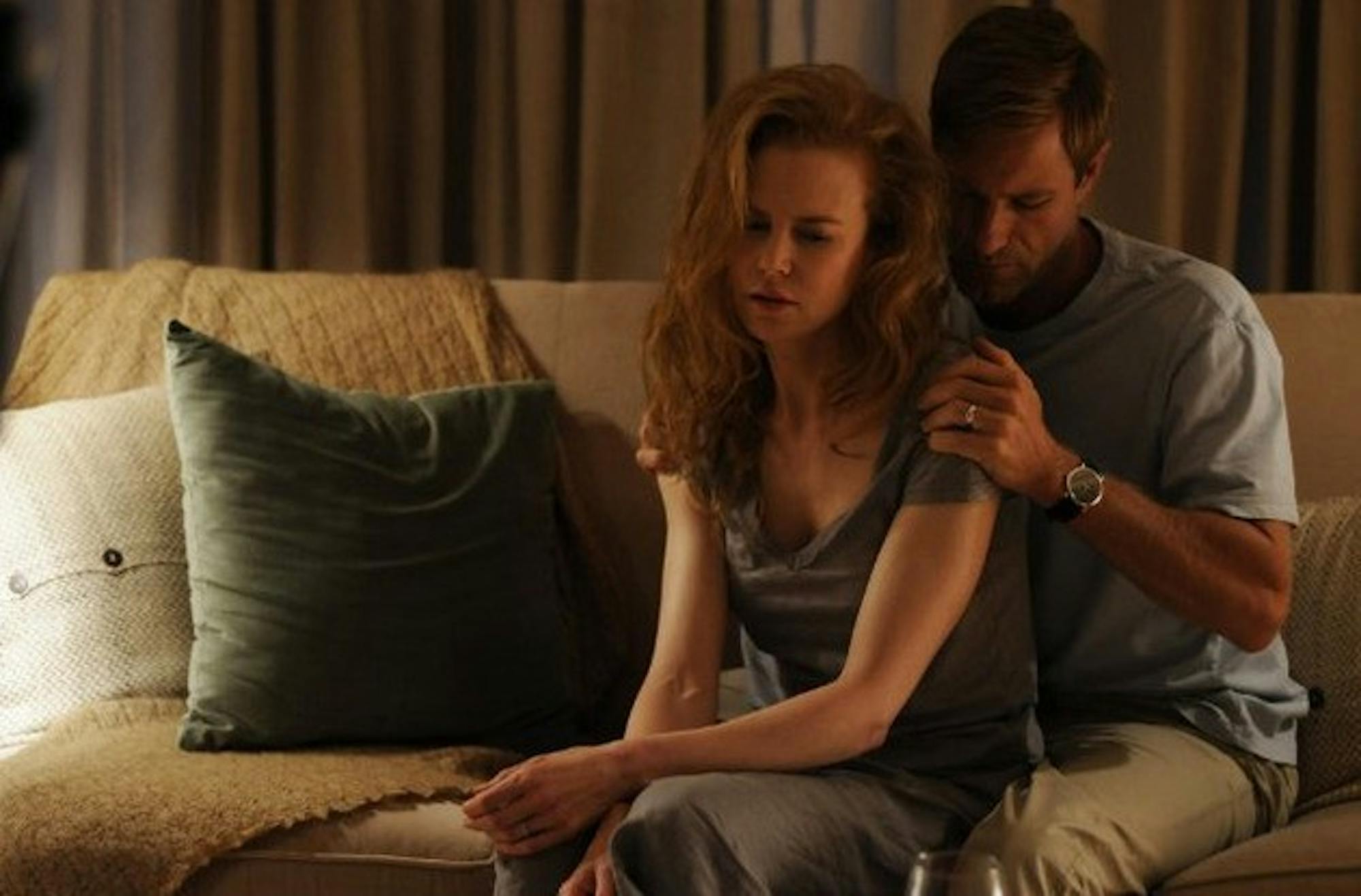
After their son is killed, Becca and Howie played by Nichole Kidman and Aaron Eckhart fall into an alternate reality, as the title suggests. They try to feign normalcy, but various clues hint that tragedy lurks beneath the surface of their pristine suburban life.
A child's artwork hangs on their fridge, a cleaned lunch box sits in the pantry and an untouched bedroom of toys haunts their house. Eight months after their son is hit by a car, Becca and Howie cannot cope with the reality of their situation.
We sense Becca's loss of direction when she spends her days emotionally invested in gardening and stalking Jason (Miles Teller), the teenager who was driving the car that hit her son.
A mother wrecked by rage, bitterness, emptiness and guilt, Becca is a departure from the brisk and controlled female characters Kidman usually portrays.
Eager for the opportunity to play a role she would not typically be offered, the actress took on "Rabbit Hole" as a special project, producing the film independently. Her initiative has certainly paid off Kidman's heartfelt performance has already earned her Golden Globe and Screen Actors Guild Award nominations.
Eckhart also shines in the film, masterfully portraying Howie's grief. Embodying their characters' nuanced emotional lives, Eckhart and Kidman complement one another perfectly onscreen. In one scene, for example, Howie is astonished to find his son's artwork removed from the fridge and Becca cleaning out their child's room. In response, he gets out his cell phone to watch a preciously preserved video of their son playing on a tire swing.
"I forget that he's not here sometimes, that maybe he's just hiding under the bed and is going to pop out like he used to," the former father declares in a heartbreaking moment.
Although the film's action is quite dramatic, it never falls into the trap of using a hackneyed plotline or overly melodramatic tone. In this manner, "Rabbit Hole" remains loyal to Lindsay-Abaire's play, which opened in 2006 at New York's Biltmore Theater.
In fact, the film could practically take place on a stage every scene is driven much more by interactions between characters than by its set. For instance, Becca's character is developed in tense scenes with her mother and sister and through her seemingly inappropriate relationship with the teenage driver who killed her son.
"Rabbit Hole" holds up an honest, often uncomfortable mirror to real life, even when its characters would prefer to live in an alternate reality where they might have a chance at happiness. Director John Cameron Mitchell remains faithful to this mission in his cinematic approach, which favors an unobtrusive camera that allows for natural scenes.
Although Mitchell boasts the insight and skills of an experienced director, "Rabbit Hole" is only his third film. In an interview with Janet Maslin of The New York Times, Mitchell compared working with Kidman and Eckhart to "when a philharmonic conductor gets to work with certain soloists," admitting to the uniqueness of directing such a star-studded cast so early in his career. In the interview, Mitchell also revealed that the cast rehearsed for only two days before shooting "Rabbit Hole."
Despite the film's short production schedule and Mitchell's relative inexperience, everything worked out in the end. "Rabbit Hole" shifts seamlessly from harrowing drama to poignant comedy, effectively keeping its audience engaged and intrigued.
Tragic scenes are balanced with humorous ones, most memorably when Howie gets high before going to his support group meeting and when Becca undermines the healing power of religion, preferring to see God as a cosmic sadist. A mother at a support group claims that God took her child because he needed another angel, causing Becca to speak out in disagreement.
"He is God after all," she says. "Why didn't he just make another angel?"
In scenes like this, it becomes clear that Becca and Howie will never cast off the sorrow caused by the loss of their son. The weight, however, may at least become bearable in time.