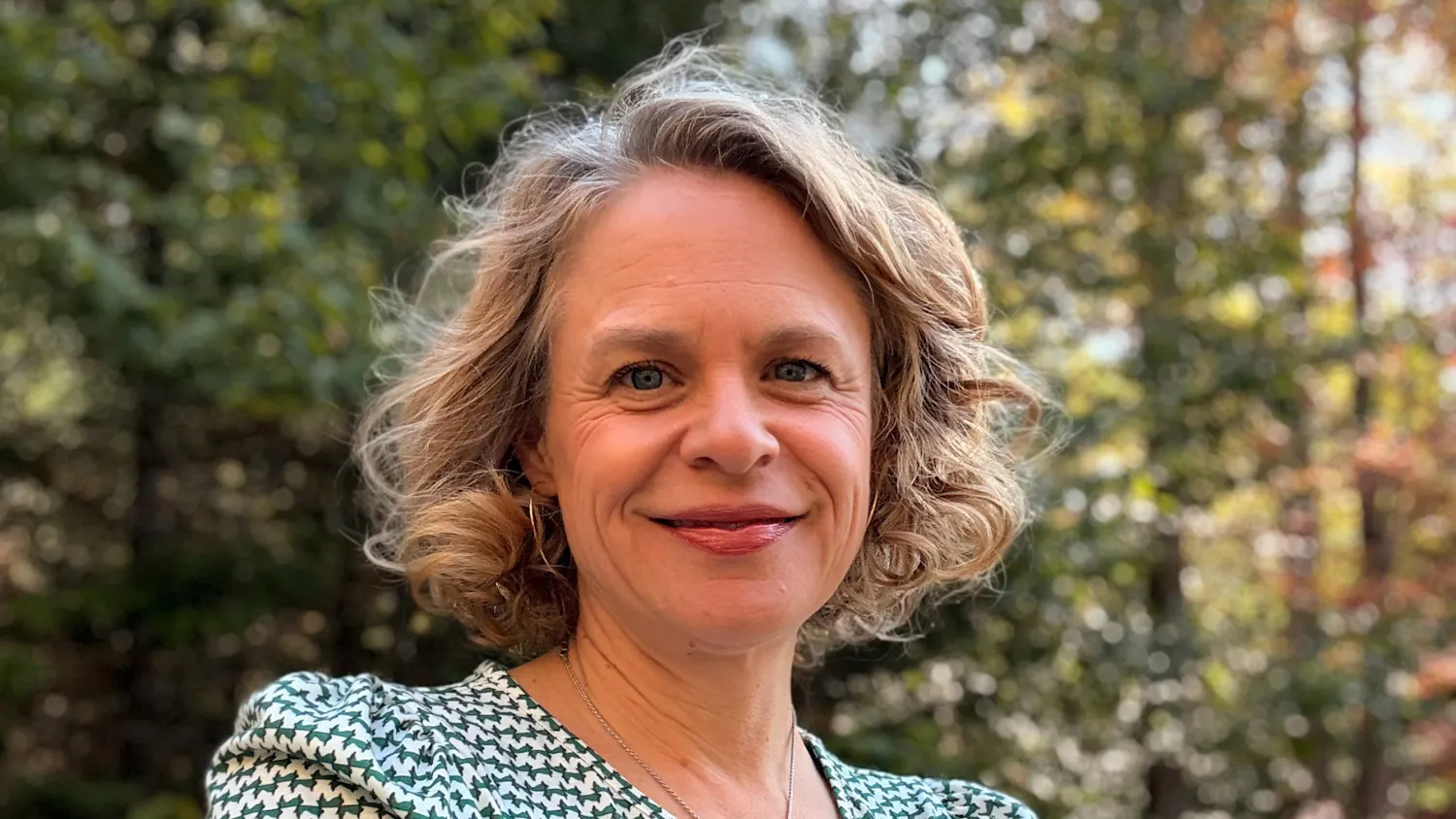
Former professor and chair of the sociology department Elise Boulding died at age 89 due to liver failure on June 24 in Needham, Mass., The New York Times reported. Boulding, a Norwegian-born Quaker who, was nominated for the 1990 Nobel Peace Prize by the American Friends Service Committee in honor of her work as an international peace activist.
Boulding worked at Dartmouth from 1978 to 1985 and founded the College's peace studies program, which later became the War and Peace Studies Program at the Dickey Center for International Understanding, according to The Boston Globe.
"I think [the peace studies department] was seminal in starting an academic field of peace studies and conflict resolution," her daughter, Christine Boulding, said. "Now many academics and peace studies programs are spread across the world."
In 1979, Boulding was the only woman appointed by President Jimmy Carter to the Congressional Commision to establish the United States Institute of Peace, according to the National Peace Acadamey and the Nonviolent Peace Force websites.
Boulding often spoke on United Nations panels and also worked at the United Nations University in Tokyo, Iowa State College and the University of Colorado at Boulder. She received her doctorate in sociology from the University of Michigan in 1969.
Many of the courses Boulding taught focused on efforts to achieve world peace and on the social history of women, according to former sociology Professor Stanley Udy.
"They were topical and theoretical about a variety of issues and problems surrounding both gender relations and war and peace," Udy said.
Andrea Strimling '86, one former student who remained in close contact with Boulding, said that Boulding inspired her to pursue a career in conflict resolution. Strimling served as a commissioner with the Federal Mediation and Conciliation Service and currently works as a research fellow at the International Security Program at Harvard University's Kennedy School of Government, according to the Belfer Center for Science and International Affairs website.
"The wisdom that she shared is present with me every single day of my life," Strimling said.
Boulding often encouraged interaction with students outside of the classroom setting, Strimling said. Boulding often invited students to her home in Hanover, where poems and musical instruments decorated the walls, according to Strimling.
"It was such a beautiful and wholesome way to live," Strimling said.
Boulding applied her expertise in conflict resolution to casual disagreements within the sociology department at the College, Udy said. Although Boulding would often travel abroad for her work with the United Nations during her tenure, she would still try to resolve arguments within the department, according to Udy.
"She would look at her watch and say, Somebody is coming to pick me up and take me to Tokyo in five minutes. Why don't you guys figure this out?' and bid us farewell and leave," Udy said. "We'd always get things straightened out and I thought it was a great way to resolve conflict."
Boulding inspired people from all over the world, Strimling said. Tributes to her life are being sent to her family from across the globe, according to Strimling.
"Many people at the memorial service didn't just know her professionally but also had a very special personal connection with her," she said.
Boulding served as the chairwoman of the National Peace Academy Advisory Board and was a member of the Women's International League of Peace and Freedom. She also helped found the International Peace Research Association, The Globe reported.
Over the span of her career, Bouding published 13 books, including "The Underside of History: A View of Women Through Time" (1975), "Children's Rights and the Wheel of Life" (1978) and "Cultures of Peace: The Hidden Sides of History" (2000), according to Amazon.com.
Before she began her academic work in peace studies, Boulding stayed at home and raised her five children. She often drew on her experience as a mother in her work, Strimling said. Boulding was also involved in the Friends Church and met her husband, Kenneth Boulding, a poet and economist, through the Quaker organization, according to The Washington Post.
Boulding is survived by her five children, 16 grandchildren and nine great-grandchildren.