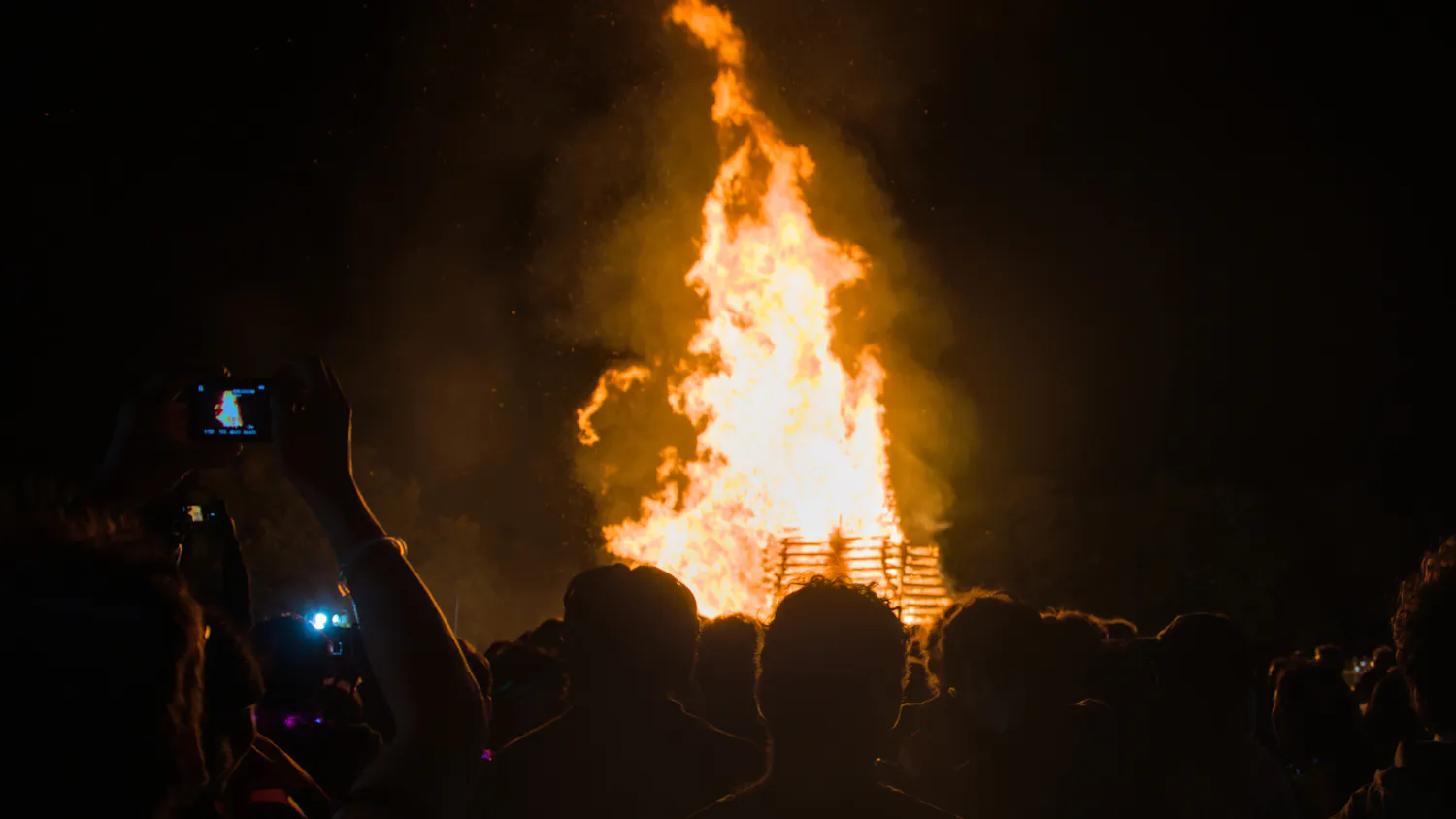
As hundreds of students pulled at their hair, guzzled iced coffee and commiserated with strangers while preparing for their Astronomy 003 test, it might have been easy to dismiss large Summer term classes as nothing more than distributive-fulfilling burdens. Yet while popular summer classes with larger class sizes can present a number of problems, students and professors interviewed by The Dartmouth said that these courses can offer advantages not found in smaller seminar classes.
Due to limited course offerings and increased focus on fulfilling distributive requirements, classes offered during the Summer term are typically larger than in other terms of the academic year, according to students and professors .
Class sizes reflect the type of institution that the College wants to be a liberal arts college, an Ivy League school or a research institution, according to classical studies Professor Pramit Chaudhuri, whose Classical Studies 004 course has 172 enrolled students. Students will ultimately benefit from sampling a variety of class sizes and teaching methods during their academic careers, Chaudhuri said.
"I do think it is very nice in the Classics department that you could take an [introductory] class with 200 students and then take a course with six very advanced students closely reading [Greek poet] Pindar," Chaudhuri said.
Several students interviewed by The Dartmouth said they were unsure if large courses matched the College's commitment to the liberal arts and an intimate learning experience.
"Dartmouth has this reputation for being a small, intimate academic community so if you have a class of a 100, it doesn't really fulfill that picture that we have," Shanee Brown '12 said.
The College is able to maintain its "strong academic quality" despite large class sizes because professors and teaching assistants of higher-enrolled classes offer extensive office hours, Carlo Pizzinelli '12 said. Large classes would not be as effective, however, "if it was an upper-level class," Pizzinelli added.
Computer science Professor Afra Zomorodian, whose Computer Science 004 class has 150 students enrolled, said he feels that with the proper staff, large courses can be as effective as small classes at providing a personal learning environment for students.
"I think certain classes are fine in a large-scale form, especially when you can provide a lot of support staff," Zomorodian said.
Zomorodian said he and his TAs offer between 31 to 33 hours per week for students to ask questions and engage with the material on a more personal level.
"There is enough support right now that [students] are able to get one-on-one responses," Zomorodian said.
When English department faculty hold discussions about the best way for students to learn, the assumption is that smaller classes are always better, according to English Professor Jonathan Crewe, who teaches English 024, a Shakespeare class with 57 enrolled students.
Determining the optimal class size "isn't quite that simple," Crewe said. "Some students seem to prefer the lecture format and the drama of the lecture."
Students and professors interviewed said that the success or failure of a large class often depends on students' interest in the course material.
"I think that there are some professors at Dartmouth who are really exceptional but most are basically on the same level, so it depends on the material and whether I'm good in the subject or not," Brown said.
Physics and astronomy Professor Robert Fesen, whose introductory astronomy courses are regularly among the largest classes on campus, said he attributes his high enrollments to students' curiosity about "their place in the universe."
Pizzinelli, who is taking Fesen's Astromony 003 course this summer, said that the course's biggest appeal was the breadth of material it covers.
"I have never studied much science in my life, so one of the most attractive aspects of the class is that it covers a lot of material but explains it in a simple way," Pizzinelli said. "I can learn a lot without struggling with assignments and tests."
Crewe said that there is a high level of interest in his course which is currently over-enrolled by seven students largely because classes about Shakespeare have their "own appeal."
"This may be the one humanities course that [students] will take at Dartmouth so they want to get their money's worth," Crewe said.
Attendance is one of the biggest concerns for professors teaching large courses over the Summer term, several professors said.
"The problem with the Summer is simply getting the students into the classroom," Fesen said.
Although it is beneficial for students to regularly attend class, Crewe said that he does not track students' attendance.
"I can't police a class this size very rigidly but I'm also not very interested in doing it," Crewe said.
The lack of a strict attendance policy can make a course especially appealing during the Summer, several students interviewed said.
Since some professors like Fesen post their lectures and PowerPoints on Blackboard, students can easily "catch up on material without going to class every day," Pizzinelli said.
While it is often assumed that large lecture classes will be easier than the average Dartmouth class, students and professors said they believe course standards are set in regards to the introductory level of courses rather than size.
"You simply can't expect [students] to be classicists at the end of an introductory course," Chaudhuri said.