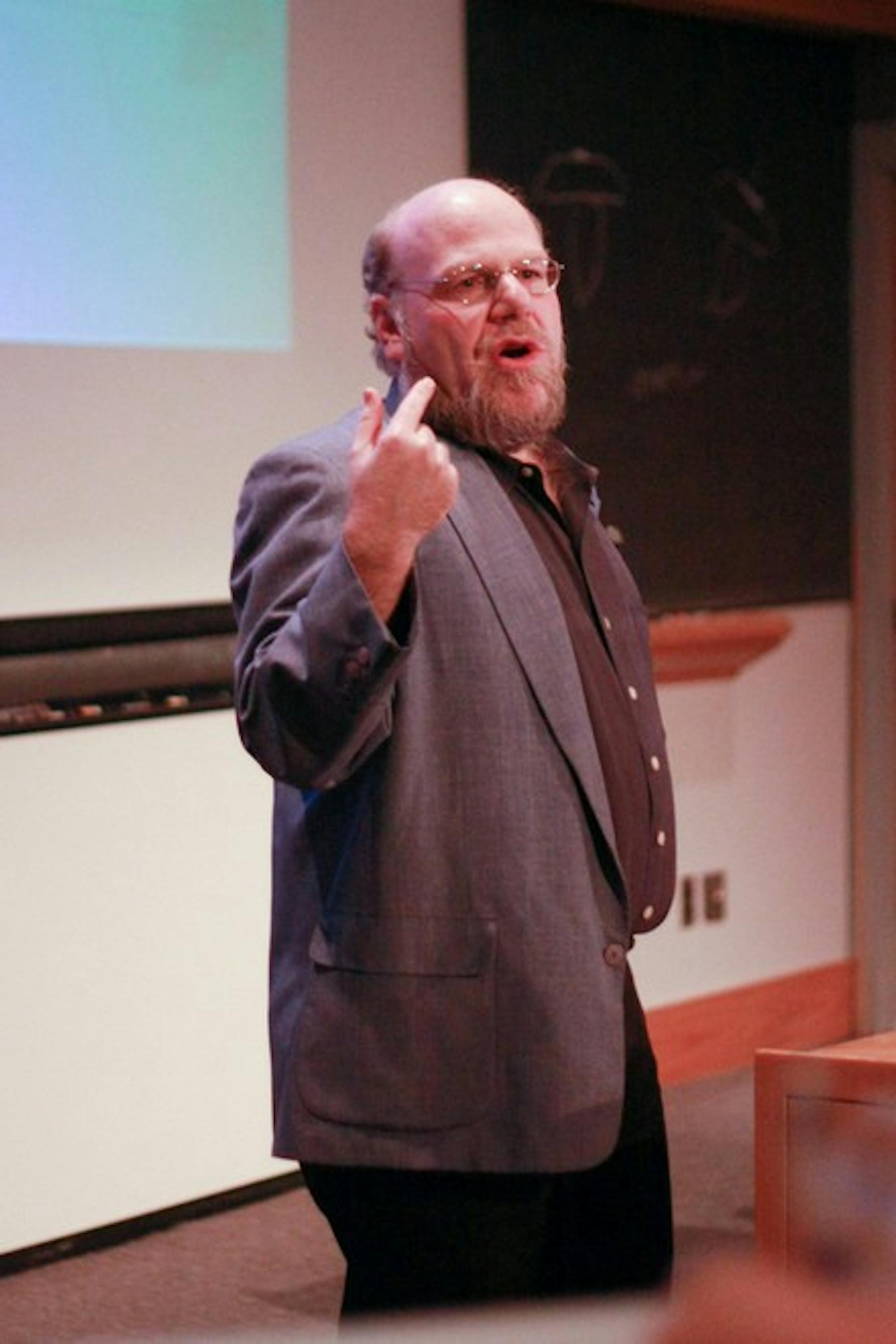
"This phenomenon is not science fiction," Hendler said. "It is a science that doesn't fall into traditional academia, and to study it we need to break down some walls."
Hendler and a group of colleagues from the Chinese Academy of Sciences were the first to do "a serious analysis" of this development in social technology, he said in an interview with The Dartmouth. The analysis included a study of the content of various social communities and the technological innovation that helped create them.
"We took a very interdisciplinary approach at catching and characterizing data," Hendler said. "We studied 450 cases and all but 12 were in China."
Whether or not this type of social organization occurs in the United States "depends on how you define it," Hendler said. Of all the cases studied, however, no country other than China had more than three social communities, according to Hendler.
One of the largest social communities is the "human flesh search," the "unfortunately named phenomenon in China where large groups of citizens get together to solve societal problems," Hendler said. People who access communities like the human flesh service post information, problems or questions that other online users address, according to Hendler.
People use social communities for a variety of reasons, according to Hendler. Some social community forums are dedicated to posting pictures of hit-and-run accidents to aid the police in finding perpetrators, while others provide descriptions of people they have seen but never met, in hopes of uncovering their identity, Hendler said.
"People become net celebrities because there's sometimes a million people trying to find someone," Hendler said. "For example, a guy will post that he saw a pretty girl in the Beijing Starbucks, and everyone that follows one of these episodes will work together to figure out who she is."
It is difficult to build communities like these on the Internet because the ones that are successful have developed naturally, not been designed, Hendler said. There are also no available guidelines for building effective social communities.
"I'm an engineer I want to know how to build it," he said. "We need a rulebook with this terminology."
Hendler compared Wikipedia with the social communities because although Wikipedia is a successful program, it is difficult to replicate its format on a different website, he said.
"Lots of groups have tried to create their own sites like Wikipedia, but most efforts have failed," Hendler said. "Its success is not solely based on technology but is very much integrated with the social aspects."
Sites like Wikipedia feature hundreds of policies, but none of these rules are especially important for building a successful social website, he said.
Hendler said the main purpose of his talk was not to propose ideas, but to stimulate discussion about how people can be connected in more useful ways over the Internet.
"I don't know how to solve these problems we are really just getting started," he said. "And it is not enough to read your favorite social science book. It seems that we need to get these communities talking and figure out their incentives."