
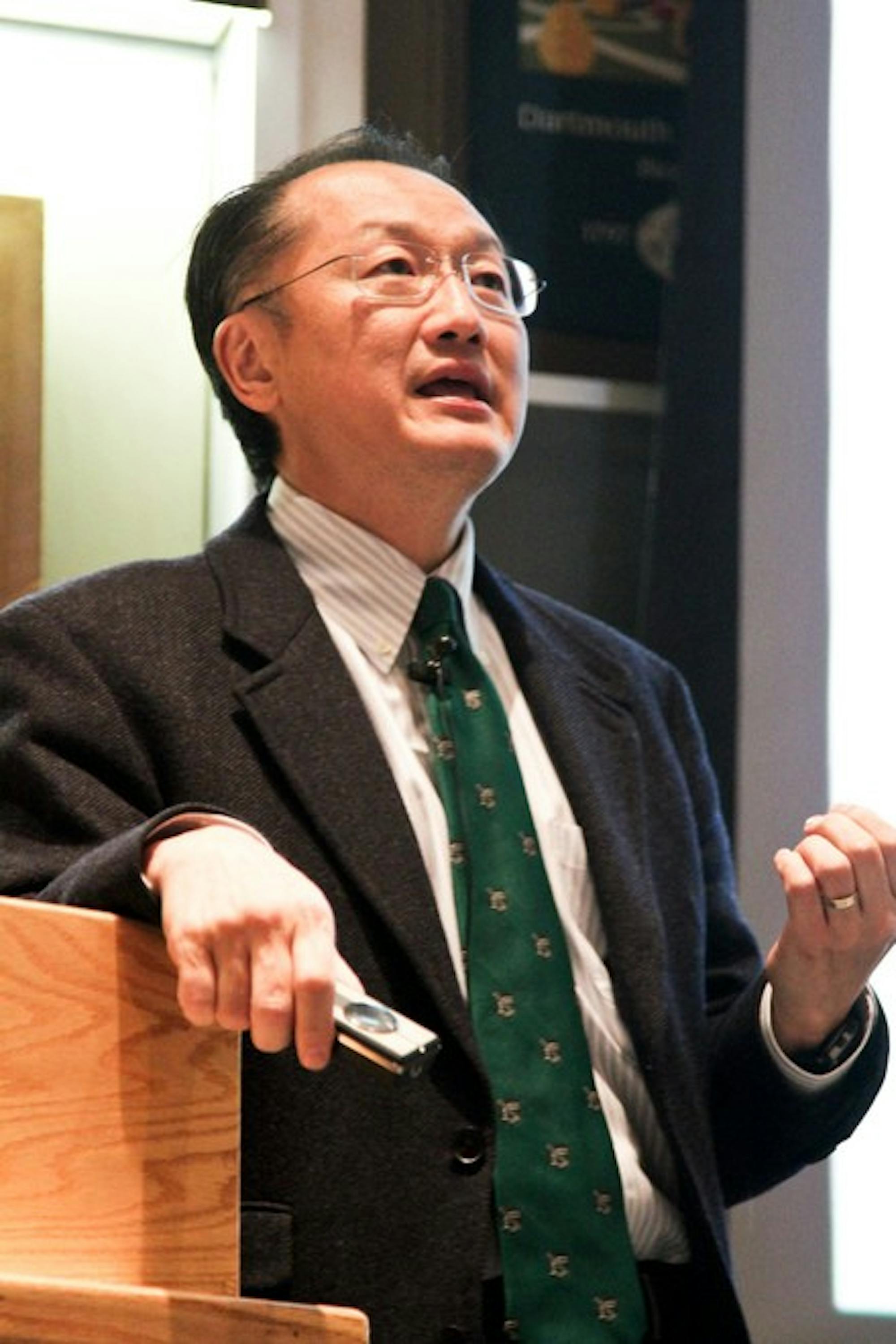
Students had previously expressed concern that Kim's appointment to the council, which occurred on Feb. 2, would take his focus away from the College.
Kim's increased interaction with the secretary and assistant secretary of the U.S. Department of Health and Human Services will remind them of "the important role that Dartmouth College plays in so many other areas," Kim said.
Kim said his presence in Washington D.C. will enhance Dartmouth's already prominent position in the fields of health services and biomedical research.
While Kim would not use his position to lobby for anything related to Dartmouth, the increased visibility for the College would be beneficial for its reputation and would show that Dartmouth is interested in working on a variety of federal issues, Kim said in an e-mail to The Dartmouth.
"Many, many college presidents, many, many university presidents have a strong presence in Washington, D.C., because it is what supports so much of the research that we do," Kim said in the interview.
The council's two to three meetings per year will likely not detract from his presidential duties at the College, Kim said.
"I think it's still important for me to be a citizen of the world, but people here can rest assured that this is a relatively minor time commitment compared to everything else that I'm doing," Kim said.
Kim originally refused the appointment, citing his busy schedule, when he was offered it in December, he said. Kim reconsidered after the department contacted him a second time.
"I got a call from the assistant secretary, the number two person at [the U.S. Department of Health and Human Services], whom I have worked very closely with," Kim said. "He basically said to me, Come on, Jim, you've done so much in this area. You need to serve your country,' so at that point it was very difficult for me to say no."
Kim also cited both the national and international importance of the HIV/AIDS issue as a factor in his decision.
Several previous College presidents have served on major federal councils, making Kim's decision "very much in the history and tradition of Dartmouth College," he said.
Harry Truman appointed former College President John Sloan Dickey to the 1947 Committee on Civil Rights, according to the Wheelock Succession series on the Dartmouth web site. Dickey also served on the United Nations Collective Measures Committee in 1951, and was a consultant to then-Secretary of State Dean Acheson on disarmament. Dickey held all of these offices during his Dartmouth presidency, according to the web site.
While serving as chairman of the President's Commission on the Accident at Three Mile Island, former College President John Kemeny coordinated the investigation into the nuclear power generator accident that occurred in Pennsylvania in 1979.
Members of the Board of Trustees reminded Kim of these examples and of the overall tradition when he sought their advice on accepting the appointment, Kim said.
The council's function is to advise the president on both national and international HIV/AIDS policy issues through the Secretary of Health and Human Services, according to the Feb. 2 U.S. Department of Health and Human Services press release announcing Kim's appointment.
Kim was one of 23 new members appointed to the Council in February. Kim traveled to Washington, D.C., on Feb. 2 for the first meeting of the new members with the rest of the council.


