
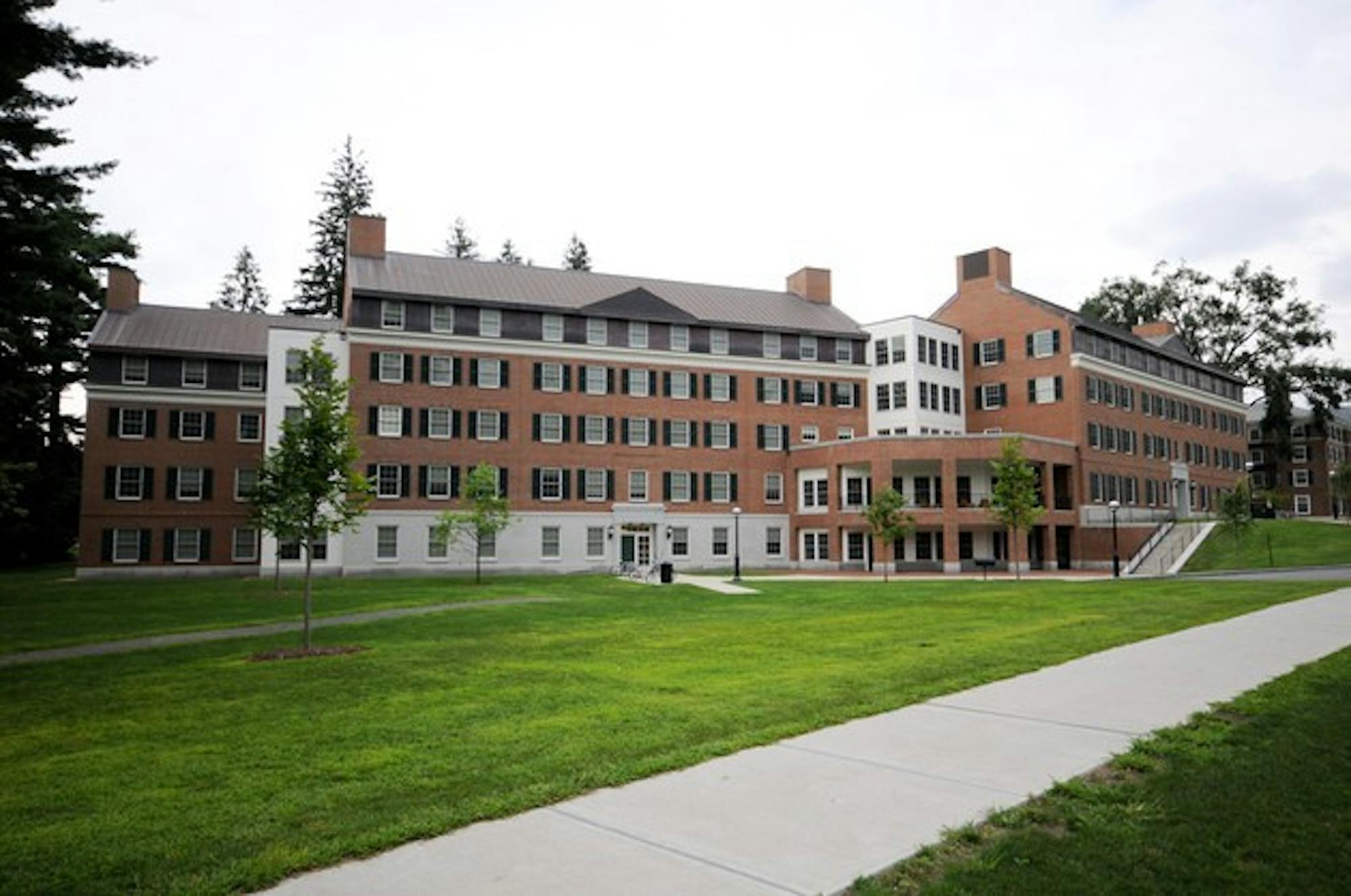
LEED, a for-profit accreditation organization, awards certifications based on a building's energy use and design. The McLaughlin Cluster and the McLane and Fahey residence halls have received gold LEED certifications, while Kemeny Hall, the Haldeman Center and the Floren Varsity House have silver certifications.
The Floren Varsity House, which was built using regionally manufactured products, purchases 42 percent of its electricity from the Mars Hill Wind facility in Maine and reuses heat from exhausted air in the building. The McLaughlin Cluster earned its gold certification because it met LEED criteria for the sustainability of its site, water efficiency, energy and atmosphere, materials and resources, and indoor environmental quality.
Despite the LEED stamp of approval, the buildings are not as energy-efficient as originally predicted. Although complete numerical data on energy performance is not yet available because some of the meters initially reported inaccurate data, Shadford said the performance had not met his expectations.
"I would say that, in general, the buildings are performing better than the older buildings that we have on campus," Shadford said. "But I would also say that in some cases they are not performing as well as we would have hoped or expected based on energy modeling or design performance parameters that the design teams would have created during the design process."
Faculty and staff are working to improve the efficiency of the buildings, Shadford said, citing an ongoing investigation into heat pump performance in Fahey-McLane.
Shadford said that he is also working to update the energy metering system on campus to provide more accurate feedback on energy usage. The new system will collect real-time information from the buildings' meter and control systems. The statistics will be available to the Dartmouth community online.
Although LEED standards will be taken into consideration for future College projects, including the Class of 1978 Life Sciences Center and the Visual Arts Center, Purcell said his department will focus on energy results, rather than on winning certifications.
"We try to build high-performance buildings," Purcell said. "We don't let LEED drive the decision process."
LEED standards do not encompass all elements of creating a sustainable building, environmental studies professor Anne Kapuscinski said in an interview with The Dartmouth, explaining that LEED guidelines do not take into account how a building affects biodiversity or the cumulative effect of a group of structures.
"To achieve a sustainability goal, you can't rely only on a technology you have to really be thinking about the interaction of the technology, the people and the environment," she said.
Purcell emphasized that LEED guidelines will still remain a part of the College's energy dialogue. "What LEED does give us is an opportunity to think about what we're doing and find ideas for new things to incorporate into this project," he said.
LEED standards also bring Dartmouth's sustainability efforts to the attention of the public.
"We're trying to figure out how to let people know all the good invisible things that Dartmouth is doing, and LEED certification is just one way of doing it," said computer science professor Lorie Loeb, who founded project Green Lite. The initiative enables students in the McLaughlin Cluster to measure their energy consumption.


