From a logical point of view, Abrams the creator of ABC's popular sci-fi series "Lost" seems an ideal choice for both appeasing "Trek's" cultish fanbase and increasing its mass appeal. The screenplay, penned by frequent Abrams collaborators Alex Kurtzman and Roberto Orci ("Lost," "Alias" and 2006's "Mission: Impossible III"), seems expressly structured to serve this purpose. Kurtzman and Orci drop plenty of references to previous films in the "Trek" franchise, while using time travel as a vehicle to set up an entirely different storyline in a parallel "Trek" universe. In essence, Abrams has a clean slate on which to build the kind of interpersonal-drama-in-extreme-circumstances that characterizes both "Lost" and "Cloverfield" (2008), which he also produced.
Long story short: a Romulan (a type of alien, for all you non-Trekkies) named Nero, played with sneering and occasionally spitting confidence by Eric Bana, has come back in time to exact revenge for the destruction of his home planet. In the process, he kills the captain of an enemy starship, who happens to be James Kirk's father. As a result, Kirk grows up fatherless and a rebel, disillusioned with the very notion of enlisting in the Starfleet. Meanwhile, the half-Vulcan, half-human Spock is wrestling with existential issues of his own. Eventually, Spock shuns his Vulcan homeworld to join the human-led Federation and ends up, along with Kirk and the other iconic characters of the original series, on the newly constructed USS Enterprise. Together, they work to defeat Nero.
Abrams establishes the alternate versions of Kirk and Spock with some rather inelegant childhood sequences. In one, a pre-teen Kirk races a classic convertible away from a robotic cop, displaying a swaggering bravado and a penchant for dramatic stunt work a la "Cliffhanger" (1993). The scene is ultimately so inconsequential (apart from a truly terrible bit of Nokia product placement) that it seems filmed solely for use as an attention-grabber in the (quite effective) trailer.
Spock's childhood, the audience learns, is one of ridicule at the hands of his peers. The goal with these childhood scenes seems to be to get initial characterization out of the way as quickly and viscerally as possible.
In fact, visceral response seems to be Abrams' ultimate goal with "Star Trek." The opening sequence throws birth, death, tattooed aliens and time travel at the audience all in less than 10 minutes.
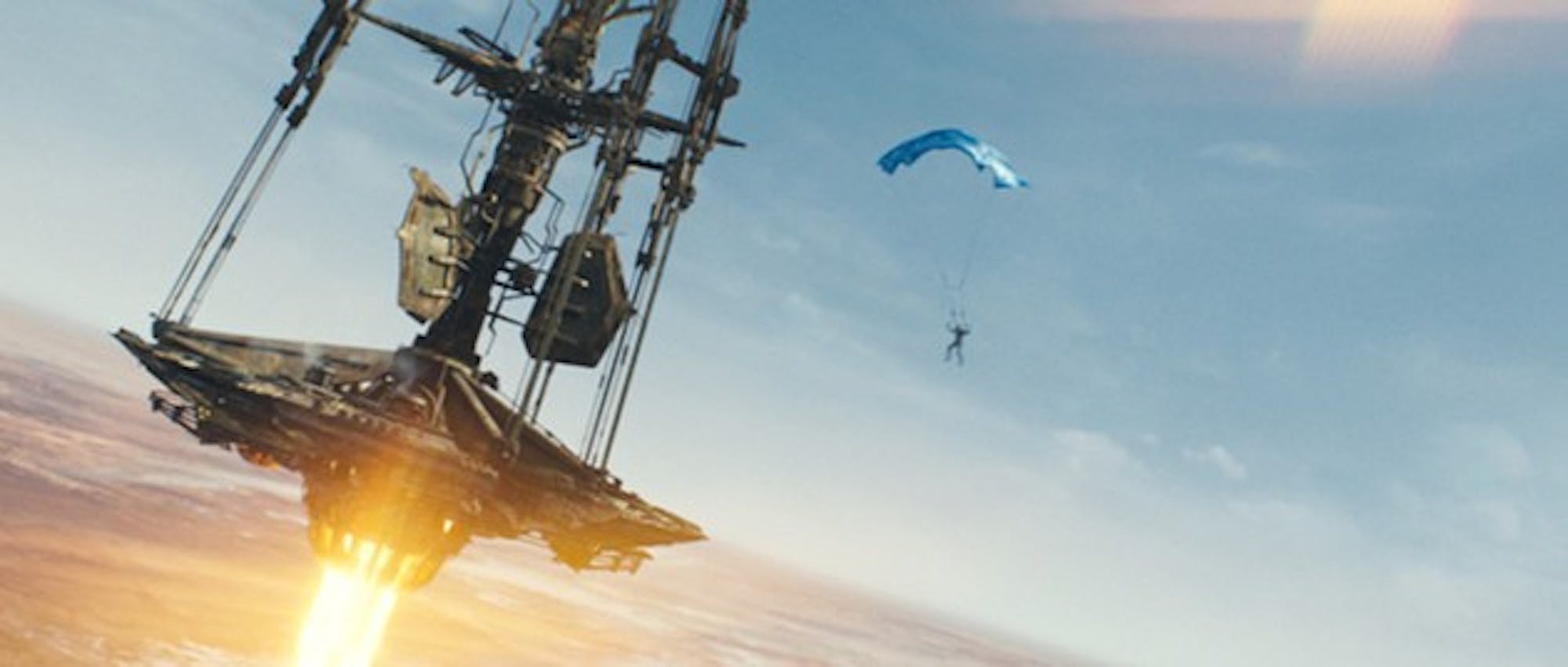
The content is emotionally evocative and visually arresting, and has been streamlined and buffed to a mirror shine. Effects powerhouse Industrial Light and Magic (the "Star Wars" and "Harry Potter" series and more recently 2008's "Iron Man") provides spectacular visuals that give a gratifying kick to the battle scenes.
Aesthetically speaking, Abrams's "Trek" is a triumph. Space battles no longer only consist of campily staggering crewmembers and the occasional shower of sparks, but advance at a breakneck pace. The first time the Enterprise slams into warp drive is really quite exciting, and the unnecessarily technical jargon characteristic of previous installments is thankfully kept to a minimum.
Despite the aesthetic upgrade, self-reference abounds and provides some of the more endearing and fun moments in "Star Trek," among them an appearance by "Trek" vet Leonard Nemoy. The crew members of this alternate Enterprise replicate their small-screen predecessors with aplomb, but none with such uncanny verisimilitude as Karl Urban in DeForest Kelley's old role as Dr. Leonard "Bones" McCoy. Urban's scowls of incredulity and impatience so well approximate Kelley's wide eyes and clenched jaw that the whole thing verges on parody.
The performances on the whole are solid, with Simon Pegg's jocular Scotty and Zachary Quinto's subtle Spock standing out in particular. Some may pigeonhole Chekov's (portrayed by Anton Yelchin) overzealous exclamations or Urban's mugging as Bones as bad, hammy acting, but they provide a welcome lightness to a plot that takes itself altogether too seriously from time to time.
Abrams has done a lot to make the "Star Trek" universe palatable to a broad audience, but in reinventing the canon's history with a time travel-induced twist, he opens the door for the once boundary-pushing series to become something painfully ordinary: an action franchise. Without its idiosyncratic Trek-ness, the franchise is no longer unique and should be left well enough alone.
That said, this is the first truly enthralling installment in the series since "Star Trek: First Contact" (1996).
So go watch it, and hope that Abrams has the foresight to do something interesting with the "Trek" story from here.