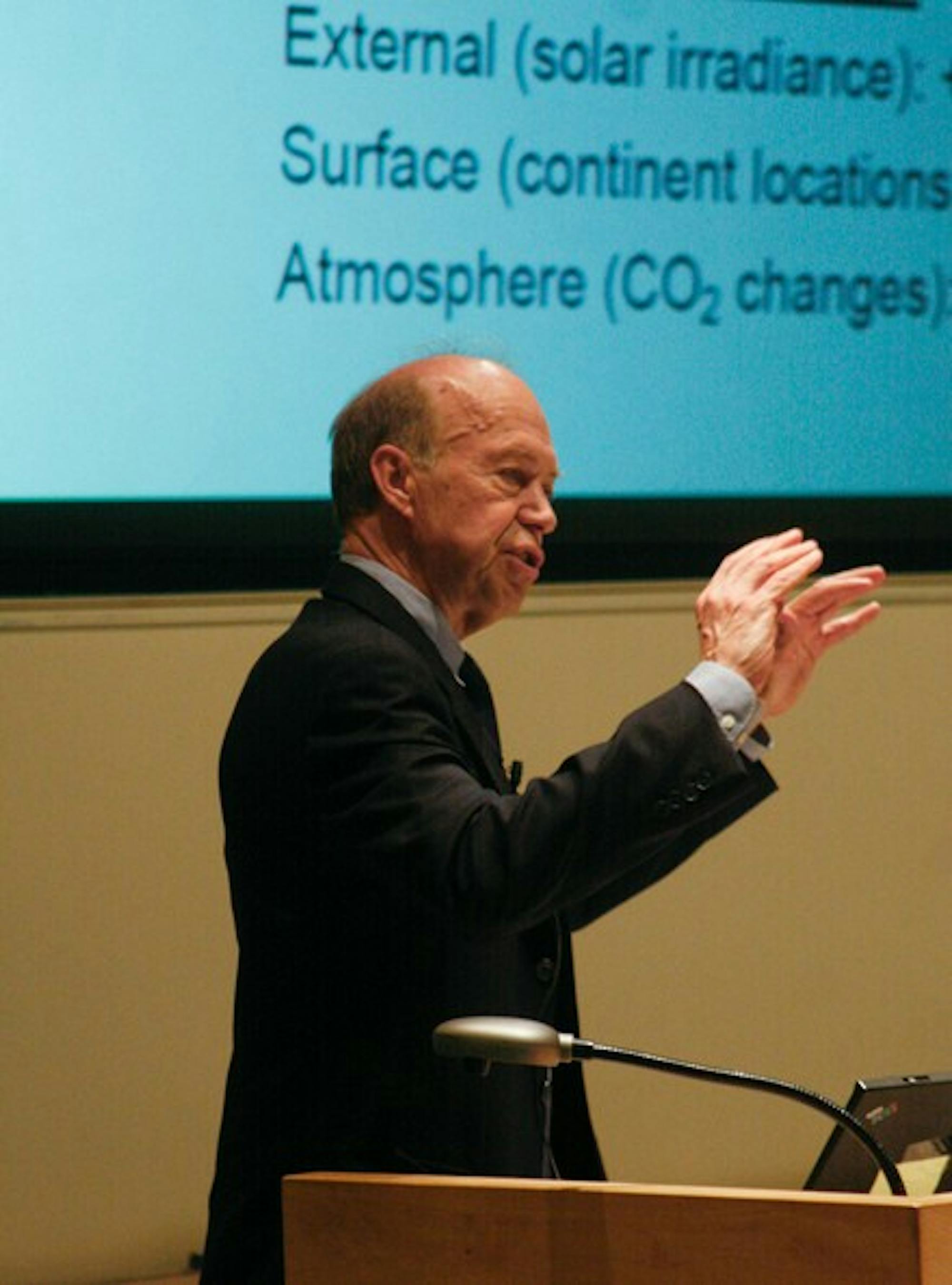
Hansen presented scientific data about climate change, while Grumet offered pragmatic policy recommendations based in part on that data.
"We have reached a crisis point," Hansen said, attributing the perceived "state of emergency" to the government's unwillingness to seriously consider scientific evidence.
After presenting figures and graphs that demonstrated rising temperatures, glacial melting and an increase in forest fires, Hansen then emphasized the need to reduce coal emissions to achieve a long-term climate solution.
"It's technically feasible, but it's not going to happen unless we put a price on carbon emissions and make fossil fuels more expensive than their alternatives," he said.
Using fossils fuels is convenient but hazardous, Hansen said in an interview with The Dartmouth.
"We have to learn how to use coal in a way that doesn't emit CO2, or stop using it -- and we have to do it soon," he said.
The climate change problem is intergenerational, Hansen said, displaying a picture of his 11-month-old grandson.
"He hasn't done anything to contribute to global warming, but he's going to have to suffer from the effects," he said.
The cap and trade model, which can use market mechanisms to limit carbon emissions, has not been successful and is unlikely to work in the future, Hansen said, suggesting a carbon tax as an alternative.
"All [the cap and trade model] has done is make Wall Street billionaires at the price of the public," he said.
While Hansen said he hopes the new administration will fight climate change, he said it is too early to determine the administration's level of success.
"The right words are being said by the new administration," he said in the interview. "The question is whether they will be willing to take on the special interests."
The government should consider the public's interests, rather than those of the lobbyists, Hansen said during his presentation.
"The government has been acting like it's a God-given fact that we have to burn all these fossil fuels, but that's not the case, and we have to get them to realize this," he said.
Grumet said that efforts to reduce the influence of lobbyists in Washington should be made immediately.
"Let's argue with the ugly beast we have, and try to get something done," he said.
While Grumet praised the current political openness to climate legislation, he noted that the economic crisis poses an obstacle to movement on the issue, as the public distrusts plans that require the government to spend large sums of money. He added, however, that he remains optimistic about the potential for progress.
"I still think we can get this thing done," he said.
Grumet stressed the importance of giving corporations monetary incentives to switch from fossil fuels to alternative energy sources.
"You have to give them another bag of money so that they can make it past that initial period," he said.
The presentation was the inaugural event in the Thayer School's annual Great Issues in Energy Symposium, which brings speakers dedicated to a single issue in the energy field to campus each year.