
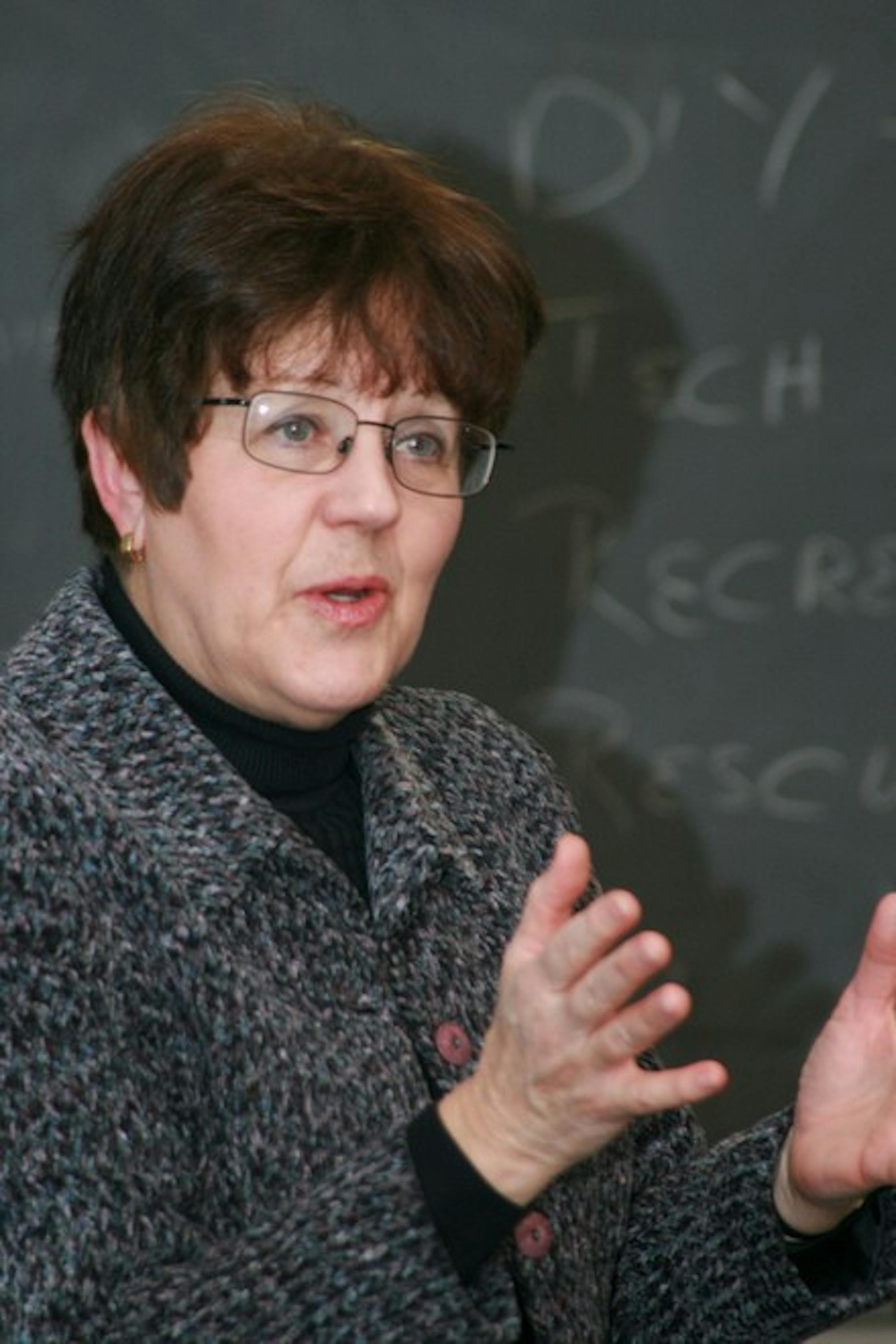
Although the Democratic Party has a majority in both houses of Congress, Fowler said, Obama may still face challenges in furthering his agenda.
The Democrats have only a narrow majority, and there is currently a deep divide between the Democrats and the Republicans, Fowler said.
Members of both parties are more likely to vote along party lines and also to filibuster, she said, a tactic that has gained widespread acceptance only in recent years. Fowler said Obama is attempting to reach across party lines, but added that she was uncertain that anyone could mobilize federal legislators to enact significant legislation in a deadlocked system.
"I'm not sure whether anybody, no matter how skillful, can operate under a system in which a two-thirds majority is needed," she said.
Some political commentators have suggested that newly elected Democratic congressmen may vote for Obama's policies because they owe their victory, in part, to his popularity on Election Day.
Fowler disagreed, arguing that these congressmen do not feel an obligation to Obama. Many were confident of their prospects for victory before Obama emerged as a frontrunner in the 2008 presidential race, Fowler said, and will not necessarily vote for his proposals.
Backlash from the Iraq war may also hamper Obama's agenda, Fowler said, explaining that legislators tend to act more independently from executives in the aftermath of wars.
Congress is likely to regard controversial measures with more suspicion, she said, suggesting that the political parties may be "embarrassed" by their lack of opposition to former President George Bush's wartime policies.
"They are not going to roll over and play dead just because [Obama's] approval ratings are 80 percent," she said.
Members of the political community have suggested that Obama will use technology, including text messaging and the Internet, to solicit "netroot" support for his proposals. Such tactics may be only marginally successful, Fowler said, because young people are more likely to be concerned with their daily affairs than with taking the time to "heckle congressmen."
To illustrate her point, Fowler asked audience members to raise their hands if they had recently responded to e-mails asking them to write to congressmen.
Only one student in the audience of approximately 30 raised her hand.
"I rest my case," Fowler said, adding that efforts by elite interests and interest groups will likely continue to have the most influence over the law-making process.
Fowler commended Obama for appointing cabinet members from various political backgrounds, rather than selecting his "electoral cronies."
This tactic, which she described as the "team of rivals model," has been used by former presidents attempting to pass legislation that appeals to both parties, she said.
The diverse views held by Obama's appointees reflect Obama's desire to place the most competent candidates in office regardless of political considerations, Fowler said, but noted that competing interests among Cabinet members could cause further polarization on Capitol Hill.
Fowler, the Frank J. Reagan '09 chair in policy studies, previously wrote an opinion piece addressing Obama's policy agenda that appeared in the Huffington Post on Jan. 20.
"Although lawmakers are predisposed to work with the new president on the nation's economic miseries, the experience of Presidents Carter and Clinton indicates that a party majority in Congress does not guarantee success for key legislative priorities," Fowler wrote.


