
More people are likely to apply to graduate business schools as individuals seek alternatives to entering the declining job market, according to Bob Ludwig, director of external communications for the Graduate Management Admission Council, the organization that oversees the Graduate Management Admission Test. Individuals often return to school during economic downturns, Ludwig said.
"They might want to sit out the slump in a school setting," he said. "Others feel they can retool themselves by gaining a degree, whether they want to switch careers or get a leg up on their competition in terms of getting a job once the economy recovers. Either way, they'll be better equipped with improved skills to take that next step."
Rosemaria Martinelli, associate dean of student recruitment and admissions at the Booth School of Business, echoed this sentiment.
"Whenever there is an economic slowdown, applications to MBA programs tend to rise since many people believe that taking time off from work to improve their skill sets will give them an advantage when economic conditions improve," she said.
The number of people who took the GMAT, a common indicator of interest in business schools, was at a record high in 2008. More than 264,000 tests were administered last year, a sharp increase from the 237,000 given in 2007, Ludwig said.
In addition, more students chose to take the GMAT this January than in January 2008.
"It's a slight increase, but since 2008 was already such a considerable jump from the year before, the fact that it has increased at all is pretty significant," Ludwig said.
He added that the surge in the number of people taking the GMAT during the current recession is not surprising, since the previous high occurred during the collapse of many Internet startups and the subsequent recession in 2002.
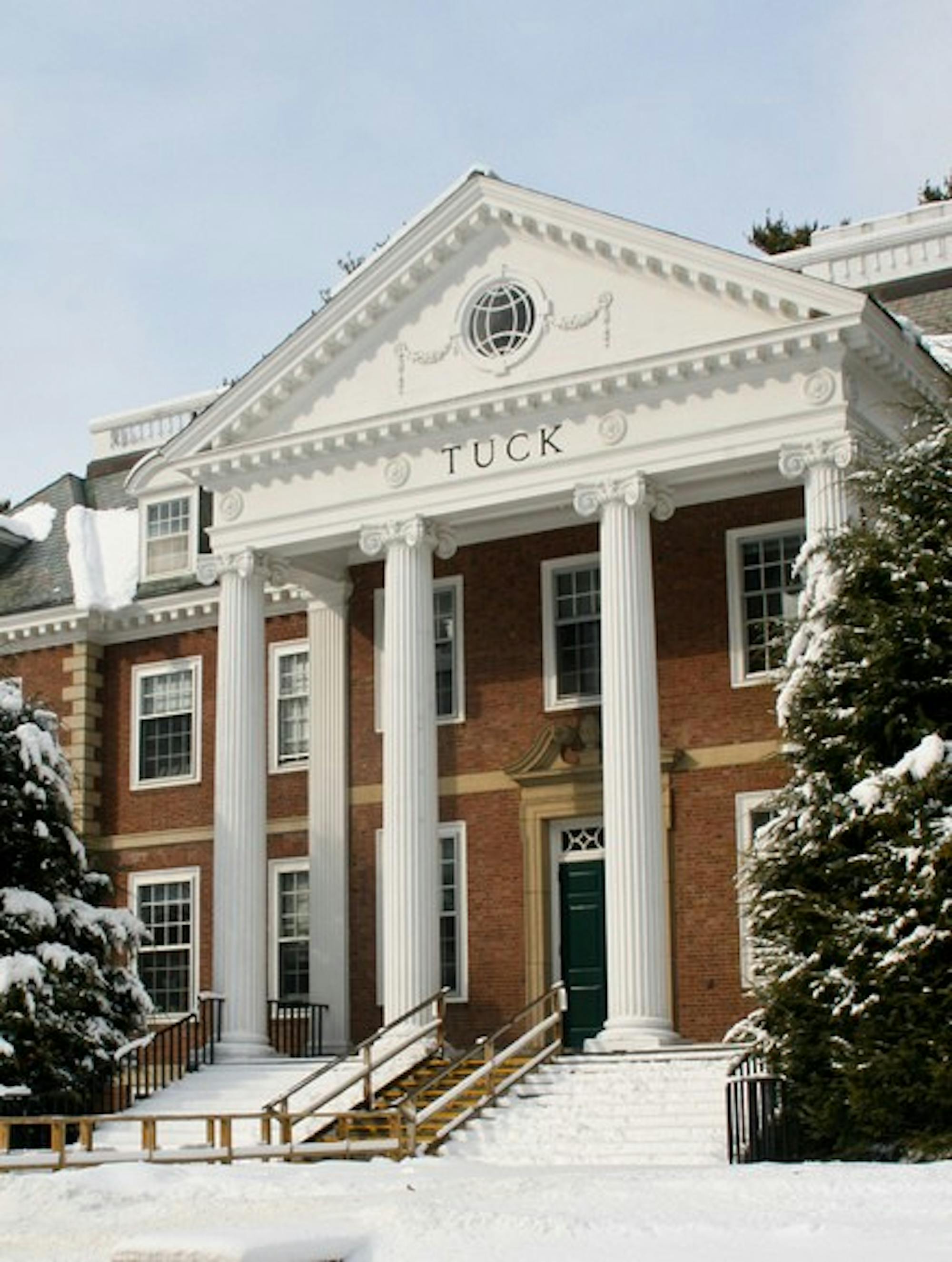
Clarke said that it is too early for her to predict whether Tuck's overall application volume will increase this year, although the numbers thus far have been consistent with previous years. Tuck's application deadline is April 1.
"Prospective students I've talked to see this as an excellent time to pursue business school, and I agree with that assessment," she said.
Tuck and other business programs give students exposure to a wide variety of fields, which will likely benefit students in any type of economy, she added.
Isser Gallogly, executive director of MBA admissions at New York University's Stern School of Business, stressed that the state of the job market always affects individuals' decisions regarding whether to apply to business school.
"When people feel the economy is doing really well, they often feel confident leaving their current position knowing that job prospects will be strong when they come out," he said. "Then in down markets, when people either feel their ability to move up in their current organization is limited or when they are having trouble finding a job in the first place, they often turn to business school as an option."
The Stern School received 20 percent more applications for admissions in fall 2008 than it did from students for the previous year, Gallogly said. Although NYU has yet to reach its third and final application deadline for this year's admission process, Gallogly said the school has had a "particularly strong year."
Gallogly added that now is a great time to be studying business because of the volatility of the economy.
"It's a particularly exciting time to be in the classroom because the professors are very much connected with what's going on outside, and they bring real examples into their lessons," he said. "You learn a lot in a down market, sometimes even more than you would during better economic times. You learn what can go wrong, which are important lessons to carry forward into good times to make sure we avoid those mistakes again."
Dartmouth's Career Services, which usually only works with about five students each year who are considering pursuing business school directly following graduation, has not seen an increase in interest this year.
"Students generally recognize that business schools, especially the more selective ones that Dartmouth students tend to look at, place a great value on work experience," Karen Whittet, assistant director of Career Services, said.
Whittet said she has not changed the advice she gives to seniors considering business school because of the current economy.
"I've always asked students why they're interested in going to graduate school and how it fits into their career goals," she said. "It is a significant amount of time and money, and we want to make sure they're doing it for the right reasons."


