The Australian actor died of an unintentional prescription drug overdose in January 2008 at the age of 28, just after wrapping his turn as the psychopathic murderer, the Joker, in "The Dark Knight." Speculation that the role contributed to his untimely death is simply speculation, but Ledger's deranged performance leaves such an impact on the viewer it's hard not to wonder what it might have done to him.
Even it didn't wreak havoc on the lives of its actors, "The Dark Knight" has at least destroyed box-office records. The film raked in $155.3 million in its opening weekend alone, besting the previous record-holder, last summer's "Spider-man 3" (2007) and creating a sell-out bright spot in Hollywood's economic slump.
Besides the box office, and the multitude of other items that get blown up in the film (bombs fill buildings, boats, mouths and are even stitched into stomachs), "The Dark Knight" detonates the superhero genre itself. In this darkest of nights, the right are wrong, the heroes disheartened, and everything else goes "boom."
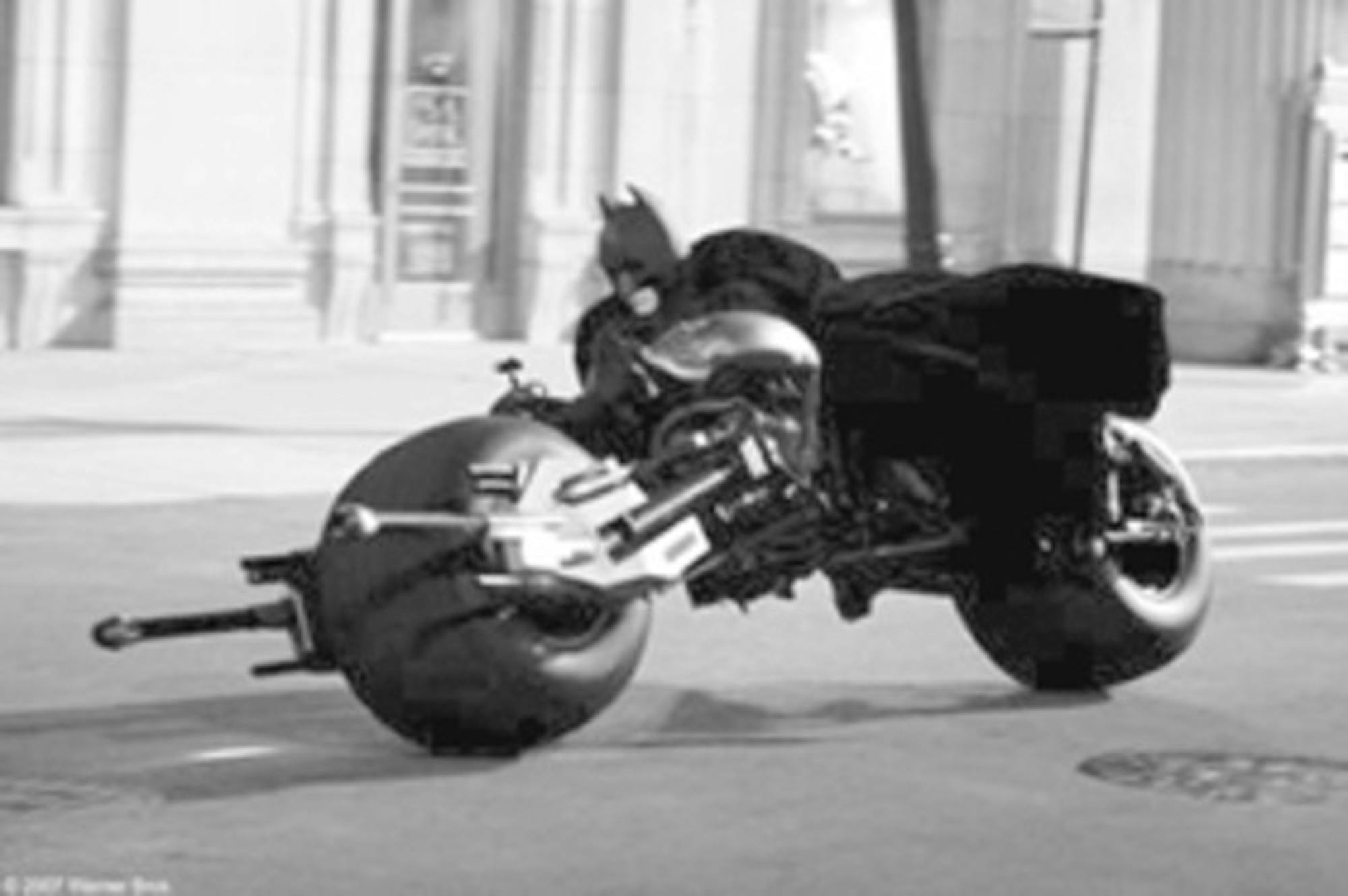
"The Dark Knight" takes up where director Christopher Nolan left off -- with "Batman Begins" (2005), the film that revived and modernized the franchise. Nolan jumps straight into new depths of destruction, clearly feeling that character development, which was the primary concern of "Batman Begins," need not continue.
In this, Nolan comes straight to the crux of the Batman legend, with complete success: Batman has never been about humanizing, but dehumanizing. There are no superheroes or super villains: merely men who've been separated from society by their masks or brutal pasts.
Ledger creates a sensationally creepy Joker, but his performance is never over the top. His twitching, slithering villain remains in the realm of the believable -- more like a sadistic cocaine addict than an evil genius. If Ledger does earn the first posthumous Oscar for an actor since 1977, it will be deserved, especially considering his unrecognized but even more brilliant turn in "Brokeback Mountain" (2005).
Playing the billionaire-dilettante Bruce Wayne by day and caped crusader by night, Christian Bale is all appearance: Bruce's sculptured face and Armani suits are no less a masquerade than Batman's wings and altered voice. This isn't a criticism; in the descent of "The Dark Knight," Bale seems to understand that Bruce/Batman is no longer certain which side of himself is a facade.
Similarly, thanks to the Joker, the citizens of Gotham City are no longer certain whose side Batman is on; the leering, tongue-flicking Joker's twisted anarchy has not only turned right and wrong upside down, but defeated the difference. For most of the film, Batman is caught somewhere between pawn and sidekick to the Joker's toying terrorism.
"You complete me," the Joker even sneers to Batman in one particularly poetic face-off. But their epic rivalry triangulates across the other characters as well: Harvey Dent, the ambitious new District Attorney (Aaron Eckhart), Commissioner Gordon (Gary Oldman) and the love interest, Rachel (Maggie Gyllenhall, replacing bat-crazy Katie Holmes) all find themselves caught in the film's revolving doors of morality.
"The Dark Knight" is by far the most sinister film to arise from the world of comic books and superheroes in the last decade -- and it's the best. Batman is perhaps the only franchise to bridge the post-9/11 gulf. While even the most popular characters now fall flat (think of "Superman Returns" from 2006, or "Indiana Jones and the Kingdom of the Crystal Skull," still in theaters), Batman seems custom-built for the anti-heroics of the War on Terror era.
What makes "The Dark Knight" work is its attention to the external. Its despicable content is beautifully filmed. By night it's neon lights, by day it's minimalist expanses of glass and concrete -- Gotham is a city of surfaces, housing a society no less superficial. Wherever the anarchic Joker roams, he disfigures his victims, attempting, and even succeeding, in the case of the doomed Harvey Dent, to reveal the city from his hideous, immoral point of view.
"What are you trying to prove?" Batman implores the Joker. "That everyone is as ugly as you?"
In this film, appearances are all deceiving: the plain Ms. Gyllenhall plays the bombshell, and the beautiful Heath Ledger is concealed beneath the mutilated face of a clown. The Joker was once an abused child, and Batman was once an orphan -- the black cape and the white-painted face could just as easily have been exchanged, somewhere along the way.
In the film's dizzying final scene, the cackling Joker hangs inverted in the air, embodying the ethical question at the center of film: Can you uphold a moral code against an enemy who doesn't play by any rules? Nolan's new Gotham seems suddenly like our own. We aren't sure who the enemy is, or how to overturn him, when the world is upside down.