
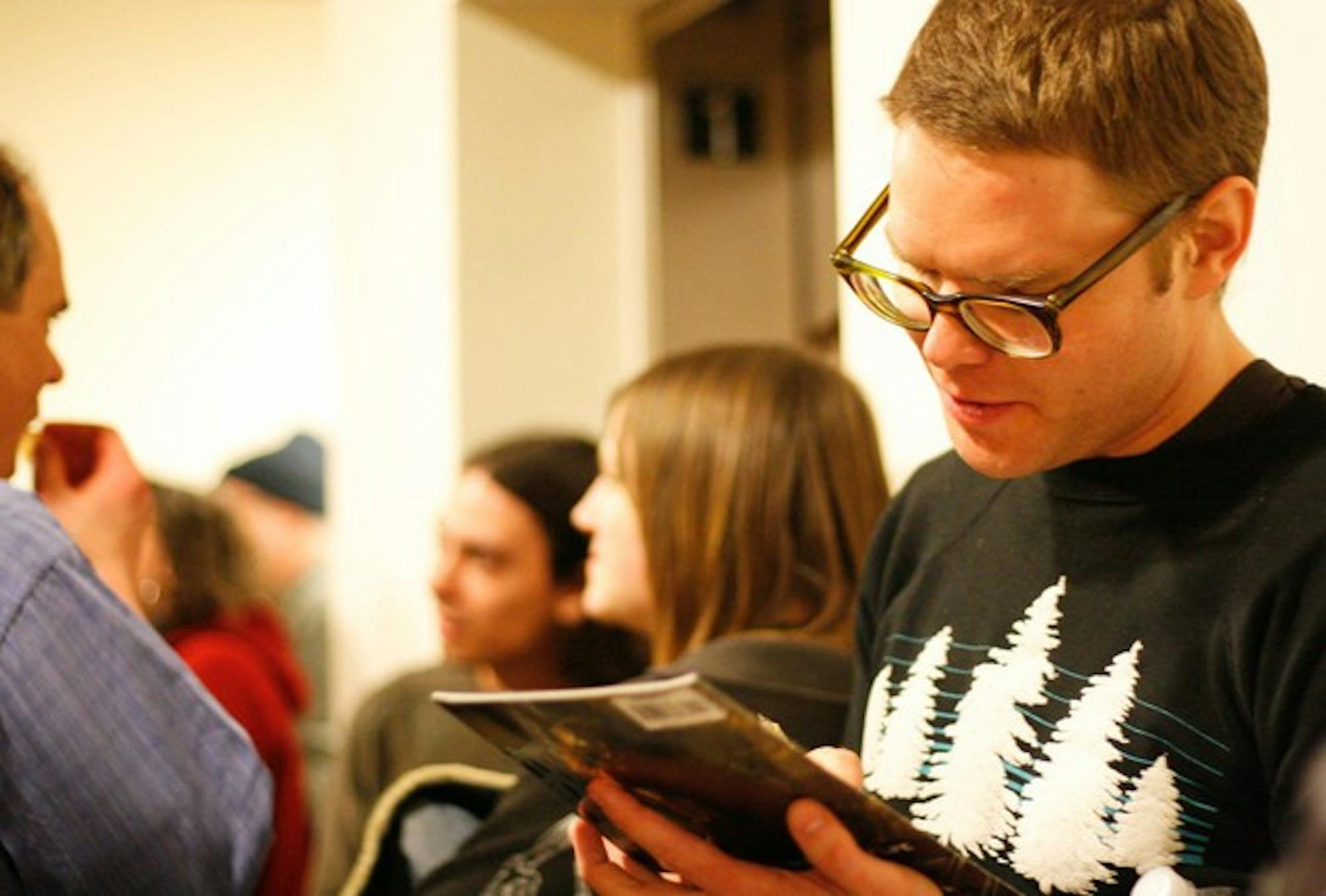
As a result, when Marvel Comics called on him to write a comic book, Lethem said that, though the publisher expected him to suggest a reworking of Spiderman or the Fantastic Four, he turned to his old favorite: "Omega The Unknown," though its publication had been discontinued due to conflicts between the author, Steve Gerber, and Marvel. Lethem and artists Farel Dalrymple and Paul Hornschemeir described the process of recreating that classic comic book in a panel discussion with Dartmouth students and visitors from the Center for Cartoon Studies in White River Junction, Vt., Thursday evening.
After selecting "Omega The Unknown," Lethem began his search for an artist to illustrate the comic, frustrated with most comic book art he saw on the market.
"I had to try to imagine someone who didn't exist -- and it was Farel [Dalrymple]," he said.
Dalrymple said he sees the background portion of his illustrations as characters within the story that have their own plots. He then asked his friend, Hornschemeir, to join the team to do the coloring of the book.
"I probably wouldn't have done this in any other circumstance," Hornschemier said of the opportunity to work with Lethem.
Hornschemier said he liked that the book was different from most comics and that he was expected to draw people that looked real.
"I knew it was a book where I make people wear cotton and not latex, or look cut from diamonds," he said.
Each person brought different elements to the "Omega The Unkown" series that had not been touched on in the original, Lethem said, adding that the artistry was "rooted in the formalities of the Marvel style."
As of now, Lethem said he does not expect to continue writing comics, because he is currently pursuing a career in fiction, though some of his fiction reflects his comic book interests. Lethem's novel "The Fortress of Solitude," -- a New York Times best-seller -- is the story of young boys who encounter a superhero. The idea of a superhero in a literary context was largely unheard of until his novel, Lethem said.
"I was the next-best known for writing a novel about a superhero," he said, explaining that Pulitzer Prize-winning author Michael Chabon is probably the best known.
He said once the major comic book companies recognized the public's excitement for these books and alternative comic books, they wanted to use the authors to recover the prestige that once characterized the comic book genre.
The event, held in Haldeman Hall, was sponsored by the Leslie Center for the Humanities, the Center for Cartoon Studies and a grant from the Will and Ann Eisner Family Foundation. Many students from the Center for Cartoon Studies attended.
One student from the school, Annie Murphy, said she was troubled by the "boys club" atmosphere of the comic world, referring to the industry's reputation for a lack of female employment.
Lauren Lesser '10, who described herself as an avid comic book reader, had a more optimistic take on the issue.
"Comics is a 'boys club,' but now there's more alternative comics and its becoming more open," she said. "There's more room for girls now."
Lesser said she believes Dartmouth's collaboration with the Center for Cartoon studies is long overdue since the schools are in close proximity to one another.
"There's so much exciting stuff going on in the comics world that should be better publicized," Lesser added.


