
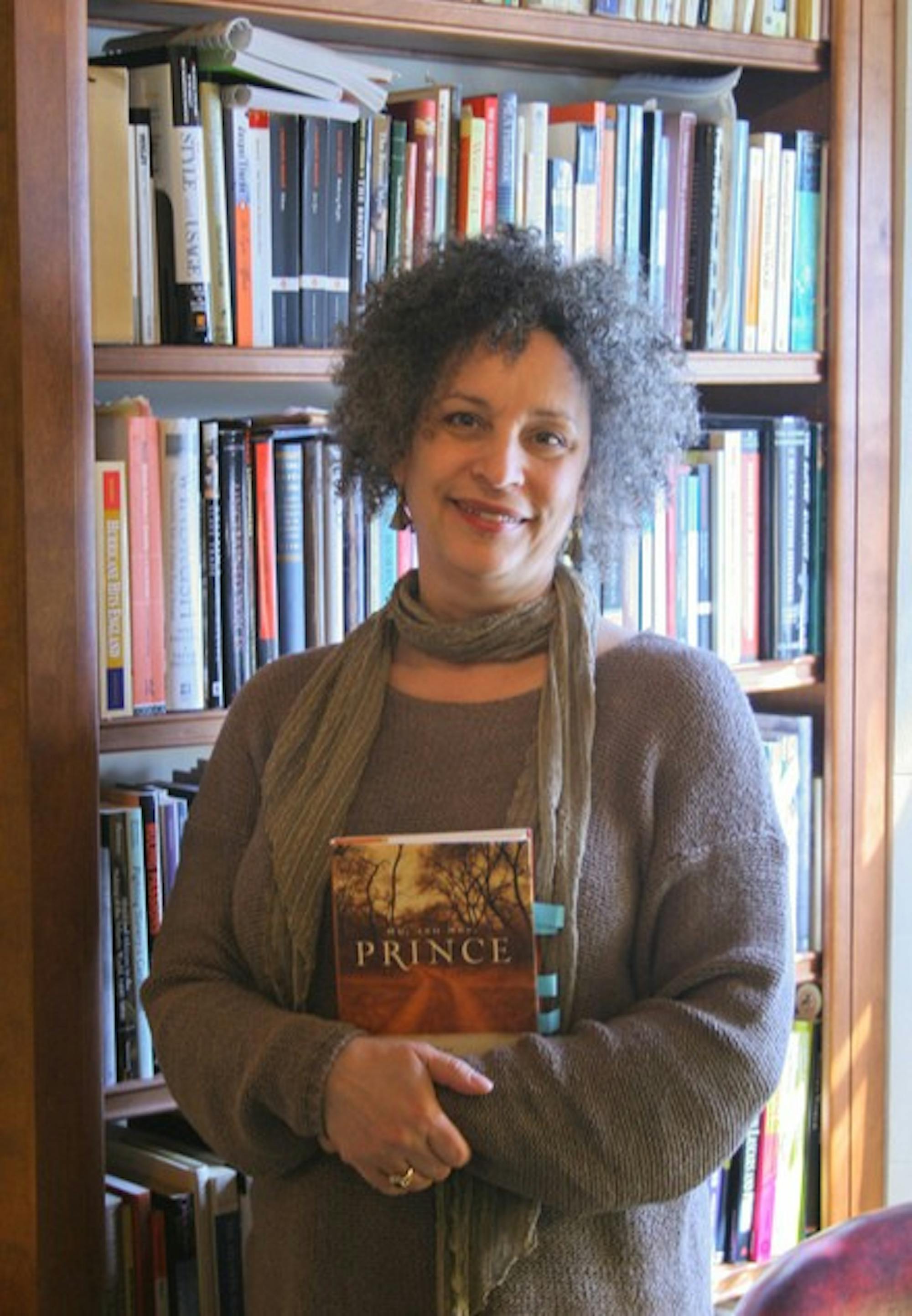
The intersection of her own life with those of her subjects provided the unique angle through which Gerzina frames the narrative of the couple's biography, "Mr. and Mrs. Prince: How an Extraordinary Eighteenth-Century Family Moved Out of Slavery and Into Legend," published earlier this month.
Gerzina followed the history of Abijah Prince -- known as "Bijah" -- to Lydia Doolittle, whose husband bought the twelve-year-old slave in 1717. Doolittle's mother was a member of the Tuttle family, a name whose familiarity struck Gerzina.
"Tuttles in New England are like rocks in Vermont -- so ubiquitous that they seem to grow from the soil," she writes in the biography. "Somehow these Tuttles caught my attention, however, and their names seemed familiar."
By consulting a family tree she had drawn years before, Gerzina's mother validated the biographer's unlikely suspicions.
"[Lydia Doolittle] is descended from the Tuttle family on her mother's side," Gerzina said. "I am also. Her mother and my distant uncle were brother and sister."
Gerzina is intrigued by the likelihood that her ancestors interacted with her subjects, she said.
"People in my own family background knew this couple," Gerzina said. "They must have known Bijah and seen him."
Gerzina parallels her quest for information about the Princes with a historic recount of the Princes' lives throughout the beginning of the biography. The stories meet at the end of the first chapter, when Gerzina reveals her family connection.
Shortly after beginning her research, Gerzina found that the details of the Princes' story -- such as the history of their sales and purchases and the birthdates of their six children -- were buried deep within the histories of many New England towns.
"It's not like you can find these records in the library or online," she said. Gerzina searched through original account books in Deerfield, Vt., and records in the town clerks' offices of various New England towns.
"We found some records in the attic of the courthouse in Newfang, Vt., just in boxes," she said. "They weren't listed. When my husband went back to visit them again, the building had been condemned."
Though Gerzina referred to her husband, Anthony, as "a white guy with only an average knowledge of African American history" in the book, she credits him with many discoveries about the Princes.
"Soon it was he who walked me through the archival materials, who read them in a fresh way that only someone who was seeing something new could have done," she writes. "He made important deductions and connections, and between us the true story of Bijah and Lucy and their children opened up."
The book has gained considerable press coverage since its release and has been featured in USA Today, the Christian Science Monitor andThe New York Times, among other publications.
"I gave two talks in the last two weeks, and I'm giving three more in the next two," she said. "Sometimes I think I need to remind people I have another job."


