
Each campaign will invite supporters to rally on the Green on Wednesday evening. Both student and local supporters are expected to turn out by the hundreds for the event.
The campaign of Sen. Bill Richardson, D-N.M., for example, will be joined by 50 students from Tufts University, where Richardson is a graduate of both the undergraduate university and the Fletcher School of Law and Diplomacy.
Many supporters will then be invited to candidate-specific watch parties at sites around Hanover.
Despite the large build up for an event like Wednesday's, for local campaign staff the debate constitutes only a step in the larger New Hampshire campaign process.
The campaign of Sen. Hillary Clinton, D-N.Y., boasts 12 field offices in New Hampshire -- the most of any other Democratic candidate in the field.
"[Clinton] has shown she is committed to running a truly New Hampshire campaign," Kathleen Strand, spokeswoman for Clinton's New Hampshire campaign, said. "Since day one of her campaign Sen. Clinton has shown a true commitment to the New Hampshire primary process. She believes that the role that it plays in the nominating process is very important."
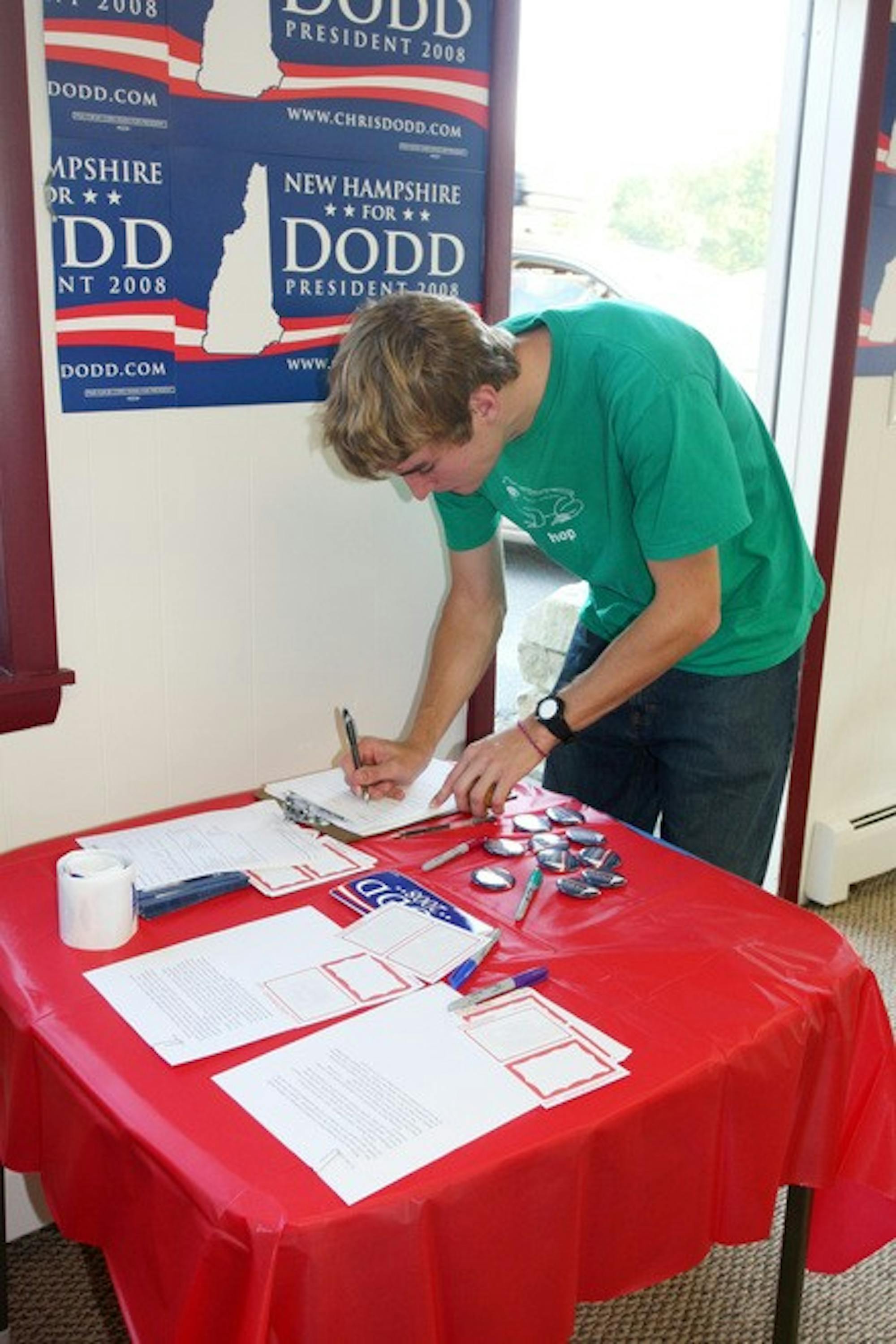
The campaign of Sen. Chris Dodd, D-Conn., holds the newest office, with the opening of its sixth New Hampshire office in West Lebanon on Sept. 21.
Campaigns both large and small have also taken a grassroots approach to New Hampshire.
In the lead-up to the debate, the New Hampshire campaign of former Sen. John Edwards, D-N.C., organized 200 "house meetings for change." The campaign announced early this week that the host of the house meeting with the largest turnout will attend the debate alongside Elizabeth Edwards.
The Keene office of the campaign of Sen. Dennis Kucinich, D-Ohio, likewise, was created and funded entirely as a volunteer effort.
"A lot of what we want to do in this campaign is to give people the tools to organize on their own," said Reid Cherlin, press secretary for the N.H. campaign of Sen. Barack Obama, D-Ill., pointing to groups like "Upper Valley for Obama" as examples of this approach.
Evan Carlson, press secretary for the New Hampshire campaign of Sen. Joe Biden, D-Del., acknowledged that the senator's campaign in New Hampshire may not be equal to those of other "celebrity" candidates.
Nonetheless, Carlson says, New Hampshire remains an important battleground.
"New Hampshire and Iowa are the big two for us. These are the two states where our campaign can really take hold," Carlson said. "We can go voter to voter and explain his message and convince people, even if it's one by one, that he is the right person at the right time."
For each campaign, Wednesday night's debate represents a chance to connect particularly with New Hampshire voters " a group that takes its role in picking a candidate seriously.
"Voters in New Hampshire really take the responsibility to get to know the candidates and ask them questions," said Michael Brasher '10, who founded Dartmouth for Hillary and worked for the Clinton campaign this summer. "This is an opportunity for them to get a clear picture of who really is their candidate and who is knowledgeable about the issues that concern New Hampshire."
On the national level, however, the publicity payoffs from the debate may not be equal. Susan Bruce, state coordinator for the N.H. Kucinich campaign, lamented that the majority of the national press coverage from the event would likely focus on the top two to three candidates.
"It's really unfortunate for voters," Bruce said. "I'm afraid that will probably be the case for this debate."
Nathan Empsall '09, founder of Dartmouth for Biden and a recently hired Biden staffer, said that having the debate at the College would at least allow those in attendance the opportunity to hear the candidates' messages more equally.
"If the media would cover all of the candidates equally instead of just two, [Biden's] message would be a really winning message," Empsall said. "Maybe having [the debate] here we'll get to see it."
The Dartmouth was unable to reach the offices of Sen. Mike Gravel, D-Alaska.


