
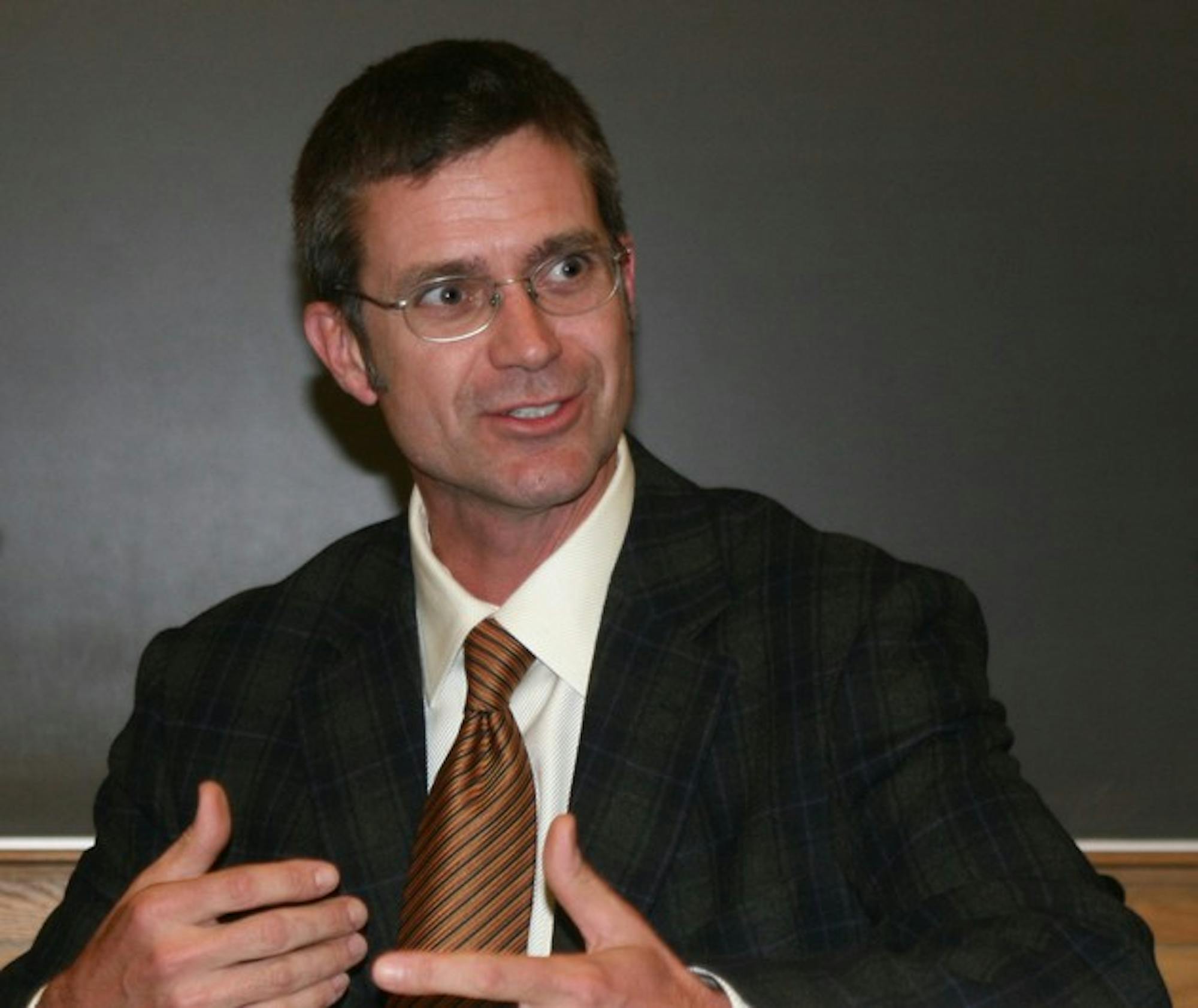
Government professor Allan Stam, who served in the Special Forces from 1983 to 1986, moderated and spoke on the panel.
Stam said that he was a "loser" before he joined the Green Berets. In high school he had been a member of the math team and chess club, and had been cut from every single sports team he had ever been a part of. He flunked out of Cornell after two years of hard drinking, and his family disowned him.
"One day I was watching televison and saw one the Army's 'Be All You Can Be' ads," Stam said. "I saw the ad of people jumping out of a helicopter into the ocean, and I thought, 'Wow, that looks cool. I could do that.' My friend asked me if I was insane."
Stam went on to join the Green Berets, saying that it was one of the best decisions he made in his life. During training he felt like quitting every day, but said he was able to survive nonetheless.
"The military transformed me," Stam said. "I was a spoiled rich kid who had ruined all his opportunites. I decided I needed to figure out what I wanted in life. If no one believed in me I felt like I ought to, or it would be population zero."
Like Stam, Wesley Lippman '03 said that when he was at Dartmouth, joining the armed forces could not have been further from his mind. After he graduated, he got a job in commercial real estate, but felt like something was missing from his life.
"I had a lot, but wanted something else," Lippman said. "I had grown up in a nice town, and was pleased with my job. But I had a nagging feeling of 'why am I not doing this?' I was physically capable, mentally capable and thought I should be doing this."
Lippman went on to serve as a lieutenant in the Marines in Iraq, where a roadside bomb nearly killed him as he was escorting a convoy. The explosion left him with a broken back, shattered foot bones, a hole in his leg and bones sticking out of his skin. After multiple surgeries and months in a wheelchair, Lippman said that he is now healed. Lippman, however, does not regret joining the Marines and said that he was grateful for the leadership experience he received there.
"You're in the central focus of the world," Lippman said. "People are watching, debating and theorizing about something you're actually doing."
The panel also addressed the national draft. George Demco, a veteran of the Korean War and a geography professor at Dartmouth, was not able to attend the panel because of a sudden illness, but wrote a letter advocating a universal draft.
"Not including stupid unprovoked wars like Iraq, we need a larger military to fight in the war on terror," Demco said. "[The military] must try to be less macho. It must be a universal service that will help poor kids move up in society."
Others were more skeptical of the benefits of a national draft. Lt. Colonel Rich Morales, who has served three terms in Iraq, disagreed that the an all-volunteer military could not be sustained in a long-term war.
"I don't favor the view of compulsory service," Morales said. "There is something unique and special about a volunteer force. What we have now is much better than Vietnam. The quality of soldiers and officers are excellent. I don't want a militarized society."


