
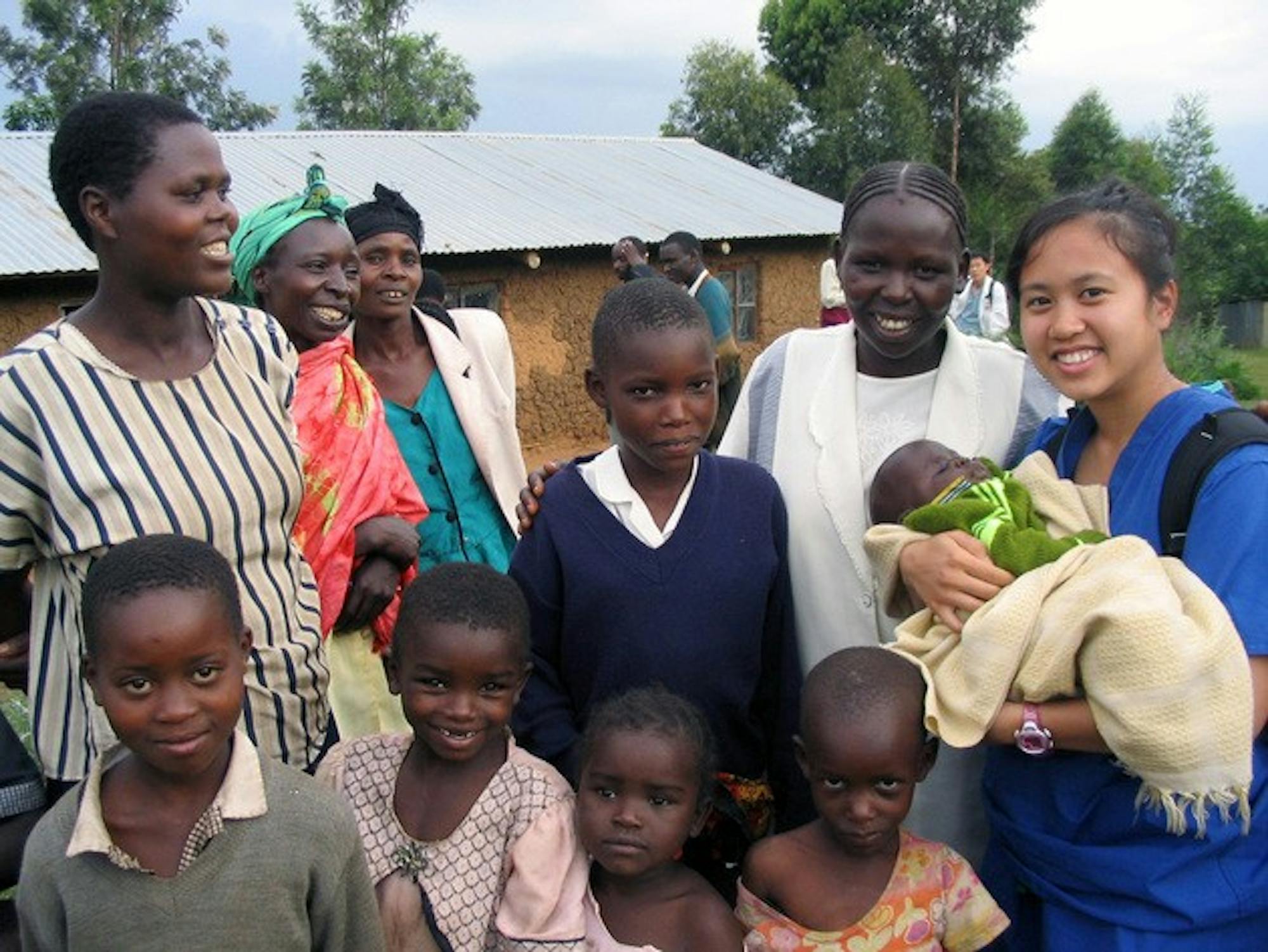
The Mt. Elgon Social and Health Initiative will provide basic healthcare to inhabitants, many of whom have never even seen a doctor.
"The students traveling to Kenya this year will be in charge of triaging patients and providing medicine, while also learning from the handful of American and Kenyan doctors who will be working at the clinic this summer," said Leslie Claracay, a first-year medical student at the Dartmouth Medical School who co-founded the program last year at Georgetown.
After running the clinic in Tuikut last summer, Claracay brought the program to Dartmouth.
"I had been on a three-week trip to Africa the year before and toured the various hospitals and orphanages," she said. "It made me realize how bad the healthcare situation in Africa really was."
Without the clinic, residents of Tuikut and surrounding towns needed to take a five-hour bus ride in order to access any sort of health service.
"What amazed me was how grateful they were," Claracay said. "They wouldn't stop thanking us."
Sheila Dunning '08, who is involved with the planning of this year's trip, said she would like to bring a mobile volunteer counseling and testing center for HIV to Tuikut, after working at a volunteer counseling and treatment center in Nairobi last year.
"These clinics are really useful in areas where it might take some effort and motivation to convince the residents to get tested for HIV," she said. "The most we can hope for on this individual trip is to offer care and treatment for people who don't normally have access."
Claracay said she believes that this year's trip will be more successful than last year's trip, which treated about 1,000 patients in two weeks, because of the additional help from Dartmouth students. Claracay said that the participants from this year's trip can build upon what the volunteers from last year's trip learned.
"Now we have a rapport with the people. Each day we were there, the lines grew longer and longer. We weren't even able to treat all the people in need," Claracay said.
Although the residents of Tuikut speak Swahili, Claracay said that the language barrier was easily broken.
"A villager taught me how to say 'take this many pills per day,' and before I knew it, my line was twice as long as anyone else's. The people felt much more comfortable hearing the information in their own language," she said.
The ultimate goal of the MESAHI project is to construct a stationary clinic in the area with local doctors and nurses. According to Claracay, though, this goal will not be reached in the near future.
"So far, we have collected an amazing $13,000 through a huge letter-writing campaign. However, the establishment of a stationary clinic is still way down the line."
Dartmouth students are currently raising money, through bake sales and other fundraising events, to pay for the medications that will be used this summer at the clinic.


