

News
News
Daily Debriefing
By
Simone D'Luna
| October 9, 2012
Demonstrations in Kabul, Afghanistan, turned violent on Monday after President Hamid Karzai's decision to change the name of Kabul Education University to the Martyr of Peace Professor Burhanuddin Rabbani University, The New York Times reported.
News
Distributive requirements encourage exploration
October 9, 2012
Dartmouth's distributive course curriculum which requires students to complete at least one course in eight different broad educational categories encourages student exploration and exposure to hidden interests, according to students and deans.
News
Professor examines state of legislation on women
By
Sasha Dudding
| October 9, 2012
The history of legislation on violence and women has featured a number of controversies making difficult the success of the Violence Against Women Act, according to Georgetown University law professor Victoria Nourse.
News
OPAL seeks successor to Misener
By
Sarah Koulogeorge and Zan Song
| October 8, 2012
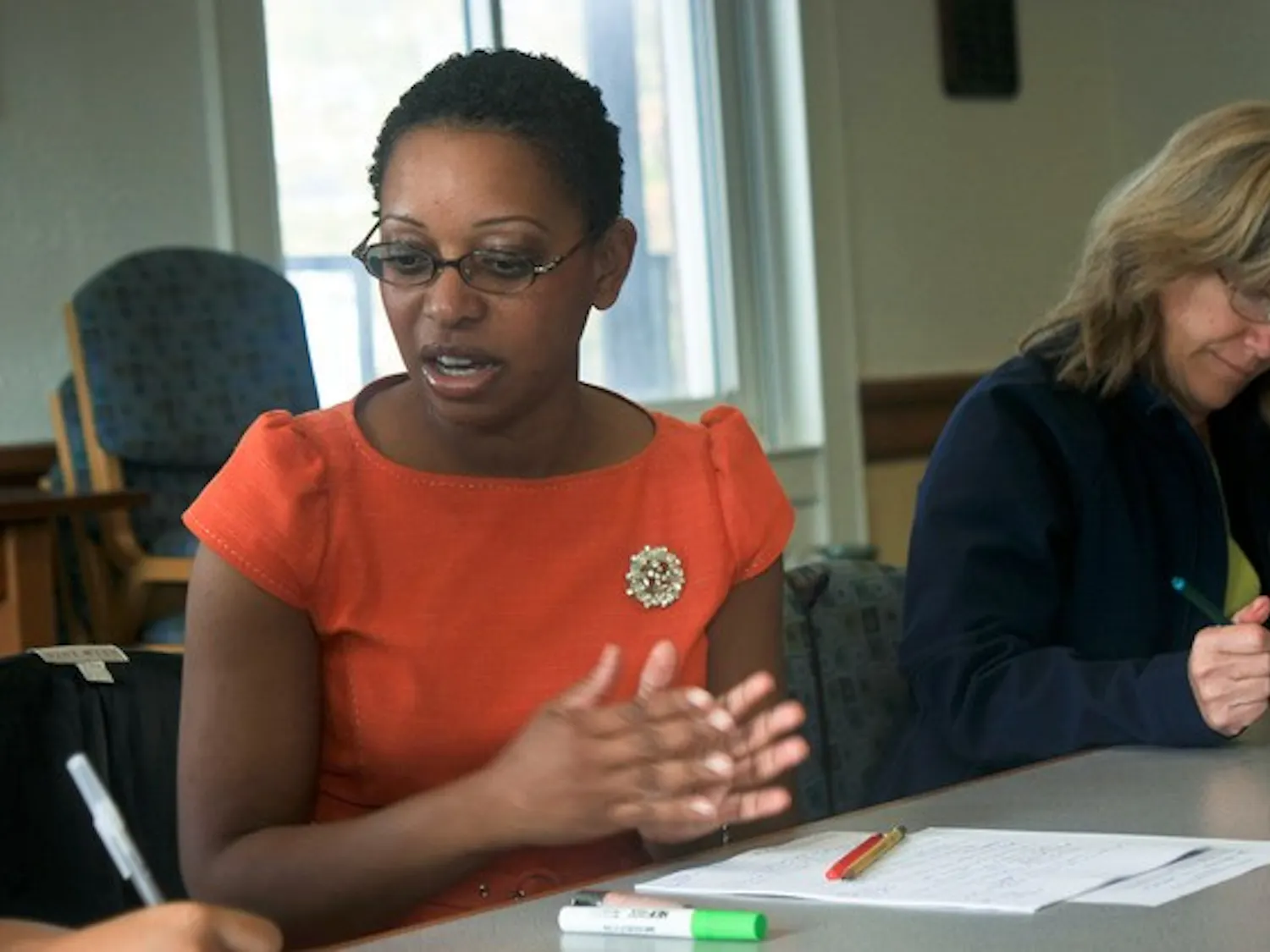
Jin Lee / The Dartmouth As part of its search for a new assistant dean and advisor to LGBT students, the Office of Pluralism and Leadership held open presentations by four prospective candidates in the Collis Center from Oct.
News
Daily Debriefing
By
Axel Hufford
| October 8, 2012
While the U.S. Supreme Court prepares to hear a challenge to race-based affirmative action at the University of Texas on Wednesday, India's Supreme Court is hearing a case on caste-based affirmative action, The New York Times reported.
News
BADA celebrates 40 years as College organization
By
Michael Rhys
| October 8, 2012
The Black Alumni of Dartmouth Association, founded in 1972 during a time of social change in the United States that prompted the College to begin admitting more black students, celebrates its 40th anniversary this year as a network for black students and alumni.

News
Alumnus creates textbook alternative
By
Karna Adam
| October 8, 2012
Maggie Rowland / The Dartmouth Senior Staff Ariel Diaz '02 Th'04 is offering students across the country an alternative to buying costly textbooks every term through his new startup, Boundless.com, which offers students free compilations of non-copyrighted material in a textbook form. Boundless does not provide actual e-textbooks, but rather uses a mix of government and nonprofit open-licensed content, according to Diaz, who started working on the idea two and a half years ago with co-founder Aaron White. Diaz said that his goal is not only to give students a less costly way to learn, but also to "create an education system that lets every individual perform and learn at their potential and speed." Boundless currently features review videos, flashcards and note-taking tools in addition to textbook information.
News
Orozco murals reopen after updates to room
By
Jasmine Sachar
| October 8, 2012
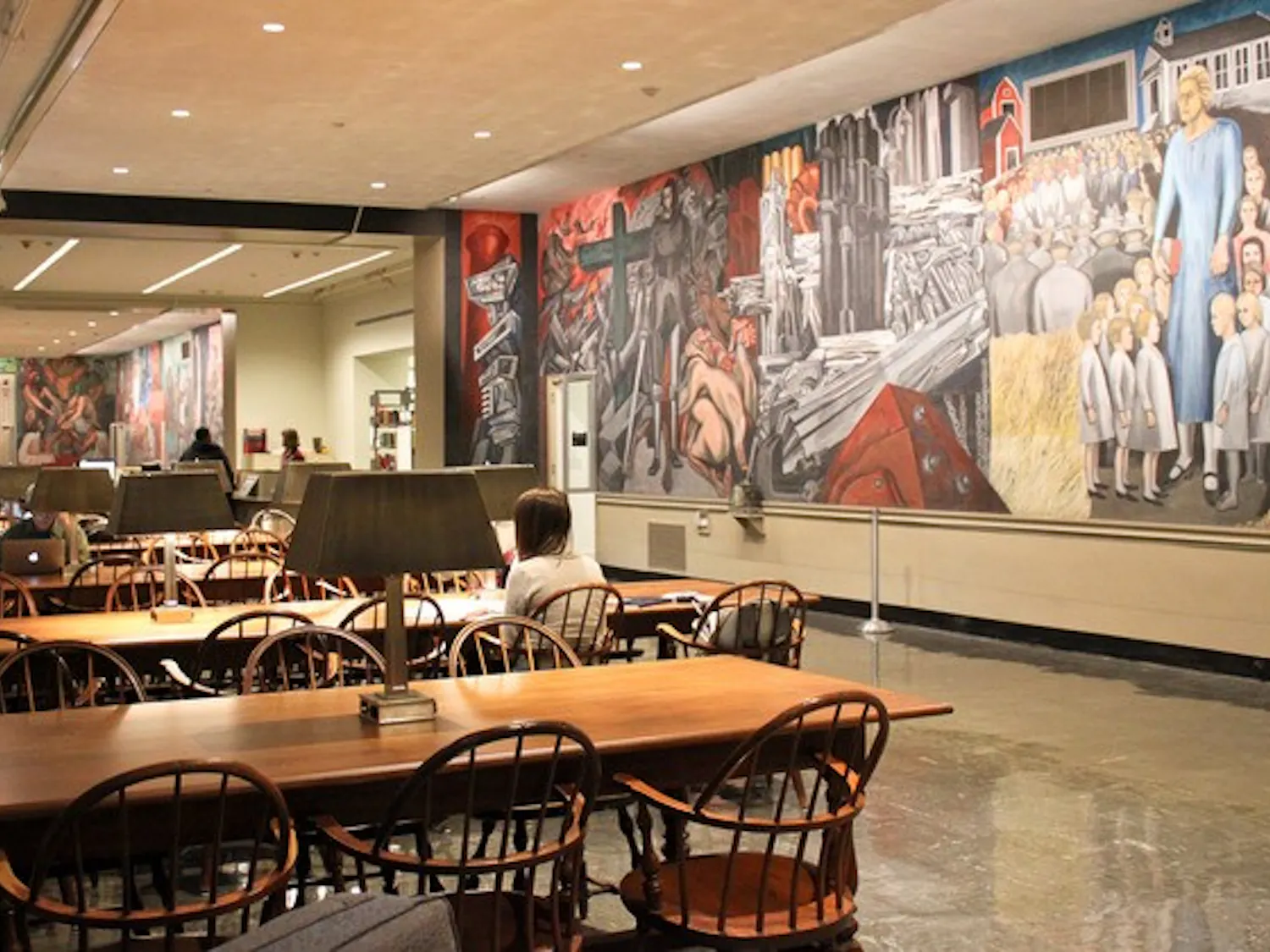
CECELIA SHAO / The Dartmouth The Orozco Room, home to a famous mural by Jose Clemente Orozco and the library course reserves, reopened to the public on Saturday after undergoing almost four months of renovations, including the installation of a state-of-the-art lighting system, new furniture and desk lamps. The new LED lighting system, installed by Anita Jorgensen Lighting Design, is intended to better display the murals, according to art history professor Mary Coffey.
News
Graduate student dies in Vermont highway accident
By
Marissa Lilly
| October 7, 2012
Correction appended First-year physics graduate student Mikhail Lomakin died Saturday morning in a car accident in Hartford, Vt., according to a press release from the Vermont State Police. Police were called to I-91 South at 2:24 a.m.
News
Daily Debriefing
October 7, 2012
A newly revamped Common Application will debut Aug. 1, 2013 as part of an $8-million project to accommodate the increasing volume of applications from around the world, The Chronicle of Higher Education reported.
News
Symposium discusses veterans' issues
By
Colby Ye and Sean Connolly
| October 7, 2012
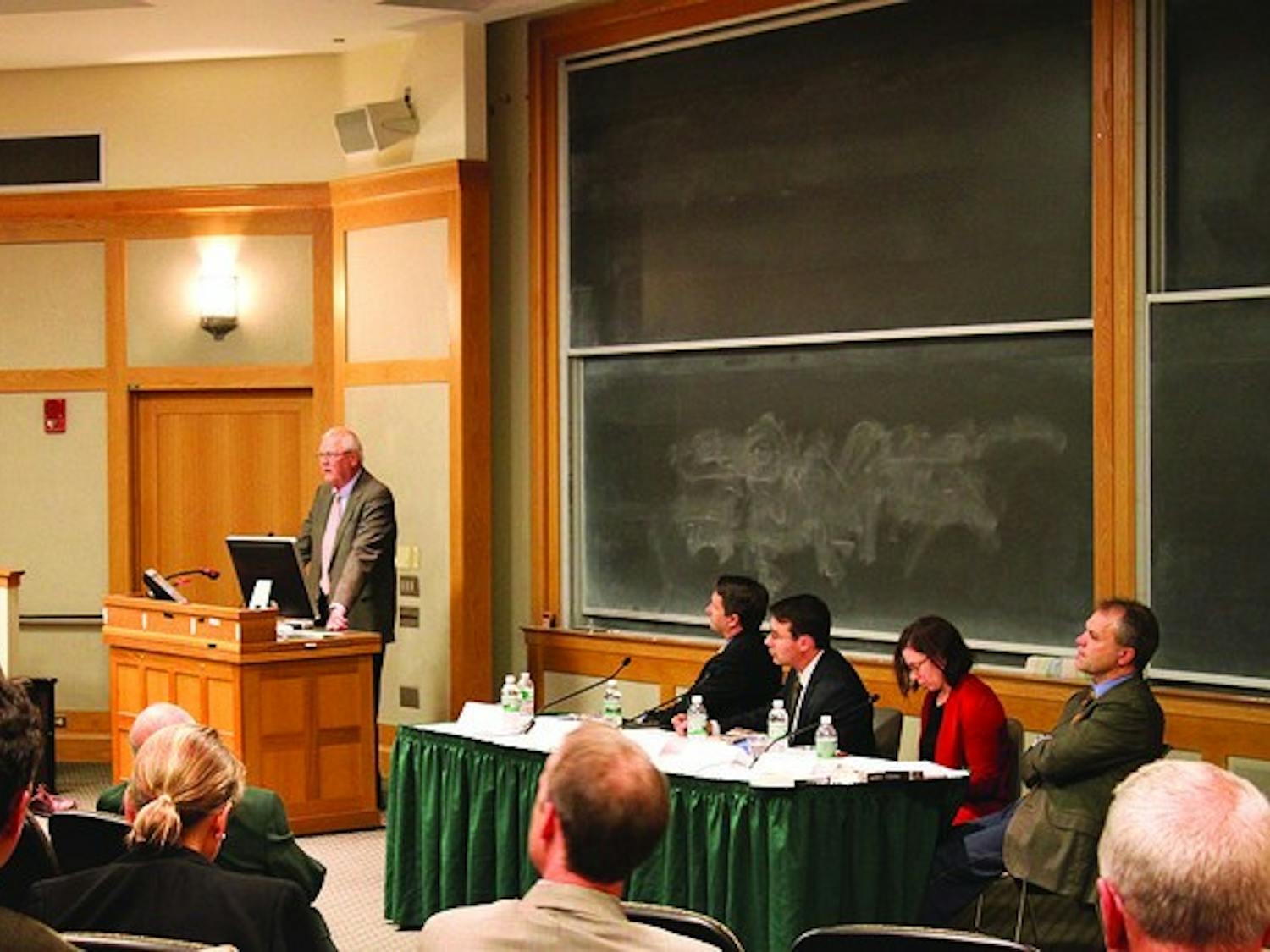
CECELIA SHAO / The Dartmouth The nature of modern war has widened the chasm between civilians and the armed forces, former College President James Wright said at a history symposium, "Military Service and National Obligation," this weekend.
News
PAAR raises funds for CHaD event
October 7, 2012
Philanthropic All American Rush, the Inter-Fraternity Council and the Panhellenic Council are collaborating with the Children's Hospital at Dartmouth in its annual CHaD Hero Half Marathon and Ripcord 5K that will take place on Oct.
News
WitsON program offers mentorship to women
October 7, 2012
Dartmouth is one of 72 undergraduate institutions with students currently participating in Women in Technology Sharing Online, a web-based forum where students can interact with other students and female mentors in science, engineering, math and technology, according to Piazza Vice President of Operations Phil Soffer.
News
Student creates EyeBook directory
By
Kyooeun Jang
| October 7, 2012
Josh Schoenbart '16 is the founder and CEO of the EyeBook, a new online optometric directory that provides a tailored search enabling patients to find eye care specialists based on categories like insurance, treatments, location and brands of eyeglasses and contacts in stock. Schoenbart took an interest in the optometric industry from an early age under the influence of his father, an optometrist.
News
Graduate student dies in Vermont car accident
By
The Dartmouth Staff
| October 7, 2012
Correction appended First-year physics graduate student Mikhail Lomakin died in Hartford, Vt., early Saturday morning, according to a campus-wide email from Interim College President Carol Folt and Dean of Graduate Studies Jon Kull '88.
News
Daily Debriefing
By
Iris Liu
| October 4, 2012
A recent Gallup survey shows that the majority of college admissions directors are content with the current average amount of undergraduate loans despite widespread concern regarding college students' rising debts, according to Inside Higher Ed.

News
Salbi discusses Iraqi women's rights
By
Ester Cross
| October 4, 2012
Yomalis Rosario / The Dartmouth Staff Zainab Salbi, the founder of the nonprofit humanitarian organization Women for Women International and author of "The Other Side of War: Women's Stories of Survival and Hope," criticized the United States for contributing to Iraqi women's diminishing social position in the aftermath of the 2003 invasion of Iraq in a lecture in Filene Auditorium on Thursday. The conflict in Iraq changed the culture of the nation by empowering the country's more religious and radical elements, Salbi said.
News
Dickey launches fellowship program
By
Axel Hufford
| October 4, 2012
This fall, the Dickey Center is launching a new fellowship program that invites five postgraduate scholars to do research on campus in the field of foreign policy.
News
Professor creates phone app for safer driving habits
By
Hannah Wang
| October 4, 2012
Emerging from a senior thesis project by Thomas Bao '12, CarSafe, an Android application that promotes driver safety, has since grown into a collaborative international project that represents the first application to use a smartphone's dual camera data to analyze a person's driving habits, according to computer science professor Andrew Campbell, faculty advisor to the department's Smartphone Sensing Group. The application analyzes drivers' physical motions, such as head turning and blinking rates, as well as the safety of their driving, monitoring their following distance and lane changing, Campbell said. "The goal of this project is to detect dangerous driving conditions using dual camera phones," Bing You, a visiting researcher from Taiwan's Academia Sinica, said.