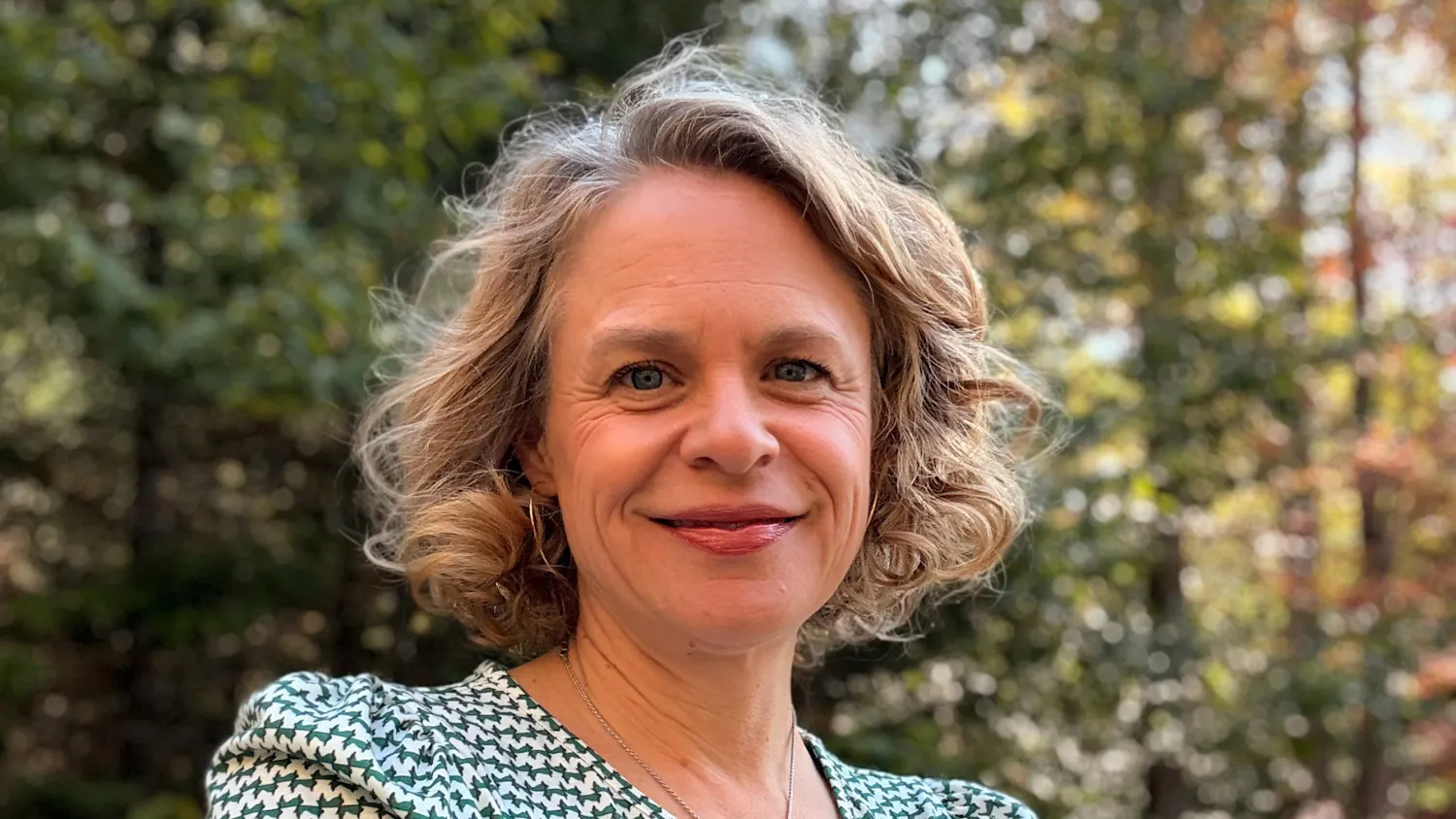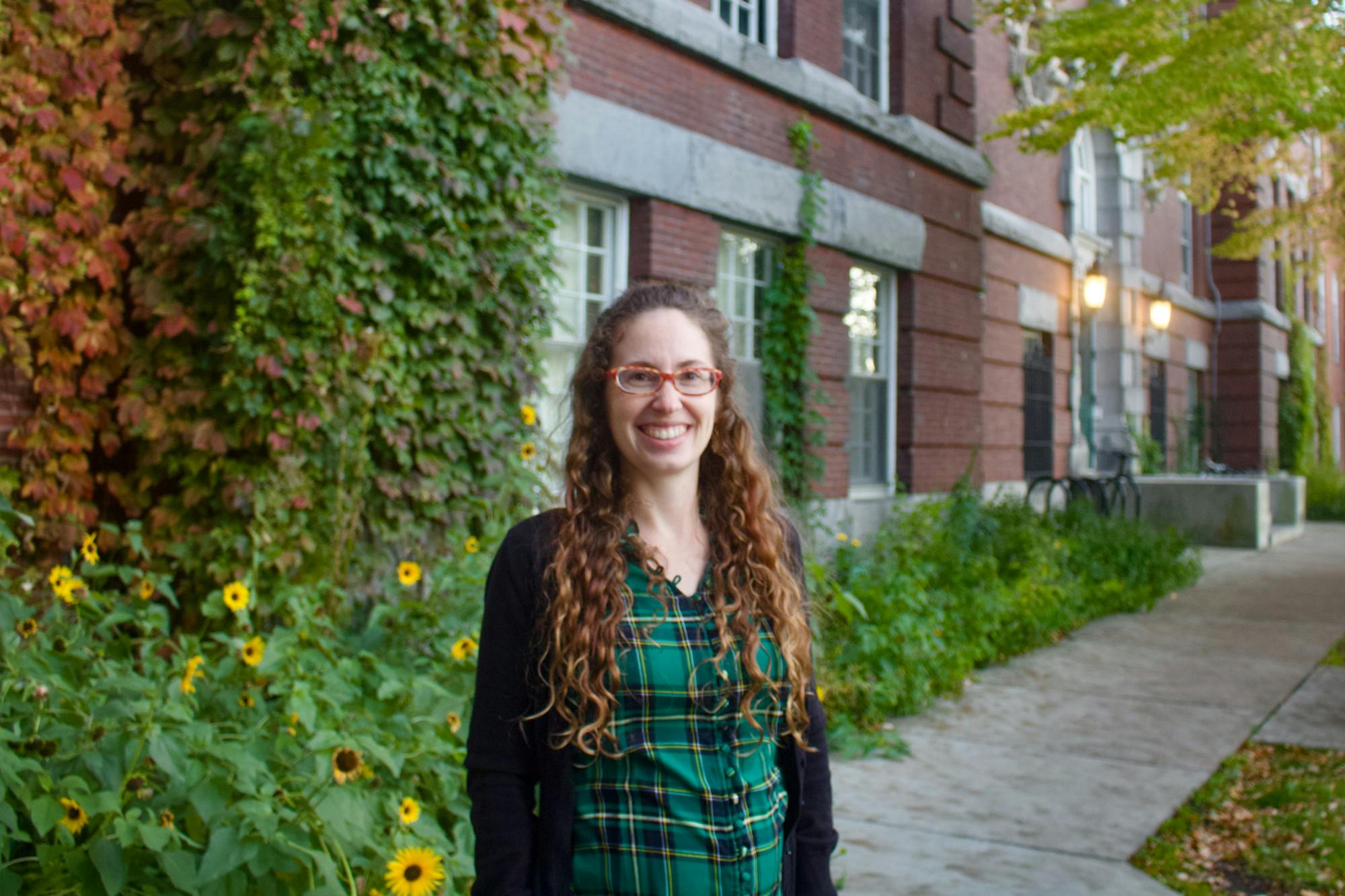
On Sept. 23, the American Geophysical Union awarded Earth and planetary sciences professor Sarah Slotznik the Takesi Nagata Early Career Award, a recognition presented annually to an Earth scientist who has “excelled in research and service to the fields of geomagnetism, paleomagnetism and electromagnetism,” according to the Union’s website.
Slotznik studies coevolution, or reciprocal effects in evolution between two species, across history. She also heads the Dartmouth Mag Lab, which focuses on characterizing the composition and magnetism of earth materials, according to the earth science department’s website.
In 2025, Slotznik received the U.S. Department of Energy early career research program award, which provides a five-year grant to early career researchers. She used it to study natural magnets containing cobalt.
The Dartmouth sat down with Slotznik to discuss the future of her research and the outcomes of her previous DOE grant.
Last year, you received the DOE’s early career research program award, along with a $900,000 long-term grant. How has your research developed with that funding?
SS: The award’s focus was to study cobalt. This DOE award came from thinking about magnets in nature, and how all the ones we think of have iron in them. I was starting to think that there are other natural magnets that have cobalt that are rarer. They’re critical elements that are really important as we think about the energy transition away from fossil fuels.
A new direction for my group is focusing on the mineral magnetism as opposed to thinking about the rocks or the record contained by those minerals. We’re still sort of in those initial phases, but we have some excitement — we’ve found some things that disagree with what’s been published in the literature, and now we’re narrowing down to understand why. We might have substitutions in our samples that make them not the same structure that was studied by others.
With the previous federal grant, has your research felt the impacts of federal funding cuts so far?
SS: I was very lucky that I submitted several grant applications right before a lot of the restructuring happened, so they were processed. The DOE grant was submitted during the current federal situation, but if anything, I benefited from it. There’s a focus on thinking about critical elements, whereas before, some of the priorities were a little different.
How does the AGU support or influence your work?
SS: I attended my first AGU meeting when I was a sophomore in college. It’s a really great space for the magnetics community. Magnetists have our own little division and section, which we don’t at the Geological Society of America or some other large conferences. We actually were one of the first divisions when AGU started over 100 years ago as a professional organization.
What are your hopes for the future of the Dartmouth Mag Lab?
SS: In the past couple of months, we’ve gotten one of our instruments working. We have these two magnetometers, and the second one is finally up and running and collecting data.
This is really important, for example, for our project in the Gobi Desert. The postbaccalaureate who had been working on that had to do a lot of the measurements at Harvard because our instrument wasn’t operational. I’m really excited about having this instrument in-house. It’s such a cool opportunity for undergrads to be involved. It’s just a great way to collect data and be able to analyze it and process it on site.
I’m also really excited about thinking about microbial formation of minerals. How microbes, this co-evolution of life in the environment, are really important in mineral formation and thinking about that more deeply through working with biologists who are doing lab experiments. Yes, I go to cool places. But having a control that you can compare directly and be like, “Wow, I made this mineral look this way. And when I changed it, it looked this way.” That’s really cool. It’s a new area for me, as opposed to going out and observing what I can find in nature.
Is it challenging to balance these research developments with teaching at Dartmouth?
SS: In certain ways. There’s a lot of interplay. I don’t get to be in the lab as much as I’d want to be. But some of these interesting ideas are connected to classes that I teach. I teach a course, “Astrobiology,” and I talk about things that relate to my research, about life and the environment. I’ll be like, “This is a good time for me to reread the most recent papers about eukaryotes. And this is going to feed directly into my research.”
One of my other classes, “Stratigraphy and Sedimentary Petrology,” an upper level earth science course, does a field trip. That’s been such an amazing learning opportunity for me to say, “I have this project idea. Let’s see these rocks and understand a bit more about this rock type I’ve never seen before.” As a field geologist, the more rocks you see, the more you know. It’s been really cool to have teaching feed back into my research in those ways.
Where do you hope your work will go from here?
SS: I like finding new connections and new applications of magnetism. Someone’s going to approach me and be like, “Can magnetism help me answer this question?” That might be the next cool thing. How these minerals form and how microbes are involved in mineral formation are my immediate next steps, but 10 years out, I don’t know. I hope that I’m doing something that I haven’t even thought of yet.
This interview has been edited for clarity and length.