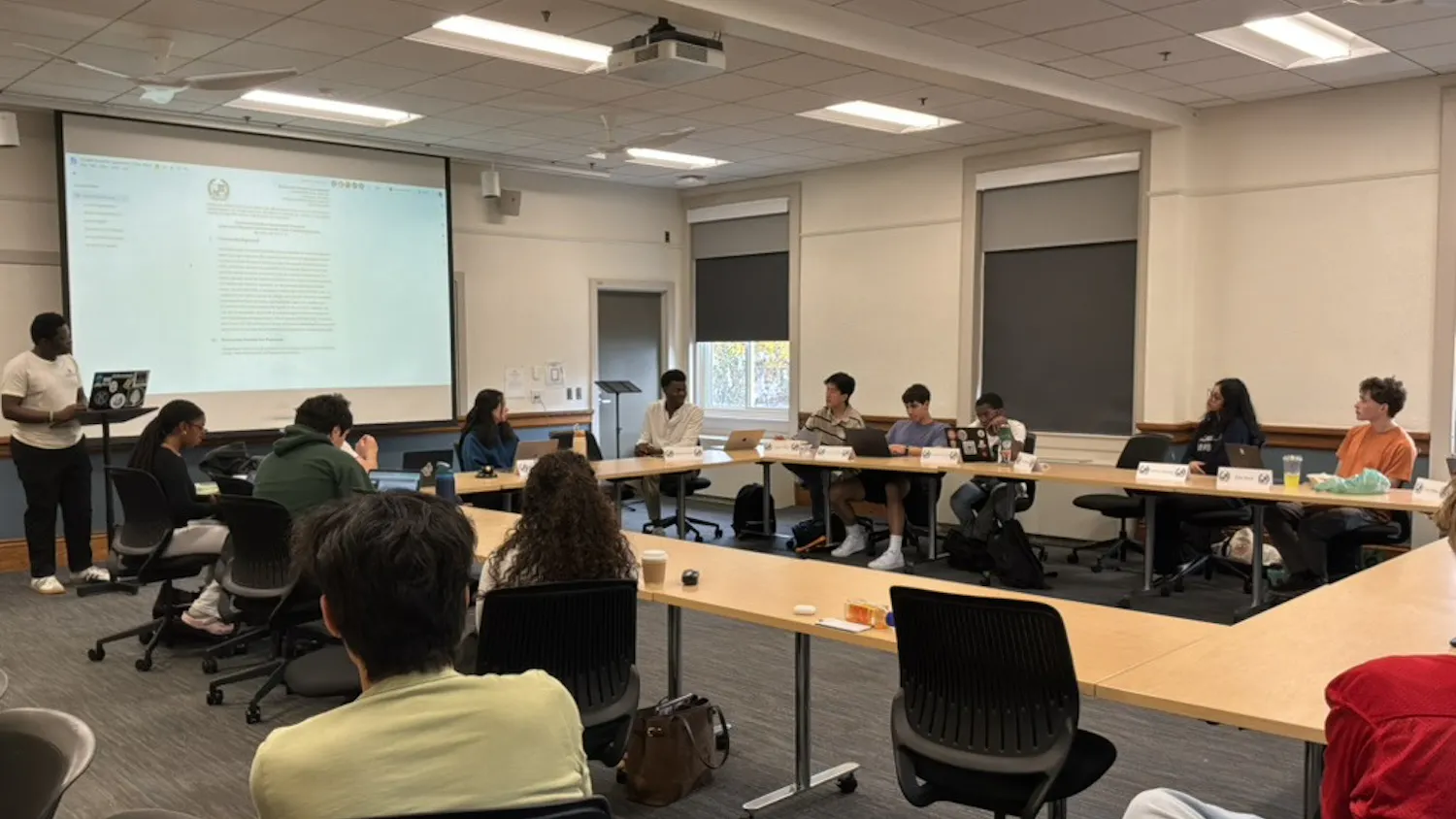
At Dartmouth, students are often consumed by classes, clubs, lectures and exams. It makes sense that many students spend their dinners answering emails, getting through a reading or scroll through Instagram reels. While most students consider these habits harmless, research shows that they make meals less enjoyable, weaken meaningful conversations and add to the loneliness many first-years feel during their first term. We should keep our phones away at dinner.
A 2018 University of British Columbia study of over 300 students and adults from the surrounding community showed that putting your phone down can make dinners more enjoyable. The researchers sent participants to a restaurant to eat with friends or family and randomly instructed half of them to keep their phones on the table, while the other half put them away. Those with their phones on the table reported feeling more distracted and said they did not enjoy the meal as much. These diners were not intentionally ignoring their friends. Having a phone within reach was enough to pull part of their attention away from the conversation.
Then the researchers ran a second study to test whether the same pattern held outside a restaurant. More than 100 participants received a survey on their phones five times a day for a week, asking what they had been doing and how they had been feeling over the previous 15 minutes. When participants used their phones during in-person conversations, they reported feeling more distracted and enjoyed the interaction less than when they kept their phones away.
Phones also interfere with the conversations that lead to lasting friendships. In a 2013 study published in the Journal of Social and Personal Relationships, psychologists Andrew Przybylski and Netta Weinstein asked pairs of strangers to talk for 10 minutes with either a phone or a notebook placed nearby. When the conversation turned to personal topics, pairs sitting beside the notebook reported feeling closer and trusting each other more. Pairs sitting beside the phone did not experience the same benefit. Although more recent studies have produced mixed results on whether an unused phone alone leads to this effect, the broader point holds: Conversation requires full attention, but phones often divide it.
This is especially relevant for first-years here at Dartmouth, most of whom met their floormates only a few weeks ago. Meals are often where casual conversations about course selection, extracurriculars and hobbies develop into something more personal. A notification that interrupts that moment rarely leads back to the question someone was trying to ask. Over a full quarter, these interruptions add up to friendships that never fully form.
More broadly, putting phones away can help address the loneliness many college students experience. In the American College Health Association’s spring 2024 national survey of 103,639 students at 1,544 colleges, 48.5% of respondents screened positive for loneliness, meaning they scored at least six out of nine on a three-question scale measuring how often they feel left out, isolated or lacking companionship.
Once the D-Plan starts sending friends off campus to internships or study abroads, finding a night when everyone is in Hanover will only become harder. That makes the dinners we do share worth more, and scrolling through them means giving up time we will not get back. Phones make our meals more isolated, interrupt the conversations that build friendships and contribute to the loneliness that affects nearly half of all college students.
So, the next time you sit down at Foco with friends, consider leaving your phone in your backpack. Enjoy the conversation and live in the moment.
Nicholas Gao is a member of the Class of 2030. Opinion articles represent the views of their author(s), which are not necessarily those of The Dartmouth.