
On Oct. 2, U.S. District Court Judge Joseph Laplante ruled that students may use school-issued IDs to prove their identity and obtain a ballot for the midterm elections on Nov. 3. New Hampshire Secretary of State David Scanlan, who appealed Laplante’s ruling on Oct. 6, encouraged students to bring their government-issued IDs such as driver’s licenses and passports to the polls at Dartmouth Civics Oct. 13 voter registration drive.
In order to register to vote, residents are required to present evidence of their age, citizenship, domicile and identity. To cast a ballot, however, all they need is proof of identification.
Gov. Kelly Ayotte signed H.B. 323 on April 3, removing school-issued IDs from the standard list of valid identification for obtaining a ballot on Election Day. The law did not specifically address whether student IDs could be used to prove “safety valve” identification, which allows voters without official photo identification to prove their identity to authorized election officials at polls.
On April 23, Scanlan, who oversees state elections, issued a directive that student IDs may not be used under any circumstances, including for safety-valve identification, after H.B. 323 went into effect on June 2.
The Coalition for Open Democracy filed a lawsuit against Scanlan’s directive and H.B. 323 on Aug. 11. Laplante heard the Coalition’s lawsuit from Sept. 15 to Sept. 19, ultimately ruling not to strike down H.B. 323 on Oct. 2 but finding that Scanlan’s directive “went too far.”
“Under the Supreme Court’s standard for evaluating voting regulations, even a minimal burden on the right to vote must be justified by the State’s interests,” Laplante wrote in the ruling. “The State has identified no interest served by the April directive beyond those already served by H.B. 323.”
On Oct. 6, Scanlan and New Hampshire attorney general John Formella filed an appeal asking the First Circuit to overturn Laplante’s ruling, writing that the ruling “misinterpreted New Hampshire state law.” Three weeks before the election, school IDs may still be accepted under the safety valve provision.
The safety valve statute “allows a supervisor to ‘review the voter’s qualifications and determine if the voter’s identity can be verified,’” the appeal reads. “It does not say that a supervisor can review unauthorized forms of ID to deem identity proven and issue a ballot.”
In May, a federal judge struck down a separate 2024 state law banning first-time voters from proving citizenship with an affidavit when registering to vote under the safety valve.
Hanover clerk Tracy Walsh, who oversees town elections, and Hanover supervisors of the checklist Patricia Dewhirst, Alison Gorman and Marcia Kelly declined to comment because the town is awaiting a ruling on the appeal.
In an interview with The Dartmouth at the Dartmouth Civics voter registration drive on Oct. 13, Scanlan said it is “hard to give guidance” on how H.B. 323 should be applied because the appeal is “in limbo.” Still, he said, students should bring government-issued IDs to the polls.
Scanlan added that he appealed Laplante’s ruling with the purpose of “adhering to legislative intent” in H.B. 323 and because it comes “after months of giving guidance on the lawsuit.”
Scanlan said he believes members of both parties “see advantages to adjusting the election laws.”
“That’s always been the case, and it always will be,” he said.
H.B. 323 passed the state Senate along party lines. Only five of 177 Democrats in the state House voted for the bill.
The secretary of state is a non-partisan position and elected by the state legislature. Scanlan was a Republican state representative from 1984 to 2002.
Dartmouth Civics Association co-president Will Nelson ’27 said in an interview with The Dartmouth that members of Dartmouth Civics “strongly urged” Ayotte to veto H.B. 323 in letters sent to Ayotte in March.
“We only have one thing that we’re ever willing to step into the political arena about, and that is anything that hinders or expands college student voting access in New Hampshire,” he said. H.B. 323 “is trying to limit the number of forms of ID that students are able to use when they’re going to access their ballot.”
Nelson added that he is “worried” about the “confusion” that the new legal rulings create.
“What the law says one day is different the next day, and that’s hard to communicate to students,” he said.
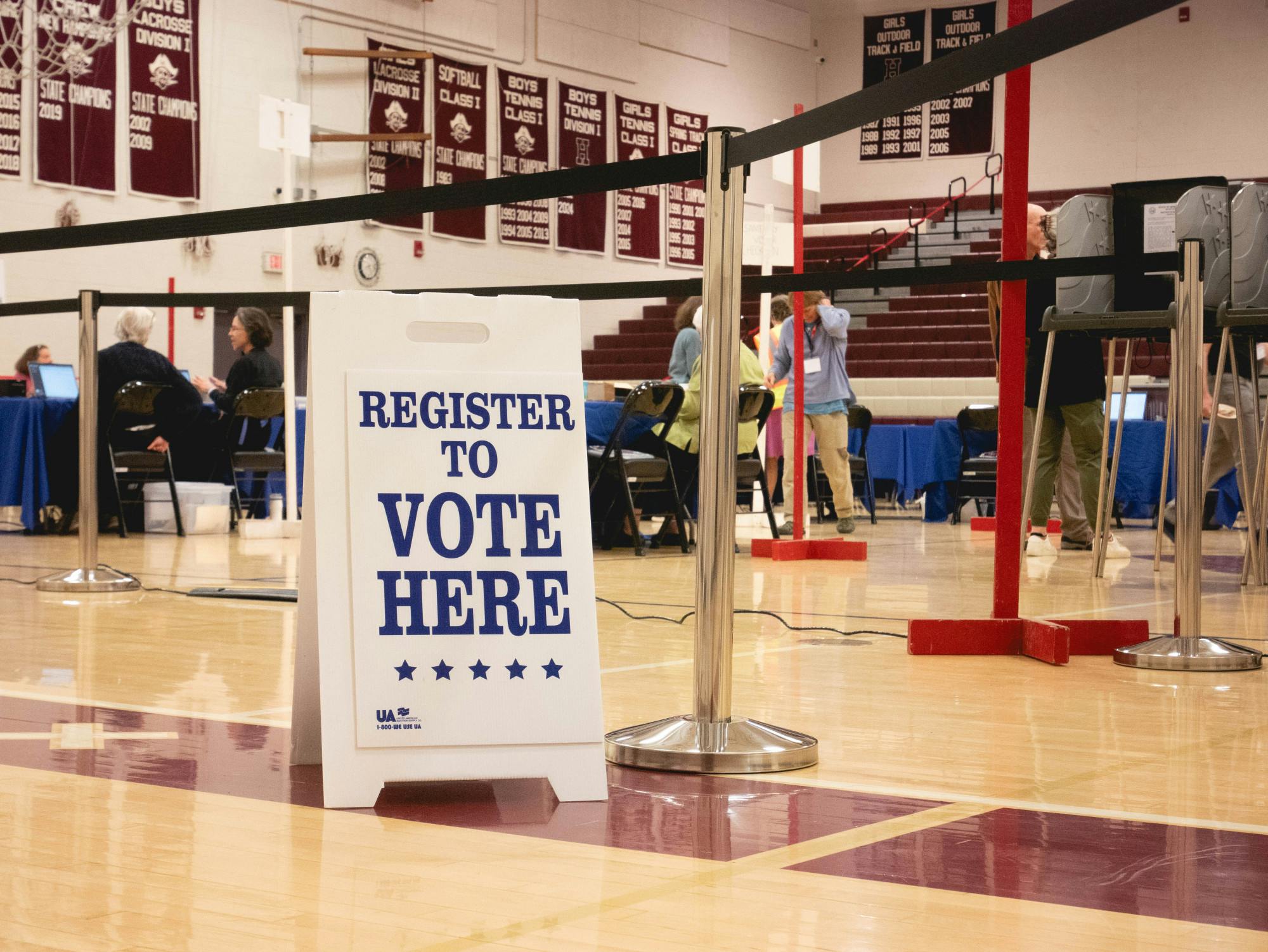
Polls will be open from 7 a.m. to 7 p.m. on Nov. 3 at Hanover High School.
Kay Alvito ’29 is a news reporter from Rio de Janeiro, Brazil studying comparative literature and creative writing. On campus, she is very involved with the arts as a member of the Rude Mechanicals classical theatre company and the dance group Street Soul.


