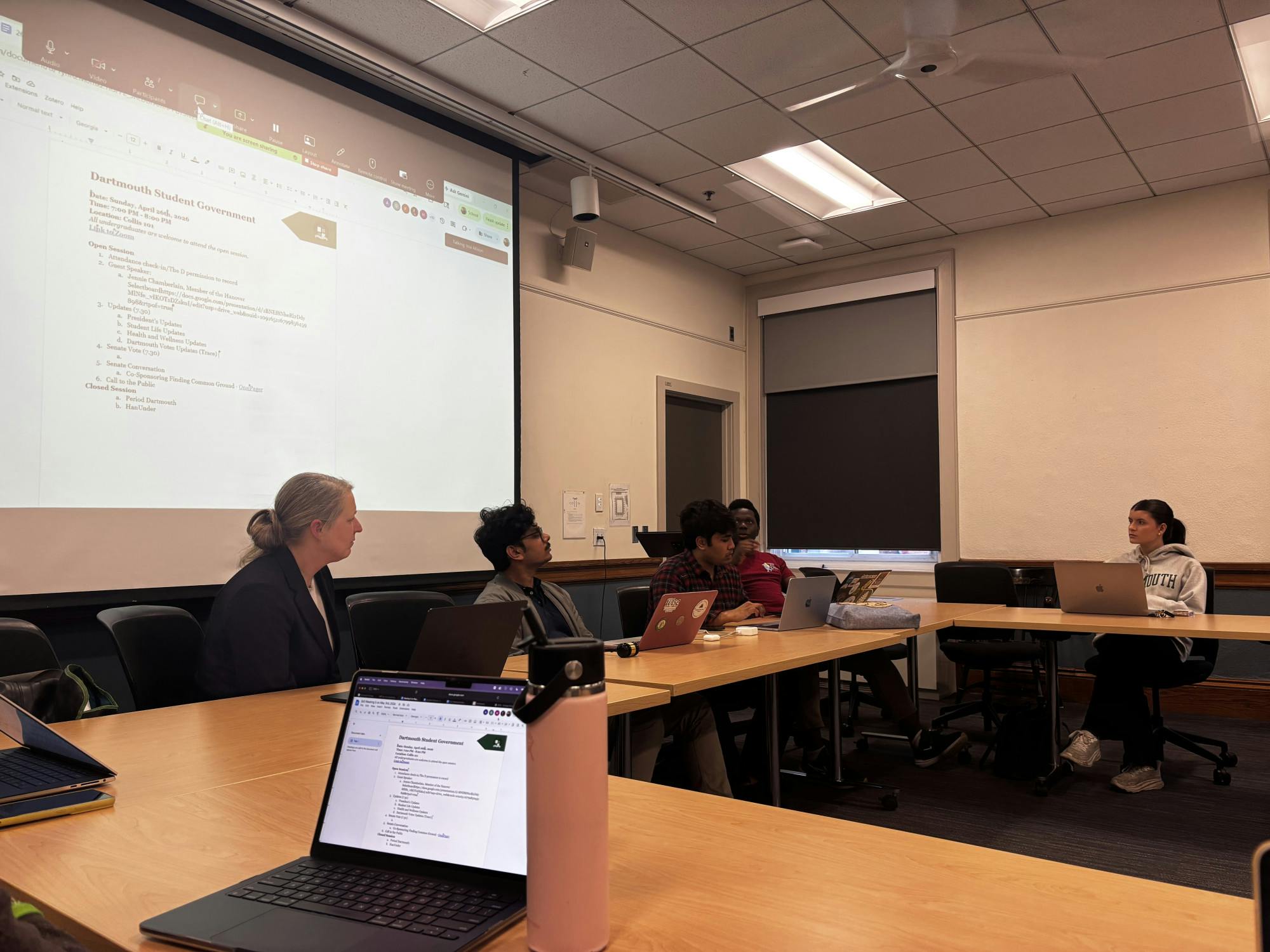
On May 3, at the fifth weekly Dartmouth Student Government meeting of the spring term, Hanover Selectboard member Jennie Chamberlain presented information about the six zoning amendments that will be on the ballot at the upcoming May 12 town elections.
At the start of her presentation, Chamberlain said that exclusionary zoning practices have made it “very difficult” to build affordable housing developments in Hanover. From 2000 to 2024, Hanover home prices have increased by 83%; the median home price in 2024 was over $1 million, according to Chamberlain.
“For the last decade or so, we’ve been working on trying to mitigate some of the negative impacts of [exclusionary zoning],” Chamberlain said.
Chamberlain added that the “housing crisis” created by exclusionary zoning rules has made it “really difficult” for local businesses to hire and retain employees.
“People close businesses because they can’t get anybody to work in them because people are commuting too far to come here,” Chamberlain said.
Five of the six zoning amendments — Article 2 through Article 6 on the ballot — would “tweak” a zoning amendment passed last year that permitted multi-unit developments, according to Chamberlain. The sixth proposed zoning amendment — Article 7 on the ballot — aims to repeal the 2025 amendments.
Hanover resident Randy Mudge, who proposed Article 7, explained in a previous interview with The Dartmouth that the 2025 amendment created “an urban environment” in Hanover that was “incompatible with the existing neighborhoods.”
Chamberlain said the development of Russo Hall, which will add 290 beds for undergraduate students, was made possible due to Dartmouth students voting on a 2022 town amendment. Russo Hall is currently under construction and is scheduled to open in September.
“Prior to changing the rules, it didn’t pencil out for Dartmouth to build this there,” Chamberlain said.
Following Chamberlain’s presentation, West House senator Luca Nacimiento ’29 asked whether the vote was “winnable” for supporters of Article 2 through Article 6 and how student representation could impact the polling.
Chamberlain explained that the amendments passed last year won “pretty handily,” in part due to student participation. However, she noted that this year's voting "could go the other way."
The reason that it could go the other way is because [Article 7 is] very incisively targeting single families,” Chamberlain said.
DSG meeting attendee Marshall Carey-Matthews ’27, who also attends Hanover planning board meetings, said at the meeting that he believes that community members say “a lot of concerning stuff” about students during town meetings.
They “speak about students as if they’re not people,” Carey-Matthews said.
Carey-Matthews, who has not lived on campus since his freshman year, said he attends planning board meetings to “help students” with a “persistent housing problem.” He urged DSG members to attend town meetings.
Student body president Sabik Jawad ’26 said he plans to “restructure” the town affairs team so that DSG members on other committees can get involved with town issues.
“Rejuvenating the town affairs team is one of my last goals right now in DSG,” Jawad said. “A common issue I have seen over the past couple of years is there’s no direct pipeline for other members to be involved.”
After Chamberlain’s presentation, PERIOD president Sahithi Medikondla ’29 discussed potentially collaborating with DSG to “ensure that there’s period products in every residential building.” PERIOD is a campus chapter affiliated with a global organization that “strives to eradicate period poverty.”
“It’s slightly disappointing that as a really important and predominant institution in New Hampshire, we don’t guarantee that for students,” Medikondla said. New Hampshire requires period products in every K-12 school.
Hopkins Center for the Arts fellow Shakeb Arsalan ’26 provided DSG with a summary of the HanUnder Arts Festival, a three-day event from April 23 to April 25 that hosted student and community artists. Arslan said 1,997 visitors attended the festival, which featured 60 performers. DSG previously endorsed expanding the HanUnder Art Festival into a regional arts festival.
“We really appreciated the encouragement that we got from DSG to advance this because I think we were definitely able to touch lots of parts of this campus,” Arsalan said.
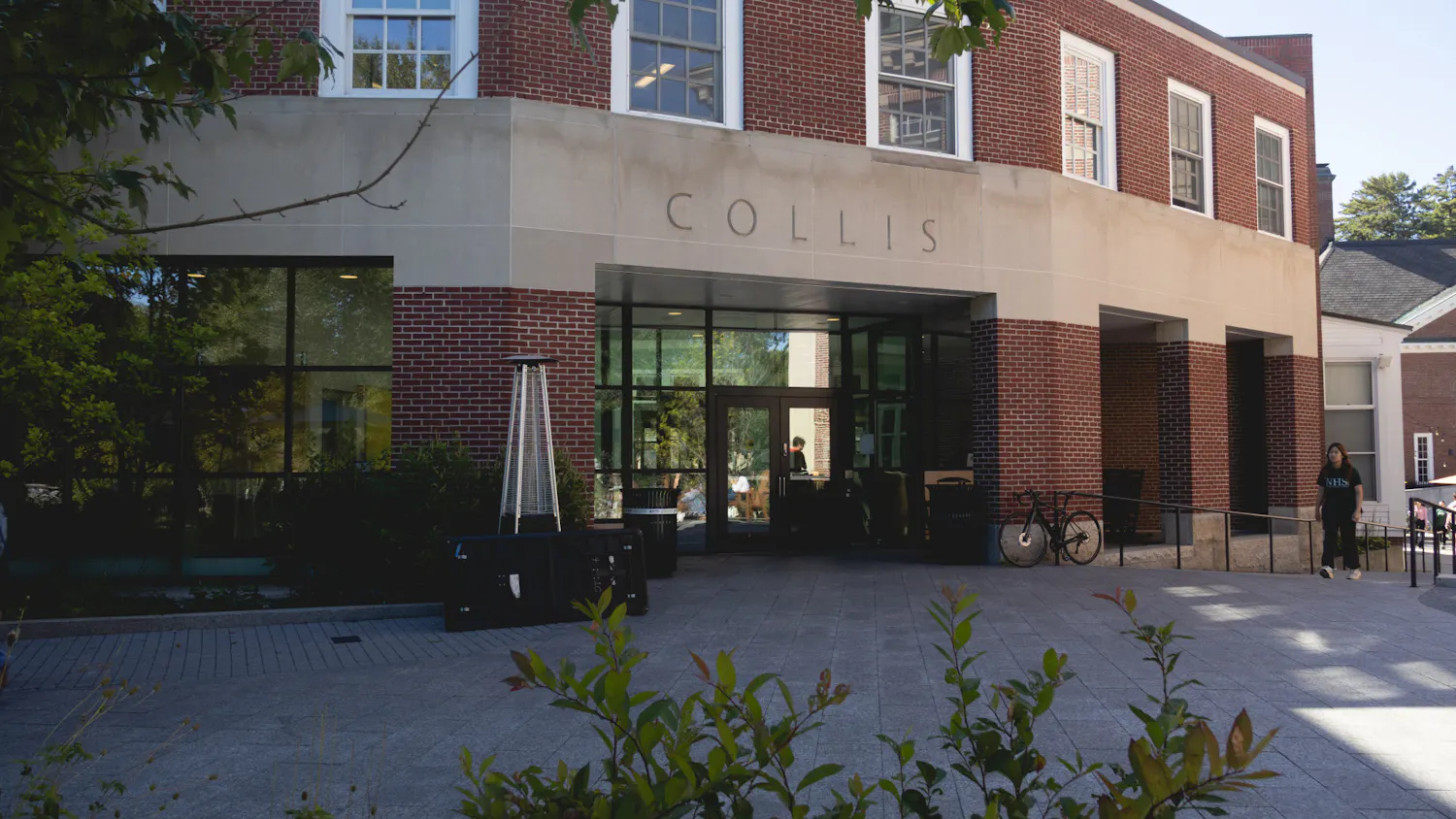
DSG Senate meetings are held weekly on Sundays at 7 p.m. in Collis 101 and are open to all students.
Corrections Appended (May 5, 12:06 p.m.): A previous version of this article erroneously called "policies to protect open lands" an example of exclusionary zoning.
A previous version of this article labelled the zoning amendments with incorrect numbers. This has since been corrected.
A previous version of this article incorrectly said that Russo Hall's construction was enabled by a 2025 zoning amendment. It was enabled by a 2022 zoning amendment.
Kailyn Holty ’29 is a news reporter from Redwood City, Calif., and is majoring in economics and quantitative social science.