
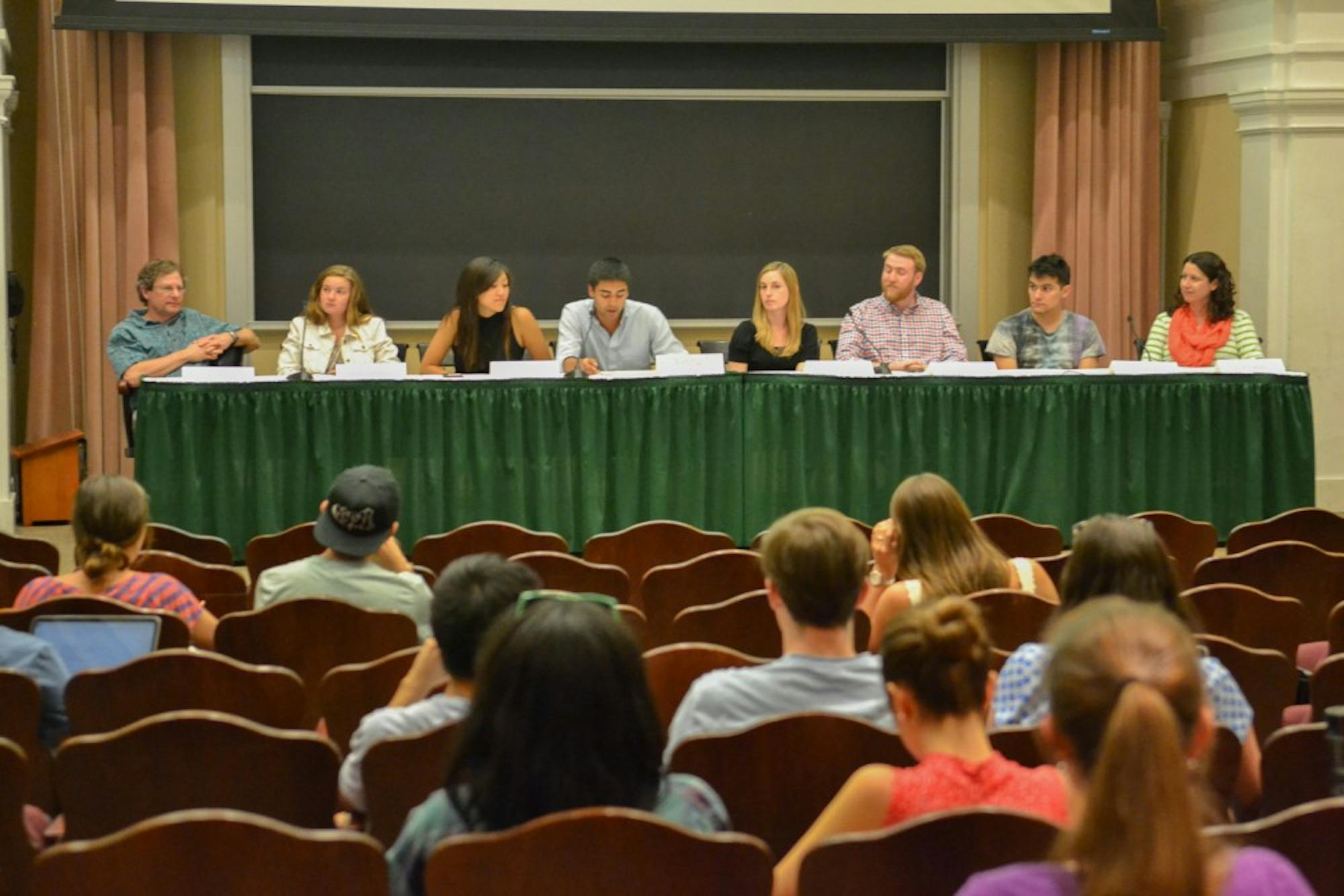
The three “Moving Dartmouth Forward” working groups — tasked with creating implementation recommendations for College President Phil Hanlon’s policy initiative — briefed an audience of roughly 20 on Tuesday night on their progress before an open question-and-answer session. Palaeopitus senior society and the Dean of the College’s office sponsored the event, and Palaeopitus members Valerie Zhao ’15 and Ashneil Jain ’15 moderated the discussion.
Chairs of the social event and alcohol management group Taylor Watson ’16 and assistant dean and director of case management Kristi Clemens said they are one to two weeks away from having a completed draft of their recommendations.
The group’s goal is to mitigate dangerous drinking while keeping in mind the reality of the College’s social scene and to create an open dialogue between administrators and students, Watson and Clemons said. Clemens said that another goal was to figure out how to make third-party bartenders and security viable options for Greek houses.
When asked which areas of the social event management procedures were the weakest, Watson cited the rule that states that parties can only serve one category of alcohol — either beer and cider or wine and champagne. Watson also mentioned the inconsistencies between College policy and the SEMP in regards to whether or not kegs are allowed.
The group also aims to streamline event registration through an online web form and to have every event with alcohol registered, Clemens said.
The student organization standards and review working group, represented at the panel by its two chairs, assistant director of Greek Letters Organizations and Societies standards and management Sam Waltemeyer and Collis Center director of student activities Anna Hall, are currently halfway through their seven to eight weeks allotted time during which they expect to produce a base proposal.
The group is aiming to create baseline standards that all of the 12 departments that recognize and oversee campus organizations will follow and to ensure that student organizations are making a positive impact on campus, Hall said.
The chairs outlined the steps of their plan. First, the group learned about what expectations currently exist for campus organizations. Second, the group looked at peer institutions for potential models. The next step is to come up with general expectations, review them and then look toward implementation.
Community citizenship working group chair Thomas Cormen, the computer science department chair, spoke about his group’s progress. The objective of the group create a code of conduct reminding students of the values that guide Dartmouth, Cormen said.
The group tried to make the code concise and visible, Cormen said. It is comprised of three paragraphs — the first addresses broad standards, the second addresses responsibilities and the third addresses educational values, Cormen said.
When asked where on campus students would engage in a dialogue about values, Cormen said these conversations could take place in the new residential house clusters and during First-Year Trips. Dumanian said that, since the housing clusters will have representatives from all four classes, upperclassmen could lead productive discussions in regards to values.
The group presented this code of conduct to the “Moving Dartmouth Forward” implementation committee, who then suggested changes. Some of the changes were reflected in the code shown at Tuesday’s town hall meeting.
Zhao said in an interview before the town hall meeting that Palaeopitus decided to host the event due to the confusion among the student body as to what the working groups were and what they did. She said that she hoped the town hall would put everyone on the same page.
When asked if they thought the general student body was well informed about the working groups, Kate Dumanian ’18, a member of the community citizenship working group, said that there has not been great visibility. Watson and Waltemeyer said, however, that the groups have revealed all they can, but are not able to reveal incomplete policy.
John Damianos ’16, who served on the “Moving Dartmouth Forward” presidential steering committee, said while town halls were great for encouraging transparency, he wished that more students had attended the event.
Aylin Woodward ’15, who is a member of Palaeopitus but wished to speak only as a student, said that she was worried about how the code of conduct would be effective without any accountability, but that she was excited that SEMP policy is being examined more closely.
Robert Scales ’16 said that he was worried there would not be a clear outlet for student feedback, as no formal process was mentioned during the town hall.
Woodward is a member of The Dartmouth opinion staff. Jain is a former member of The Dartmouth business senior staff.


