
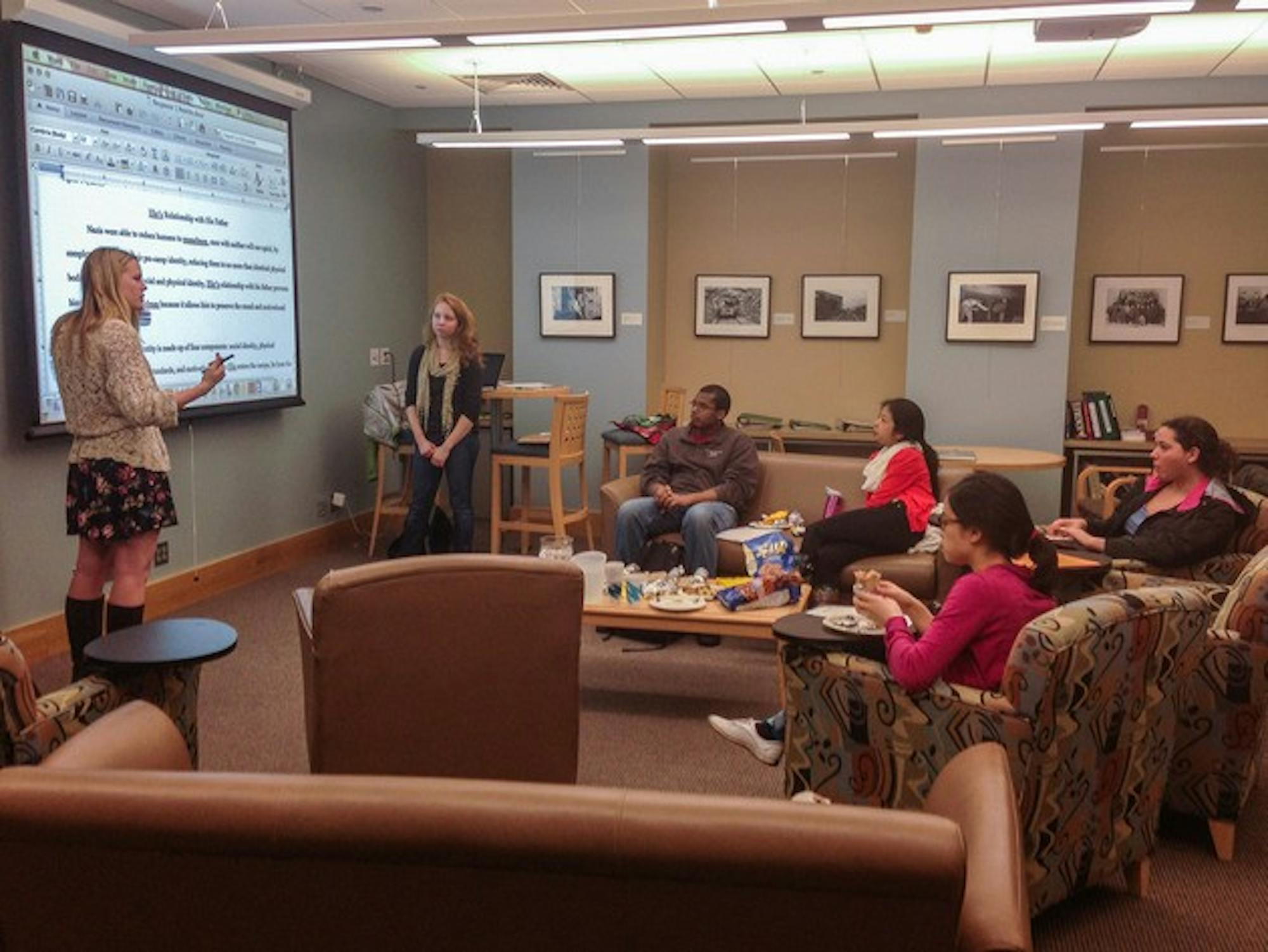
Campus resources, such as the Center for Research, Writing and Information Technology, the Academic Skills Center, the Undergraduate Deans Office and Student Accessibility Services, help students acclimate to campus culture. RWIT and the Academic Skills Center both provide tailored academic support through tutoring and one-on-one assignment review, the latter also offering course-specific study groups and advising on non-academic skills.
"There's a lot of management done by the high schools and parents that falls away when you come here," said Carl Thum, a Writing 5 professor and director of Academic Skills. "It's about taking those extrinsic motivations and making them intrinsic."
Incoming students are assigned to an undergraduate dean based on their dorm cluster. Undergraduate deans inform students of administrative and academic deadlines throughout the year and are available to meet students individually. The Undergraduate Deans Office saw about 300 students during its first five-hour drop-in session this year, Dean Natalie Hoyt said.
Many advising resources are available to first-year students through their housing. One of the first resources that students encounter is their undergraduate advisor, an upperclassmen who lives in their dormitory hallway. UGAs are an interface between the administration and undergraduate students. As peer advisors, they build a welcoming community.
During the first few weeks of term, students will be contacted by their pre-major faculty advisors, who are matched with students each year based on each student's expressed interest in a specific department. They remain in contact with their advisees throughout the year to answer questions about topics such as study abroad programs and the D-Plan.
The acclimation process for first-year students begins during orientation, when students attend health and safety lectures, learn about classes at departmental open houses and matriculate.
A central part of orientation is course election. A standard course load comprises three classes, including a required writing course.
The writing program is one of the College's academic requirements and can be satisfied in three ways, which are dependant on the student's SAT or ACT scores. Students may choose to begin in the fall with Writing 5 and elect a first-year seminar in the winter, or students may take the Writing 2-3 series in the fall and winter, followed by a first-year seminar in the spring. Alternatively, students can elect the Humanities 1-2 series to satisfy their writing and first-year seminar requirements during the fall and winter terms.
Each Writing 5 class and first-year seminar is categorized by subject, which means that assignments might focus more on the material than the quality and style of writing. Writing 2-3 and Humanities 1-2, a seminar-style course that introduces students to the most seminal works of Western literature, are alternative tracks.
Students, faculty and administrators acknowledged that the importance of writing varies from course to course, but that all Writing 5 and 2-3 courses try to incorporate campus resources in their classes.
Students said their satisfaction with Writing 5 classes and first-year seminars depended on their professors.
"It's one of the first professors you're meeting, and it's in a small setting, so it's important that it's a welcoming environment," Laura Hechtman '15 said.
Hechtman and Mandy Martin '15 said the structures of their Writing 5 courses were sometimes monotonous.
"I assumed there would be all different forms of writing, but we wrote the same kind of paper every week," Martin said.
The writing program has changed twice in the past three years, expanding the pre-seminar requirement to all students and allowing Humanities 1 and 2 to replace the seminar. Previously, the College waived the Writing 5 requirement for students with particularly high SAT scores and allowed them to enter first-year seminars directly. This policy changed in the fall of 2011.
Several professors and administrators expressed support for the more stringent writing program, especially since the first-year program is the only writing requirement at the College. Thum said he has heard students complain that they were "shunted" directly into a first-year seminar and regretted missing the opportunity to have more writing instruction.
"It's a good example that there are people who feel this is the direction we should be moving in," Thum said.


