
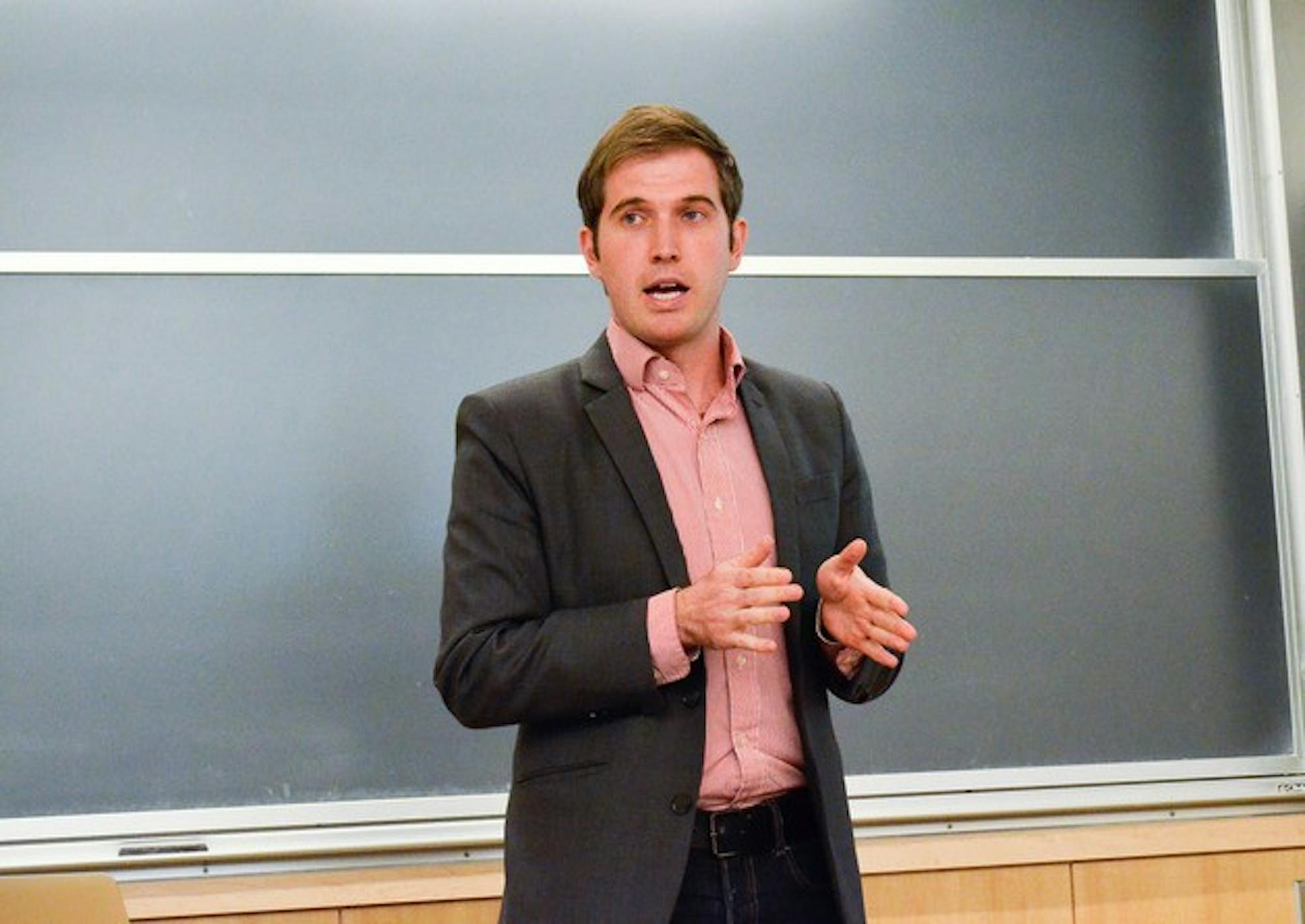
Nyaya Health, which draws its name from a Sanskrit word meaning "justice in action," broadens access to medical care in rural Nepal using a model Arnoldy called "global health 2.0." So far, these techniques have been more successful than traditional international aid models in helping hard-to-reach populations, Arnoldy said.
The NGO uses a "hub-and-spoke" organization that relies on one hospital as its central headquarters, which is surrounded by an expanding network of clinics. A contingency of community health workers helps to provide health education, refer cases and perform follow-ups and disease surveillance.
They collaborate with the Nepalese government to take advantage of the country's existing, under-utilized health care system and expand into isolated areas, Arnoldy said. The organization's main facility, a hospital in Achham, Nepal, was unused until the government offered it as a base for Nyaya Health's operations.
"If you're going to reach the poorest people in the world, you're going to have to leverage the existing infrastructure," he said.
Rather than importing foreign personnel, who can be difficult to retain due to cultural differences and challenges in quality of life, the organization invests in long-term local staff, doctors and administrators to boost the region's medical capabilities and employment opportunities.
A major challenge is recruiting and retaining human resources, as Nepalese with advanced skill sets often face as much culture shock as foreigners when they move from Kathmandu, Nepal's capital, to more rural areas.
In contrast to medical aid organizations that focus on addressing specific diseases, Nyaya Health uses a horizontal model that tackles a broad range of medical problems, from trauma and malnutrition to tuberculosis and rarer diseases.
"It's not enough to just be a service delivery organization," he said.
Arnoldy acknowledged that mental health services are a major deficiency in Nyaya Health's operations and in the country. The organization's purely medical-based model may also conflict with traditional healing practices the only type of health care some rural Nepalese have experienced.
If the NGO achieves its goals in Nepal, its next step would be to replicate the system in other needy regions of the world, Arnoldy said.
Nyaya Health uses open-source financial software and publishes all of its financial and clinical information online to ensure institutional transparency. The organization has begun using crowd sourcing to raise money for medical procedures and other expenses.
Rigorous data collection is also used to demonstrate the success of its programs to the institutions and individuals that fund it.
"The truth is, we can't tell you how many of the patients we treated actually got better," Arnoldy said. "New technology allows us to move in this direction."
The organization's $1.2 million budget is funded by private individuals, foundations, corporate partnerships and the Nepalese government. The organization also receives non-cash assistance from the government in the form of drugs, food and staff. The value of this non-cash assistance is much greater than the government's financial investment in the organization, Arnoldy said.
Arnoldy added that he hopes to create a partnership with Dartmouth through fellowships and other programs.
"Students really are that bridge to bigger-picture partnerships that are incredibly needed and valuable in global health delivery," he said.
Aditya Mahara, a first-year PhD student at the Thayer School of Engineering, said he appreciated that Nyaya Health's model is more sustainable than that of other NGOs.
"I think Nyaya Health has established a permanent base," he said. "I like that with their hub model, they can disseminate the process."
Mahara, who was born in Kathmandu, the capital of Nepal, said he hopes to eventually work in global health in the future in his home country.
"I'm a biomedical engineer, so I want to build something that is low cost and robust that can also be taken into rural parts of the world," Mahara said.
Ana-Marija Pongrac '15 said she was impressed with Nyaya Health's unique platform for delivering health care.
"I think this speaks to the multiple avenues through which we can approach health," she said. "As a Dartmouth student, it definitely motivates me to be innovative and creative when thinking about global health."
The lecture, delivered to a full classroom in Kemeny Hall, was titled "Delivering Health Care to the World's Poorest" and sponsored by the anthropology department.


