
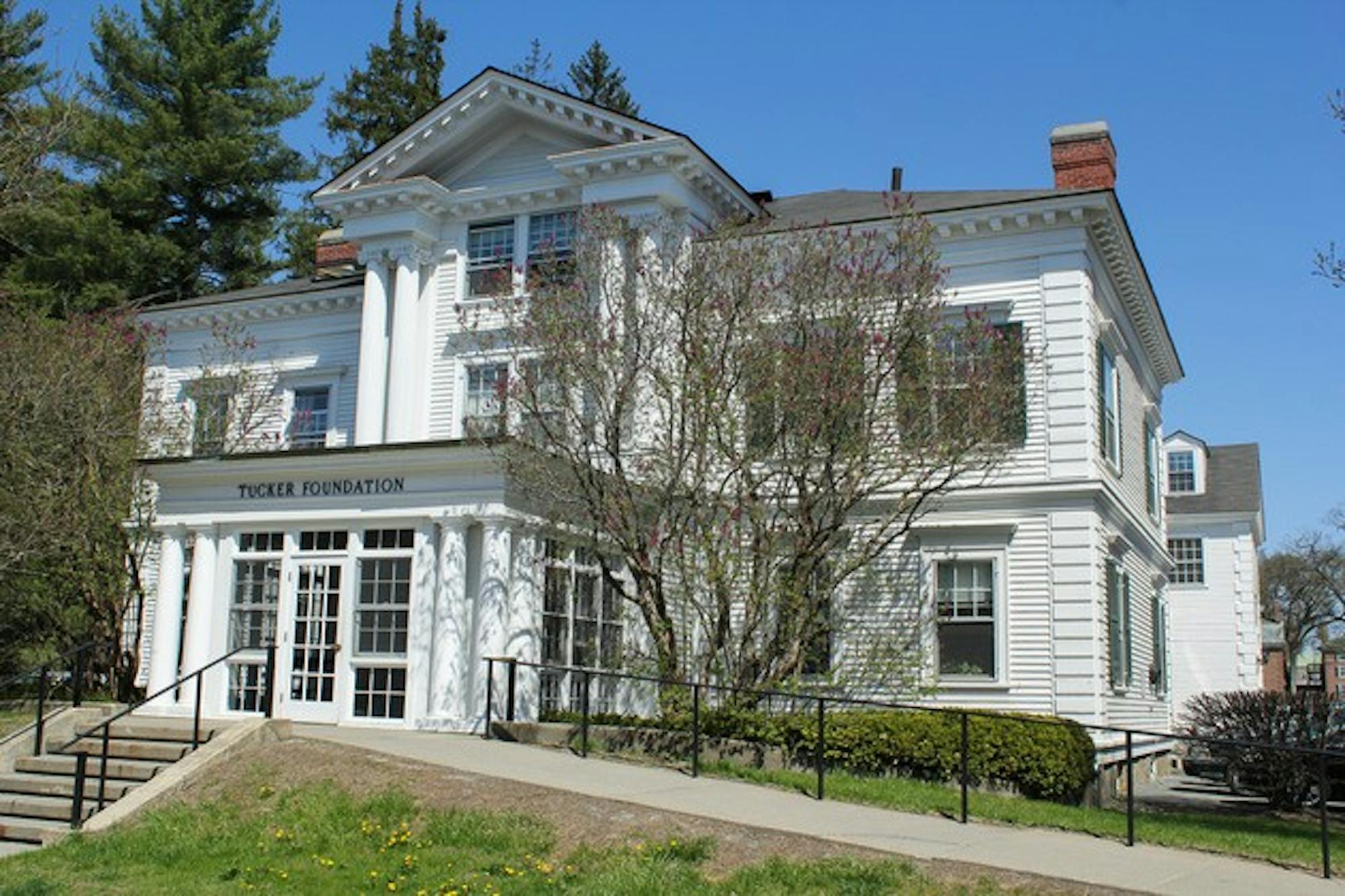
The build was part of a service project for Tucker Leaders in Community, a program launched this fall term, which exposes first-year students to the Upper Valley and helps them develop leadership skills. The 27 students involved are expected to fulfill a variety of requirements each term, including attending talks and dinners, visiting local nonprofit organizations and completing 10 hours of community service.
Participants said the program encourages greater engagement with the surrounding community.
"My experience has been overwhelmingly positive," Cheng said. "It really forces you to get out of the Hanover bubble."
Visits to the Upper Valley Haven and The Family Place inspired students to volunteer and put their education in context.
"Here in Hanover, we definitely lose sight of the real world and of people who aren't as privileged as Dartmouth students," Jessica Barfield '16 said. "A lot of us are definitely out of touch with the financial situations of people in the Upper Valley."
The idea came last year, when a student director realized that the Tucker Foundation did not offer a program for first-year students similar to those offered by the Rockefeller Center and the Dickey Center.
Program director Adam Knowlton-Young said the program encourages first-year students to balance academics and extracurricular activities as they transition to college. A few students dropped out of the program once they realized they could not meet its requirements due to other time commitments, he said.
As a member of the varsity field hockey team, Barfield said she finds it difficult to juggle her involvement with practices and games.
"The dinners are scheduled far in advance, but athletics get in the way," she said.
In spite of logistical issues like low attendance, Cheng said the dinner discussions have been a highlight.
"We discuss topics you don't usually get to talk about in the classroom, like diversity," Cheng said. "They make a point to find diverse kids so you hear a lot of different perspectives."
Knowlton-Young said most organizations struggle with attendance, and scheduling "consistently engaging material at consistent times" will motivate participants to prioritize attending Tucker Leaders in Community events over other obligations.
With the program nearing the end of its first year, students have learned to reflect on their work and the program, which some say lacks continuity.
Matching students with service projects that suit their interests may provide a more cohesive experience in the future. Students are also encouraged to find their own project opportunities.
"I think it's a common refrain to want the program to be set up for them because of how demanding it is," he said. "Part of the challenge is them reaching out to the community to see what's out there, which is frustrating and hard, but I think they're better for it. They have a lot more experiential knowledge."
Although the first year of the Tucker Leaders in Community program has involved some trial and error, Knowlton-Young said he is confident that the program will give participants an introduction to introspective civic engagement.
"In the long term, we're making Dartmouth and the Upper Valley a better place," he said.


