
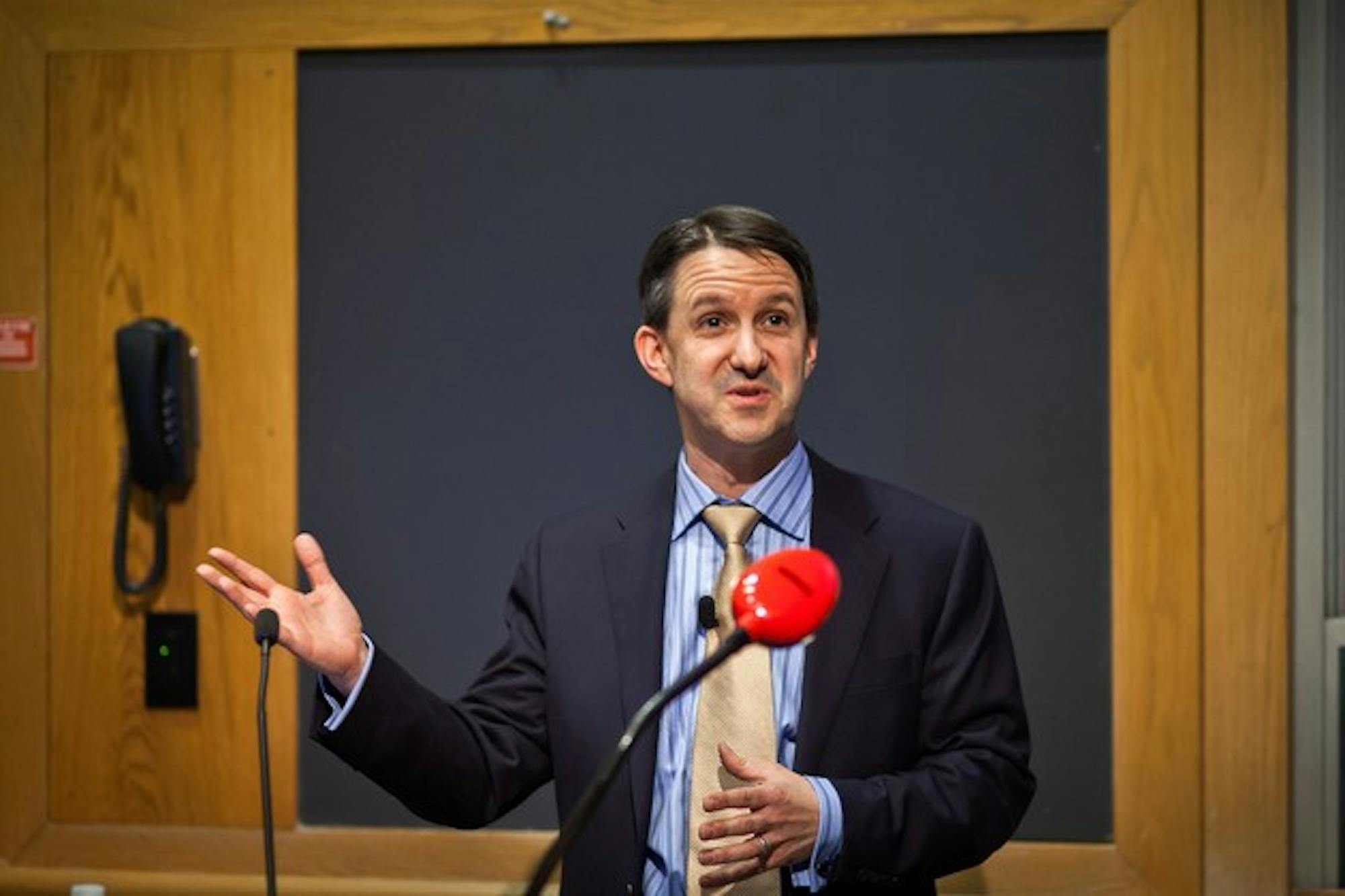
Currently, alternate forms of education, such as the recent introduction of massive open online courses and hybrid courses, and rising college tuition costs threaten traditional forms of higher education, Selingo said. College costs are increasing as family wealth decreases in light of the 2008 economic downturn. Meanwhile, states have contracted funding for day-to-day services, particularly higher education, and the federal government is considering cutting research grants and the Pell Grant program. Consequently, students must reevaluate the economic availability of a college education.
"Tuition is eating up a larger and larger share of family income," Selingo said. "As a result, parents and students are asking more and more questions about what they're buying for what they're spending."
While Dartmouth may not specifically face the same trouble attracting applicants or funding as other lesser-known colleges, many students are reassessing the current value and need for a college education, Selingo said.
"I met students who didn't know why they were in college except that their parents wanted them to be," he said. "We lack a real high-quality educational substitute for those who are ill-suited for traditional colleges like this."
Students often have a romantic view of a traditional college education with "a leafy quad" and "neolithic" buildings, Selingo said. However, 33 percent of students transfer out of their original school and four in five say they feel like they are "drifting" through their educations.
There is no single solution to the troubles that higher education institutions face, he said.
Selingo proposed a system that embraces emerging education approaches.
Selingo's plan includes blending K-12 education with real world experiences, competency-based courses, where students determine the pace of the class, and increased usage of MOOCs.
Hybrid courses, which combine alternative education approaches with traditional methods, allow students more flexibility to work at their own pace, resulting in better productivity and efficiency, Selingo said.
Computer science major Shloka Kini '13, who attended the lecture, expressed mixed feelings about expanding the College's community through online classes.
"There are always pros and cons of opening up Dartmouth courses to other students outside," she said.
While there is value in keeping the College a private and intimate community, a Dartmouth education cannot currently reach a large audience of students, Kini said.
While higher education has been trending toward alternative solutions, traditional college education is still valuable, Selingo said.
Students benefit from interaction with professors, study abroad experiences, internships, research opportunities and collaborative environments, which contribute to the strength of a traditional liberal arts education, he said.
A key value of a college education is to teach students the ability to be creative, take risks and "learn how to fail," Selingo said.
Kini said her mentor-mentee relationship with computer science professor Thomas Cormen and her term abroad have defined her college career.
For students like Kini, who want to enter the workforce, Selingo said there should be a transition period before and after college. Venture for America and Teach for America are two examples of opportunities for recent college graduates, Selingo said.


