
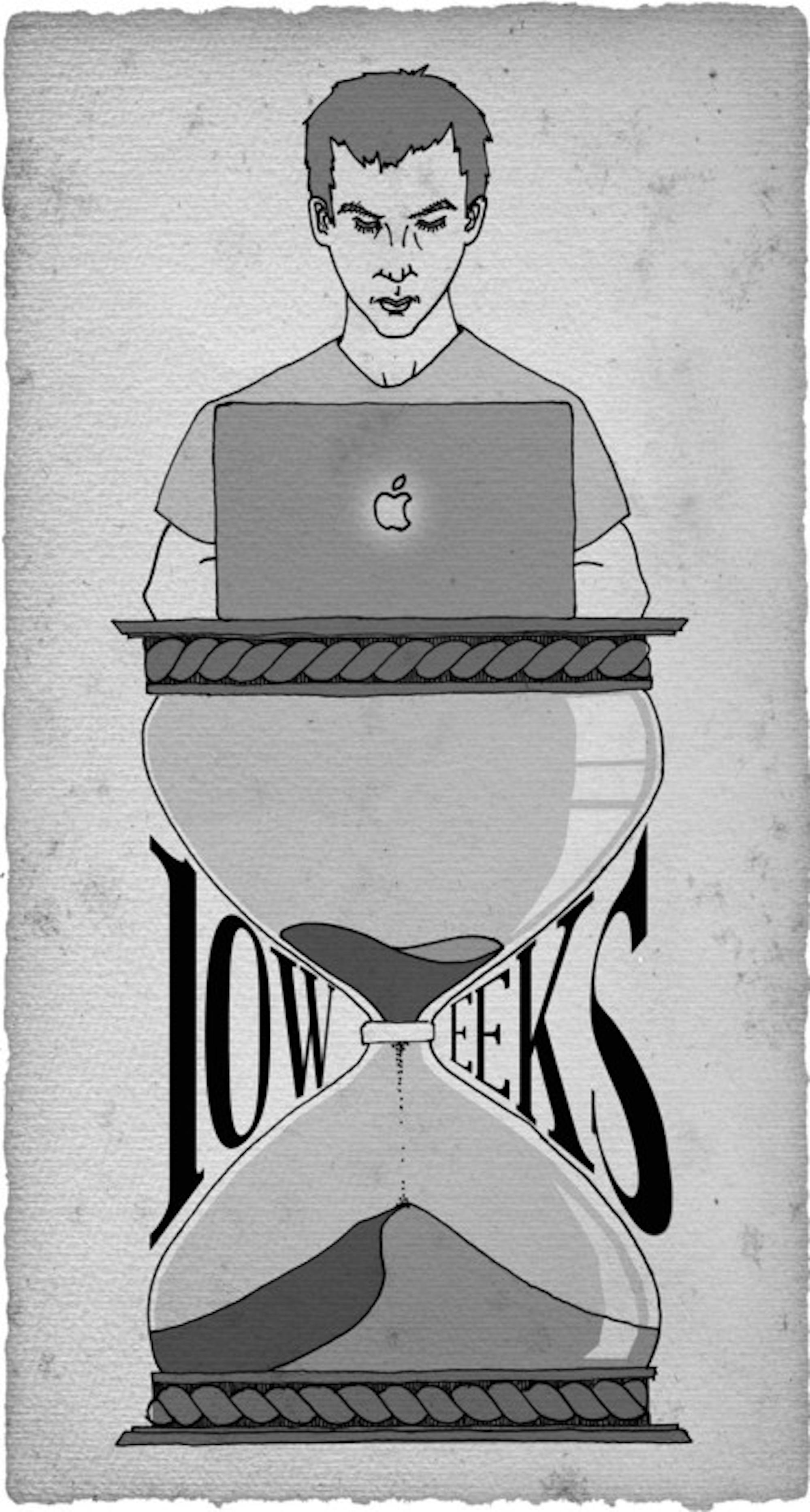
Ever-shortening attention spans coupled with the insatiable need for instant gratification limit our ability to experience flow, psychological jargon for being in the zone, in the realm we came here to focus on most: academics. Here at Dartmouth, typical distractions from academic priorities abound just as they do elsewhere. However, the strongest impediment to deep learning at Dartmouth is neither social nor technological it is structural.
Critics offer the legitimate yet incomplete claim that Dartmouth students' social lives and incessant use of technology are obstructions to learning. On the social front, distractions shape classroom schedules, which are often strategically designed or ignored to accommodate social commitments. Professors who use x-hours attract negative reviews and repel future students. On the technological front, distractions permeate the classroom itself. Although some professors prohibit laptop and cell phone usage, many students seem unable to part with their devices for a mere hour or two. For these students, it is more appealing to surf the Internet or check the next incoming blitz or text than to listen attentively to their professor.
Indeed, time is hailed as a precious commodity, if only to be wasted mindlessly perusing Facebook, watching Netflix or drinking to oblivion. But are students entirely to blame for this time deficit? Of course not.
While students have little defense in the social arena, they may have a case when it comes to technology soaking up their class time. Dry, ineffective lectures fail to captivate attention, tempting students to seek technology as an escape. Technology satisfies limitless, impatient curiosity efficiently in a way that unresponsive professors cannot. Students believe their time is better spent tackling material individually or with peers outside of class instead of listening to a tedious lecture. If they are forced to attend a lackluster class for participation points, students are present physically but not mentally. They fit class time to their personal preferences. While this behavior may sound like hubris on the part of students, it questions the efficacy of their professors' use of time and the overarching temporal structure of undergraduate education at Dartmouth.
The quarter system moves rapidly, whether students are ready. Time can easily and unforgivingly pass students by, forcing them to think ahead at the expense of the present. Constantly worrying about the future prevents students from delving into information and stimuli in the moment. As such, breadth in learning is emphasized more often than depth. Even the broadest temporal structure, the quarter system, reinforces a shallow learning mindset: on to the next one. If students cannot keep up with a term, how are they expected to manage a day, let alone a class period?
Understandably, students are fixated on time and its allocation. If they are subject to an instructional time sink, they employ technology as either an academic heuristic or a welcome distraction. Both avenues are better uses of students' time in their eyes, despite further diminishing the classroom experience. Deep, lifelong learning should not consist of shortcuts.
Fortunately, professors and administrators can close the time deficit within the confines of the quarter system. Where appropriate, professors should enliven lectures with active learning; the bulk of passive learning should occur outside of class. In addition, all professors should establish intermediary due dates for long projects or papers, allowing students time to stay on top of work and seek feedback. Departments should standardize the use of x-hours always use them, or don't at all. Finally, the administration should establish a task force of students, professors and independent researchers to assess classroom effectiveness and attentiveness.
We must act together to solve a problem of our own creation. Time is running out.
