
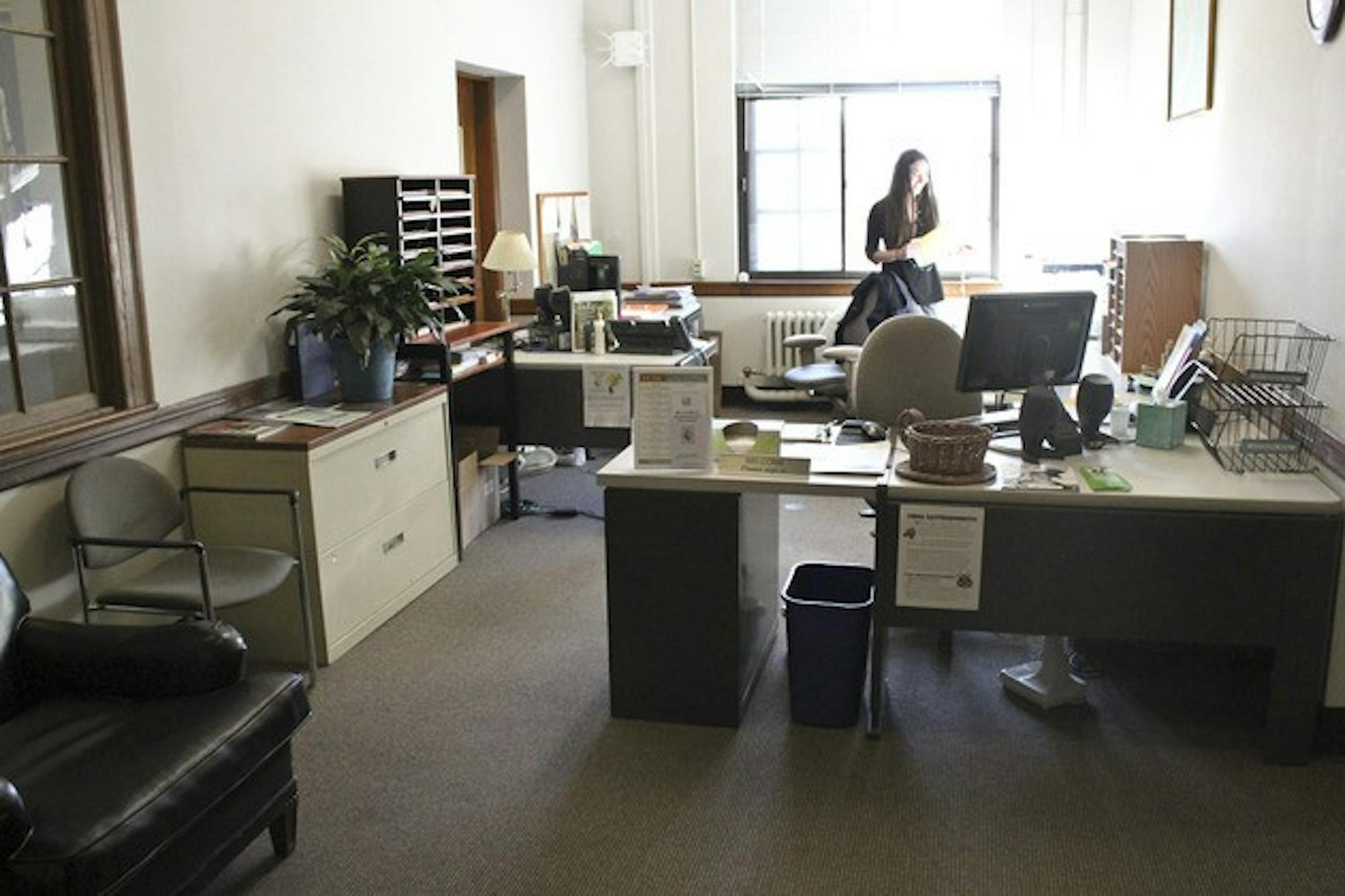
The Deans To Go program is part of a larger effort modeled after a hospital triage system to centralize necessary services in one location to remodel student support services at the College. Groups included in the eventual centralization will include pre-health advising, the First Year Student Enrichment Program, Student Accessibility Services and the Academic Skills Center, according to Associate Dean of the College for Student Academic Support Services Inge-Lise Ameer.
Dean of the College Charlotte Johnson will announce the opening date and location of the new center in the spring, according to Ameer. Until then, the Undergraduate Deans Office has temporarily moved to Baker Library in an effort to increase visibility.
Last spring, the College added four new assistant dean positions, and a fifth assistant dean was hired to fill a pre-existing vacancy in the office. The change to the advising structure was aimed at facilitating frequent interaction between students and advising services.
"Last year, we had five deans, so the outreach was very limited in that the deans were focused on the one-on-one needs and services of students who came into the office," Reed said. "But now we each get a programmatic area."
Reed currently coordinates marketing and strategy outreach, which involves promoting contact between students and deans, he said.
Since the start of the academic year, the undergraduate deans have also met with students outside of their offices, in venues that included freshman residence clusters, Student Assembly meetings, Men of Color Alliance meetings, FirstYear Student Enrichment Program meetings and Greek organizations, according to Reed and Senior Assistant Dean Deborah Tyson.
"The general gist is to get outside these four walls and put a face to a name out in the public and make students feel more comfortable interacting with their dean," Reed said. "The other piece is to provide good advising."
Deans have also started hosting "Evening Hours," when deans are available until 7 p.m. on Tuesdays and Wednesdays of every week.
"Dartmouth students don't operate on an 8 a.m. to 4:30 p.m. schedule," Reed said. "We had to take our advising and be really adaptive to students' schedules."
Other efforts, such as a Facebook page and monthly newsletters for freshmen, were established to achieve similar goals.
Ashton Slatev '15, a first-year cluster representative, said the Undergraduate Deans Office has done a "great job" in outreach and visibility but has yet to garner genuine interest among a wide group of students. Slatev said his undergraduate advisor was more helpful than his dean during the class selection process.
"She helped everyone on our floor every step of the way, and from what I have seen, that seems to be a pretty homogenous experience," Slatev said. "It's a lot easier to go next door and knock on their door and talk to someone who's just one or two years older than you."
The Undergraduate Deans Office will incorporate both "formative" and "summative" assessments when measuring the success of its new programs, Reed said.
While the majority of assessments will occur at the end of the year, the office uses attendance records and post-event reflections to get a sense of the success of an event, he said.
"We are assessing the strategies implemented by our new initiatives, and we will be making adjustments along the way," Tyson said in an email to The Dartmouth. "If the assessment is not indicating that the strategies are working, then we will adjust them along the way."
Kristen Rumley '15, a varsity softball player, said she prefers to meet with Anne Hudak, the assistant athletic director for student enhancement.
"She's basically my dean I talk to her at least once a week," Rumley said.
Under the new centralized system, Ameer said she believes students will be able to receive helpful advice regardless of their initial point of contact due to increased transparency between all advising departments.
"One of the best practices in advising is to work as a team to support students," Ameer said.
Reed said the Undergraduate Deans Office is currently examining how best to support sophomore students this summer.
"How do we capitalize on an entire class being here in the summer around their academics and our advising?" Reed said.
The Deans Office will also begin to emphasize student self-reflection, according to Reed.
"We encourage students to study abroad, but the piece I want to be more intentional about is reflecting upon that experience," he said.


