
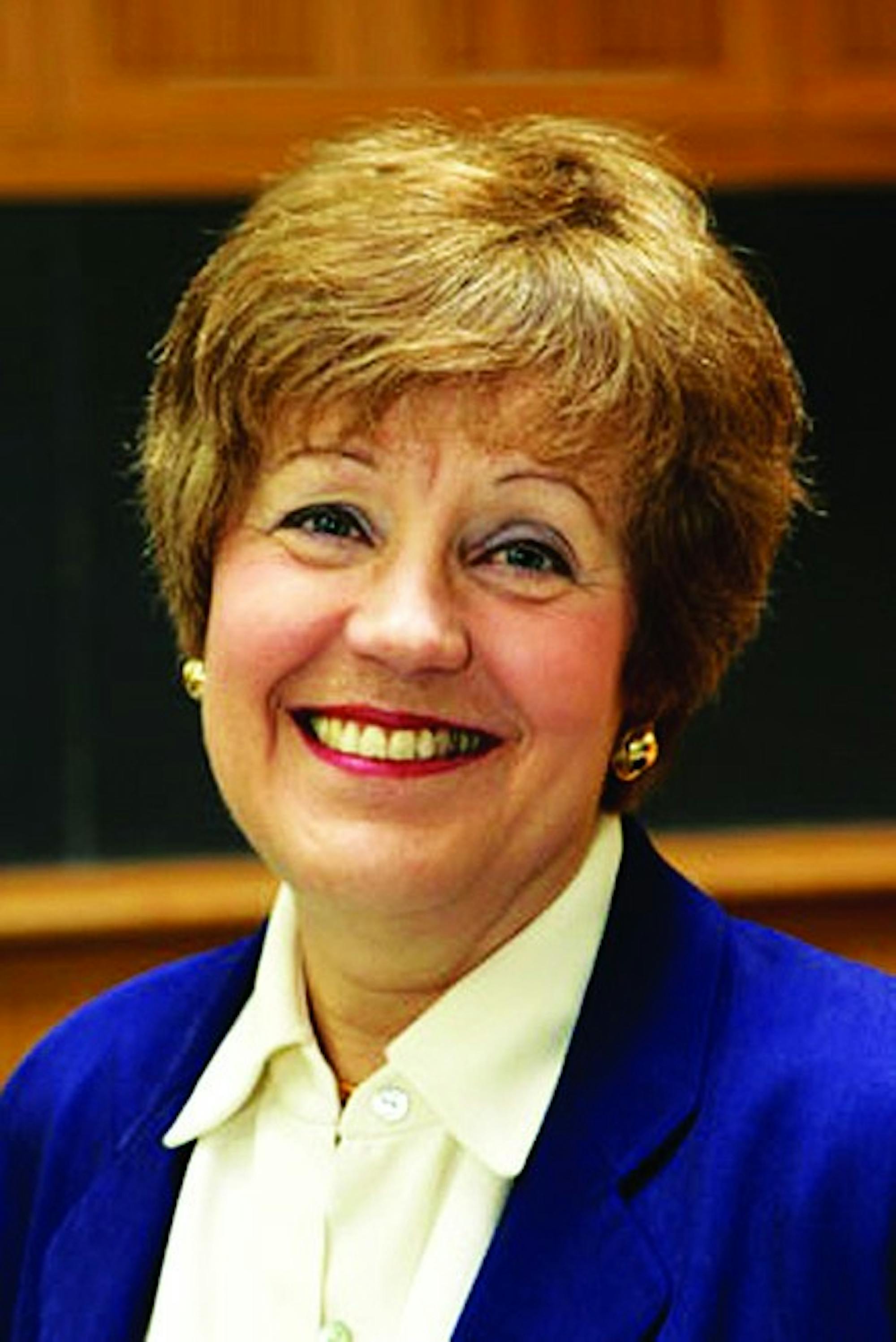
Since the Jan. 3 Iowa caucus, Fowler has made 20 media appearances, with requests coming from National Public Radio's "Talk of the Nation," USA Today and WBUR, Boston's NPR station, according to Director of Media Relations for the College Justin Anderson. Shaiko's commentary has been featured in outlets including Politico and WPTZ Channel 5 News.
Fowler, who has been commenting on the New Hampshire primary since the 1996 race, said she has observed that the media focuses too heavily on interpreting the latest voter polls, which can pose a real danger given that primary polls contain a large margin of error. The political media often attempts to manufacture news rather than reporting on what is actually happening, she said.
"Reporters are always asking for a prediction, but I try to resist that," Fowler said. "I see my job as scholar to provide a broader context for the event they're asking about, and to provide comparison of how it was different from what happened last time."
The media has also devoted far more attention to the Republican debates than in other election years, Shaiko said. Reporters have usually focused on the candidates' personal contact with voters in New Hampshire.
"This cycle, the media has been enamored with the debate process," Shaiko said. "This has replaced coverage of the retail politics usually seen in places like the Upper Valley."
The academic community is a valuable source for the political news media largely because scholarly research equips professors with a sophisticated and contextualized understanding of the election process, according to government professor John Carey.
The transformation of the media atmosphere, particularly the proliferation of the political "blogosphere," has opened new opportunities for academic experts to weigh in on election campaigns, according to Adam Nagourney, formerly the chief national political correspondent for The New York Times and now the paper's Los Angeles bureau chief.
"There is, because of online media, an exponentially greater demand for voices, opinions, instant analysis, and authority, which means that the market for [professors] has become huge," Nagourney said in an email to The Dartmouth.
In early primary states such as New Hampshire, reporters tend to turn to the same circle of experts every four years, Nagourney said.
The rise of online media has led to greater exposure for those experts, to the extent that academics are sought out by media outlets that would never have otherwise been familiar with Fowler or Shaiko, according to Kate Andersen Brower, a White House correspondent for Bloomberg News.
Fowler is listed in the Bloomberg News database of political experts, Brower said.
Another effect of the transformed media landscape is that experts' commentary is incorporated into news articles even without direct contact with the reporters, according to both Fowler and Shaiko. For example, both Fowler and Shaiko said they have been cited in The Washington Post, despite not giving interviews for those articles.
Online media has spawned what Shaiko called a "cadre of self-appointed experts," as many academics use their own blogs and Twitter accounts to share their views on election campaigns.
Television media outlets have played less of a role in this election cycle, especially given the short period of time between the Iowa caucus and New Hampshire primary, Fowler said.
"It used to be that national television reporters would travel around New Hampshire towns," she said. "I, as a professor, was a voice to put with these beautiful images, but the large [television] media doesn't come up here anymore."
Fowler and Shaiko were both involved in the College's programs surrounding the Republican debate at Dartmouth in October 2011. A few hours prior to the debate, Fowler participated in the "Leading Voices: What's at Stake in the Republican Debate" panel discussion. Shaiko organized a focus group consisting of 16 students who had no allegiance to any candidate prior to the debate and were asked to evaluate their performance following the debate.
Fowler and Shaiko's media coverage reflects their knowledge of politics and brings positive attention to the College, according to Andrew Samwick, an economics professor and the director of the Rockefeller Center.
"Professor Fowler and Professor Shaiko are thoughtful scholars and teachers in the area of American politics and public policy," Samwick said. "Their media mentions advertise that fact to the audiences of those news sources. Dartmouth and the departments or centers with which they are affiliated benefit from that publicity."
The political media's inclusion of these professors' ideas bridges the gap between the College's scholarship and the general public, according to Anderson.
"When journalists need to explain something to their audience, they're coming to Dartmouth because they know that Dartmouth can provide the sort of explanation and guidance that's going to inform their readers, viewers and listeners," Anderson said.
The Office of Public Affairs actively circulates election campaign coverage that cites Fowler and Shaiko, through both Dartmouth Now and the Dartmouth in the News newsletter, according to Anderson.


