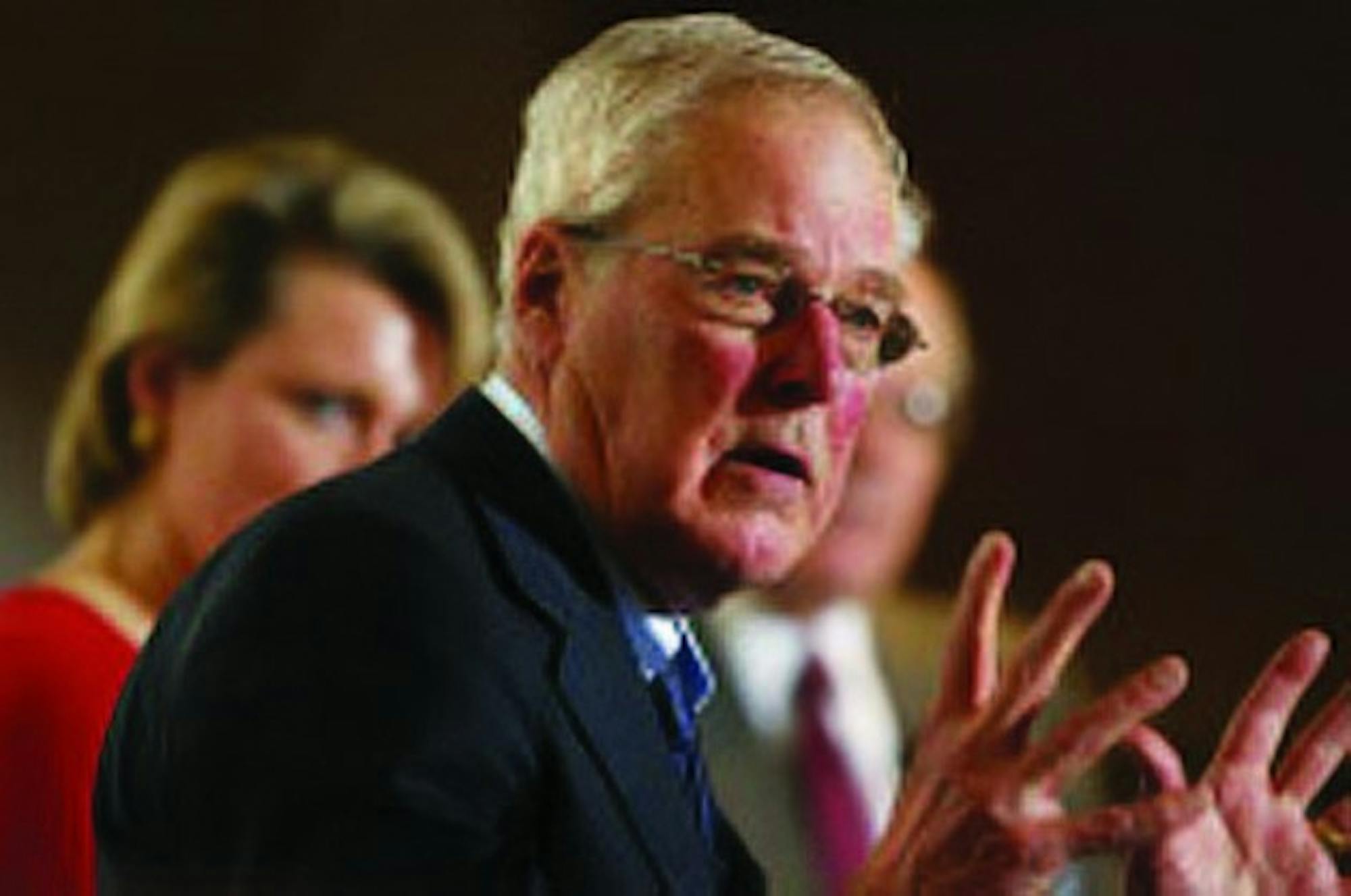
The award is the largest prize in the ethics field and is sponsored by the MacLean family, whose members are long-term donors to the College and "principal supporters" of the Thayer School of Engineering, Wennberg said.
Wennberg, who was named the "most influential health policy researcher of the last 25 years" by Health Affairs magazine in 2007, has devoted much of his recent work to the importance of patient preferences and shared decision making in the medical process, he said. Wennberg is the founding editor of the Dartmouth Atlas of Health Care.
"One of the reasons why I'm sure they were interested in giving me this honor is my interest in changing the dynamic of the doctor-patient relationship," he said.
The search committee that selected Wennberg looked for individuals who had made "transformative contributions" to the field of clinical ethics and health outcomes, according to MacLean Center Director Mark Siegler.
Wennberg's work for the Dartmouth Atlas has been at the center of political debates of health care services and access, he said.
"We had a very significant role in the Clinton health plan and were hugely disappointed after its failure," he said. "I haven't been particularly interested in playing any great role in what's going on now, having been burned before, but if the Obama plan stays and isn't overturned by the Supreme Court or repealed by the Republicans, there are some very important things in it that do reflect our work."
It is crucial that the country adopts more organized care, and President Barack Obama's health care plan moves the country in that direction, according to Wennberg.
"That is the first step to get anything done," he said. "The big, obvious secret to efficiency in health care is to be organized. Hospitals need to have organized staffs, regular meetings and regular ways of managing care."
Doctors should practice full disclosure and review the consequences of procedures with their patients, according to Wennberg.
"We need to restructure the doctor-patient conversation," he said. "There need to be formal ways of educating the patient that what matters is clearly communicated and that the treatment options are fully explicated so that the patients would know the possible major outcomes," Wennberg said.
The fundamental problem with the United States' health care delivery system is that patients are not fully informed of their decisions regarding health care and cannot express their medical preferences, according to Wennberg.
"You end up with people who get an operation that they wouldn't want if they were well informed," he said.
Wennberg was drawn to medical ethics after graduating from McGill Medical School in 1961 and completing his residency at Johns Hopkins University. He began his research 40 years ago as an inspector of regional health planning programs for Vermont, he said.
Wennberg's previous honors in the medical field include the 2008 Gustav O. Lienhard Award from the Institute of Medicine, the 2007 Emory Codman Award, the Picker Institute Award for Advancement of Patient Care, the Richard and Hinda Rosenthal Foundation Award in Clinical Medicine, the Baxter Foundation's Health Services Research Prize and the Association for Health Services Research's Distinguished Investigator Award, according to the DMS website.
"I have a long history of dealing with ethical issues, and my work at Dartmouth is pretty well known," Wennberg said. "You gain a lot of strength from your association with Dartmouth."