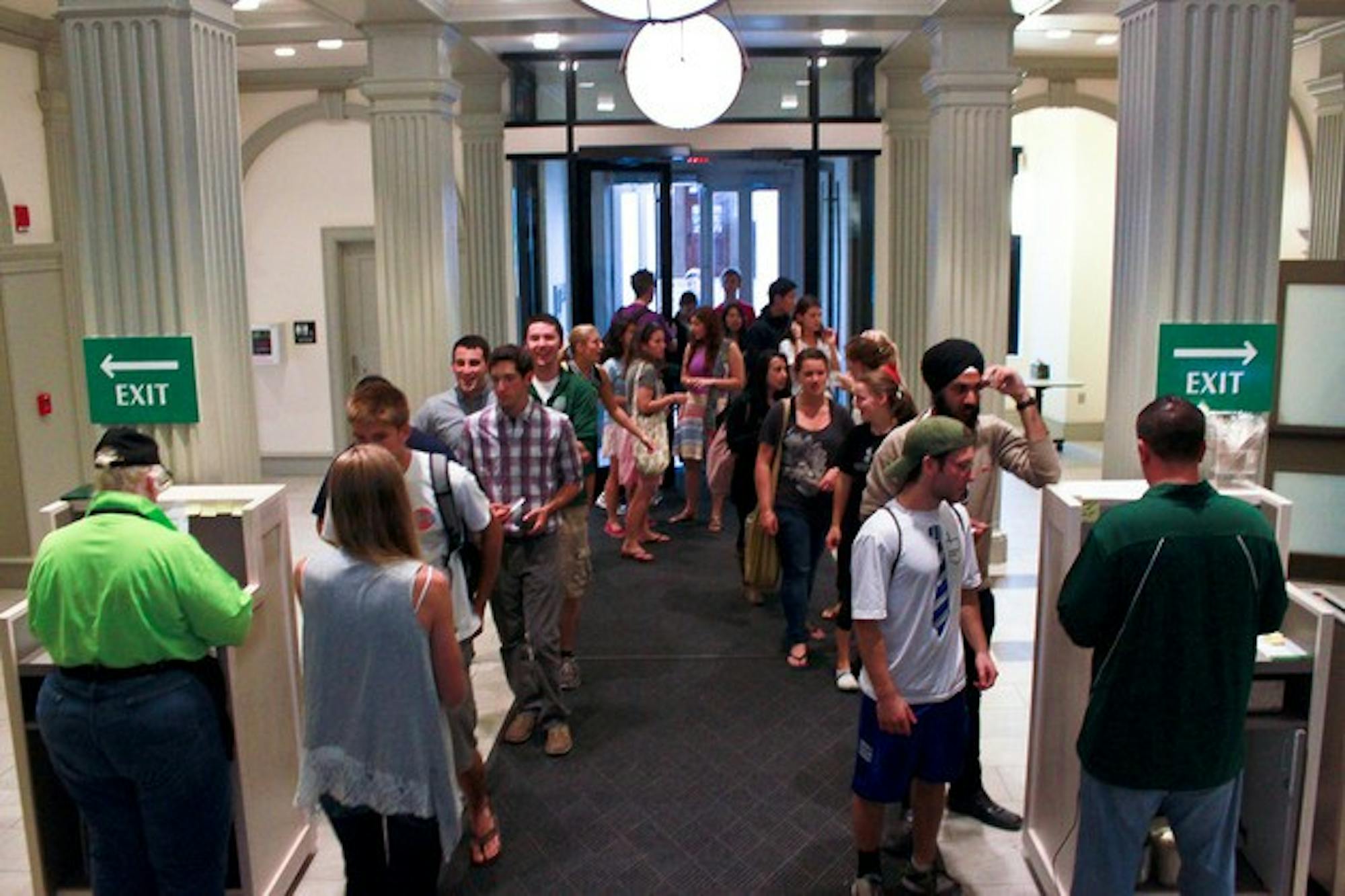
Of the 2,438 students assigned in July to the SmartChoice 14 meals-per-week plan, only 757 students remain on that plan following the Oct. 7 deadline to submit meal plan change requests, according to data provided by Thompson. The smallest meal option, which provides five meal swipes per week in addition to $875 in their declining balance account, proved the most popular, with 1,645 students switching to that plan since July. In addition to the first-year students who are assigned to the 20 meals-per-week plan and are not permitted to change that status for the year, 139 upperclass students have switched to the largest plan, according to Thompson.
Data concerning Dartmouth Dining Service's profitability as well as how many meal swipes go unused each week will not be available until later in the term, Thompson said.
Despite previous claims by DDS Director Newlove that DDS aims to "break even" in its profits, members of Student Assembly questioned Newlove's purported profits over the 2009-2010 and 2010-2011 fiscal years at an Assembly meeting on Oct. 10. At the meeting, Travis Blalock '12 accused Newlove of misrepresenting DDS profits on Newlove's LinkedIn profile. Newlove had told students that DDS was breaking even and not drawing profits, but Newlove reported a $900,000 profit two years ago and a $1.3 million dollar profit last year on his LinkedIn profile, Blalock said. Information regarding DDS profits on Newlove's LinkedIn profile is no longer visible.
Anderson said DDS posted over a $1 million surplus last year as a result of "unique circumstances." Anderson said the profit was the result of an "unusual year" resulting from the renovation of the Class of 1953 Commons and the decisions not to upgrade certain appliances, such as broken ovens, until the renovations were complete.
"[We] made changes in the management of DDS over the last three years as we prepared for construction that improved efficiency and reduced expenses," Anderson said in an email to The Dartmouth.
Under the new SmartChoice dining plan system, upperclassmen were automatically assigned to the 14 meals-per-week plan in July, which allows students 14 meal swipes per week and $125 of DBA. All first-year students were assigned to the SmartChoice20 plan, which includes 20 meal swipes per week and $75 of DBA.
Of the 447 students living off campus, 129 switched to one of the on-campus meal plans from the off-campus meal plan, which includes $875 of DBA.
The number of students who switched their meal plans will impact future projects regarding the SmartChoice system, Thompson said, describing the dining plan and '53 Commons as a "constantly evolving system of improvements."
Thompson said future changes to the meal plan system will include efforts to educate students about how to properly use their plans and how to select the appropriate plan for their needs.
Among the changes already made to dining facilities are the inclusion of soy milk and nut and gluten free zones, as well as an increased tea selection, she said.
Future improvements will include an expanded salad bar, more canned fruit options, additional condiment sections and the inclusion of nutrition information in '53 Commons and on a mobile app, Thompson said. College officials are also working on "improving the meal exchange program" by increasing the options available at Collis and Courtyard Cafe, according to Thompson.
Thompson said '53 Commons has been using more food than originally anticipated, adding that the discrepancy was due to the unexpected popularity of the facility among students.
The increased capacity of '53 Commons compared to Thayer Dining Hall has contributed to the increase in food demand, Anderson said.
"There are more people that are in ['53 Commons] on some nights than could ever be in Thayer," Anderson said.
Thompson said that food waste has not been a concern so far.
"It's less about putting more food out," Thompson said. "It's about putting different food out food that's healthier, more nutritious and will give different options for students who might not have been able to try these foods at home."
Thompson is currently working with Newlove and Student Body President Max Yoeli '12 to put together a group of students to examine changes that need to be made to the new dining system at the end of term, she said.
"What we're mostly concerned about is the students, what they are paying for their meal plan, and making sure that matches what they're paying for in their facility," Thompson said.
Many students interviewed by The Dartmouth said their primary motive for switching meal plans was the higher DBA on the SmartChoice5 plan.
"I don't want to eat at [Food Court] that much, and I was worried about not using meal swipes," Caroline Marani '12, who switched from SmartChoice14 to SmartChoice5, said. "I wanted more DBA for more flexibility with dining options."
Other students agreed that DBA amounts were a more important factor than the lower price of the SmartChoice5 plan, which costs $1,440 compared to SmartChoice14, which costs $1,575.
When describing her decision to switch from SmartChoice14 to SmartChoice5, Carissa Crawford '14 said the value of the plan was a bigger factor than the overall lower price of the smaller plan. Crawford said it was difficult to use all of her meal swipes because she often spends weekends off campus traveling with the sailing team.
"DDS tried to make the best of both worlds between going out to eat and a la carte and now it's just confusing," she said.
In contrast, Teagan Daly '13 said she decided to stay on SmartChoice14 because "staying on the middle plan seemed like the best way to balance the mix of meal swipes and DBA." Despite her decision, Daly said she remained concerned about the inflexibility of the meal swipe time slots and price restrictions at Collis and Courtyard Cafe.
Prior to the Oct. 7 deadline, students could change their plans via email or Banner Student, or by visiting the Card Office.