Ahmed compared Zaid Hamid, a Pakistani political commentator whose discussion of prophecy has been influential in Pakistan, to conservative American radio host Glenn Beck. In May 2008, Hamid began his television show with the opening line that Pakistan was threatened by "the Jews, [private security contractor Blackwater USA, now known Xe Services], Hindus and the United States," Ahmed said.
The solution, Hamid explained to viewers, was to follow prophecies in order to achieve "the fulfillment of the Pakistan movement," Ahmed said. Hamid claims that the prophecies of Shah Waliullah Muhaddith Dehlvi, an 18th century scholar, reveal truths about the Pakistani people and their futures.
Hamid's rapid climb to popularity demonstrates the powerful mix of prophecies and new media, Ahmed said. Hamid's work is circulated widely via YouTube channels, where his television shows are rebroadcast, according to Ahmed.
Hamid has become a respected figure in Pakistan despite his limited understanding of history and his questionable financial backers, Ahmed said. He is most popular with young, urban men and women under the age of 30, which represents the current largest population demographic in Pakistan and also comprises the population that "came of age under military dictatorship" and have experienced almost daily terrorist activity, Ahmed said.
"They love Pakistan," he said. "They want to take Islam back from the jihadists, but there is no national dialogue, no vision for the state, no place where the young can make sense of their own country."
Young Pakistanis surveyed by Ahmed believe they must "mobilize" so Pakistan can triumph as past prophecies have predicted, according to Ahmed.
Hamid is just one of several current Pakistani figures who have recently publicized that Pakistan is on the brink of triumph, Ahmed said. These prophecies are always presented as a dialogue between two figures, such as a questioner and an answerer or a dreamer and a figure who appears in a dream, according to Ahmed. These leaders therefore present a public narrative that continues to change and expand to comprise a wide prophetic version of the future of Pakistan, he said.
"Certain new global media-savvy productions which are apparent in Pakistan are asserting hyper-nationalist ideologies and belong to a longer narrative thread, one that stretches back to the mid-19th century," Ahmed said.
Ahmed cited present-day Pakistan as a case study to investigate the general idea of prophecies, a subject he first became interested in after discovering a text from 1226 describing Muslims' arrival to South Asia.
Ahmed's research has led him to conclude that prophecies, especially prophecies that come to people in dreams, often appear as a result of political unrest, he said. The 1857 revolt against British rule in South Asia and the destruction of Dehli by Sepoy army rebels, for example, generated many prophetic sayings.
"From this moment on, we can trace the role of the prophet coming in dreams for the sake of understanding key political events," he said.
Prophecies tend to become popular in "moments of stress that generate an inherent anxiety about the future," Ahmed said. At the same time, people do not always blindly follow prophecies, and throughout the 20th century critics attacked the validity of ancient prophecies, according to Ahmed.
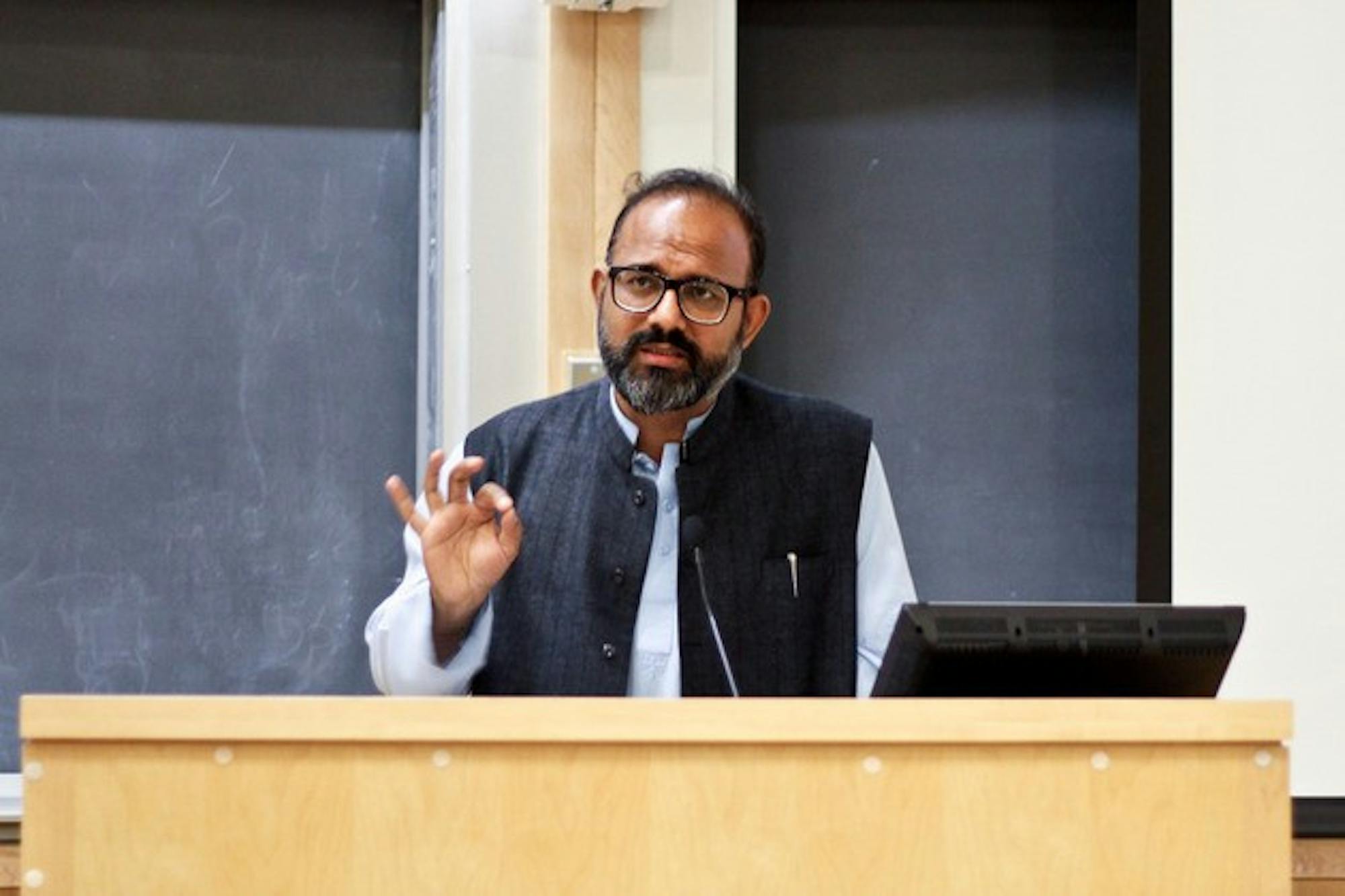
The lecture, titled "Prophecy, Apocalypse, and Selling the Pakistani Dream, 1947-2010," was sponsored by the Asian and Middle Eastern studies department and co-sponsored by the Leslie Center for the Humanities and the religion department.