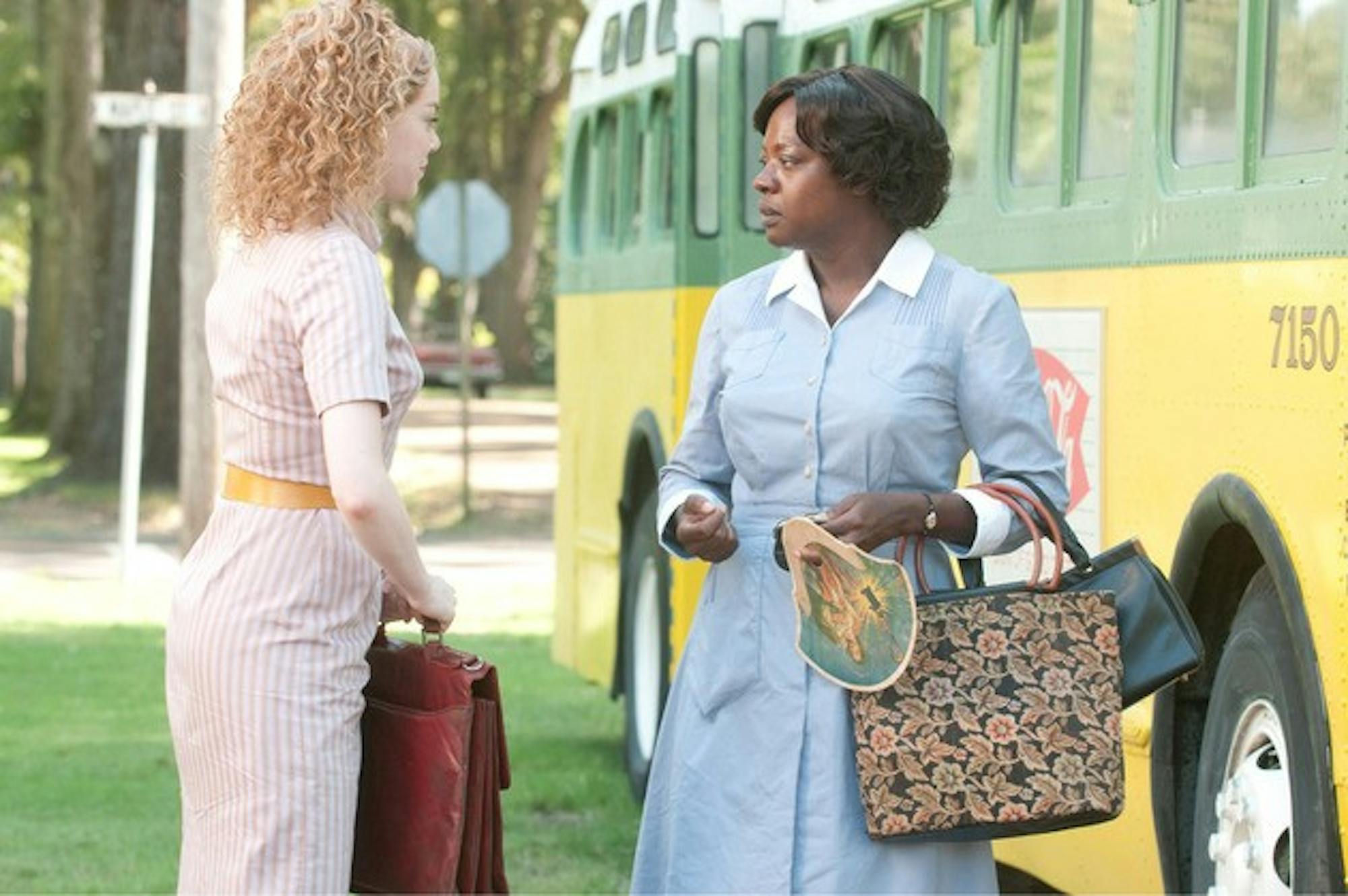
Set in Jackson, Miss., the movie follows three major characters. Aibileen (Viola Davis) is a black maid who cleans houses and cares for the children of many white families. Trapped and downtrodden in many respects, she fronts a solemn attitude that beckons the audience to yearn for her life story. Her friend, Minny (Octavia Spencer), is a blunt and snarky maid who does not hold back her opinions, despite her unfavorable social circumstances. This makes for great comedic tension between Minny and her employers. Lastly, Miss Eugenia "Skeeter" Phelan (Emma Stone) is the daughter of a prominent white family, and her return from college opens the movie. Unlike her white peers, Skeeter is not racist, as she grew up under the care of a kind black maid named Constantine, who has mysteriously disappeared during Skeeter's time away.
Skeeter, indignant to the racism prevalent in her community, investigates the stories of the black servants by interviewing Aibileen and many of her friends.
Unlike other films that focus on the fight for civil rights, "The Help" features villains whose complexity breaks the mold of stereotypical racist characters. In the same way, the black maids are not portrayed as victims or idealized noble martyrs. The maids are quiet and vindictive, and they work subversively for social progress.
The settings and scenes of the movie are very colorful, with bright dresses, beautifully furnished homes and the suburban Jackson pleasant, at least, for the white community.
Yet even the shantytowns where Aibileen and Minny live, the gritty sense of poverty is not very harshly executed. Much of the film is set in a Jackson kitchen, which is populated by members of both the white and black populations, but it is always portrayed as a place to get a hot cup of tea with honey. This works well against the violent protests and cruelties of the outside world because, in the kitchen, feelings are kept below the surface. The maids are not shown to suffer under extreme duress in their ironed blue dresses, but their struggles are understood to run deep.
Sadly, while the film had a fresh, humorous twist, it could have accomplished more complex analysis by the end. Skeeter's character, while played brilliantly by Stone, is too idealized. She isn't as much an intermediate between the two worlds as she is a white moral savior for black justice. Great for any inspirational film, the stalwart superhero vibe does not bode well for a memorable character in cinema or a morally interesting movie. The lack of the middle ground seems too black and white in some respects, pun intended.
But despite its predictable plot, "The Help" is still a unique depiction of the bygone South. Funny and heartwarming, it is worth watching for the great female cast and expected triumphant story.