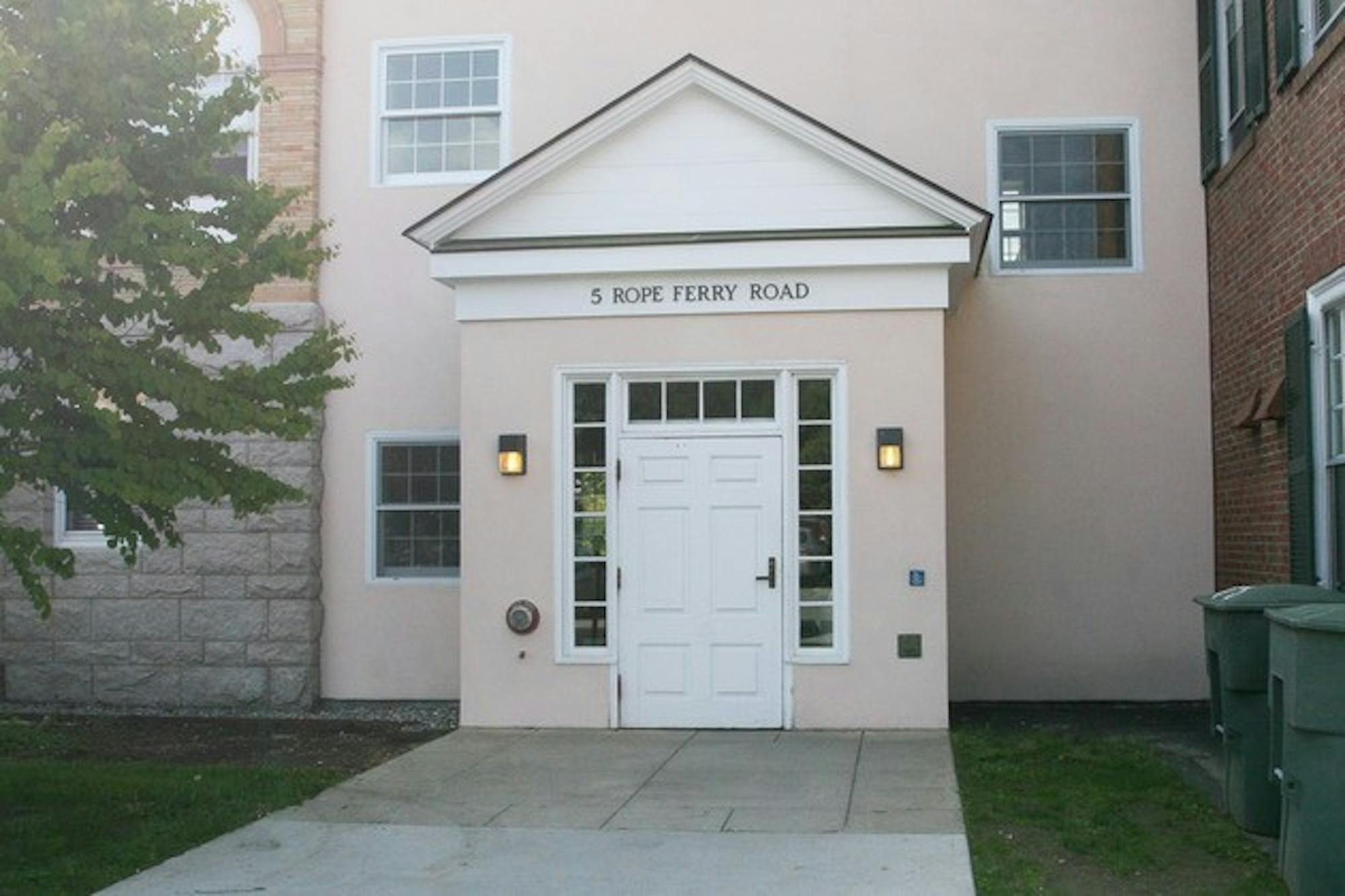
Dick's House sees approximately 17,000 undergraduate and graduate student visits per year, and there were 593 overnight admissions to the infirmary during the 2009-2010 academic year, according to Dick's House Nursing Director Charlene Bradley. In addition to offering primary medical care in its infirmary and clinic, Dick's House provides students with mental health counseling services, women's health resources, sports medicine treatment and immunizations and vaccinations needed for international travel.
PRIMARY CARE
In addition to a 10-bed infirmary that provides overnight care, Dick's House also offers services through its on-site clinic five days a week for eight hours a day, according to the Dick's House website.
The primary care department at Dick's House has the resources to treat respiratory infections, strep throat, sinus infections and fevers, Director of Health Services Jack Turco said. Dick's House can also perform chest X-rays to determine whether a student needs antibiotics.
Turco said he sometimes finds that students are dissatisfied with their medical treatment at Dick's House if they do not receive antibiotics, but the only medically appropriate circumstances under which Dick's House will provide antibiotics include strep throat, respiratory infections and a week-long high fever or sinus infection.
If medical practitioners at Dick's House determine that a student is in need of urgent care that Dick's House cannot provide, the student will be transported to Dartmouth-Hitchcock Medical Center, Turco said.
Dartmouth students' access to an on-campus infirmary effectively minimizes the impact of medical issues on students' academic success, Turco said.
"If we didn't have an infirmary, some students would probably go home, and with a 10-week term, it's hard to go home for two weeks to recover from mono and then come back and be able to get back into swing of things academically," he said.
COUNSELING
Mental health counselors at Dick's House treat 25 to 30 students each week, including at least one new intake every day, Mark Hiatt, a psychologist with Dartmouth Health Services, said in an email to The Dartmouth.
Dick's House maintains emergency services for students who are unable to obtain appointments, according to Hiatt. The health center is always staffed with night nurses trained to handle mental health issues, and there is also a psychologist on call regardless of the time, he said.
The average time it takes for a student to receive an appointment after they call Dick's House varies, Hiatt said. Dick's House staff members attempt to connect students with outside counselors if they cannot accommodate the student's needs in a timely fashion, Hiatt said.
Several students interviewed by The Dartmouth said they were told that they would have to wait three to six weeks to see a mental health counselor at Dick's House unless they were in need of emergency medical care.
"People come to Active Minds and the chief complaint we hear is you call and you work up the courage to call and it's a big step and you're told it will take three weeks to get an appointment," said Katie Edkins '12, president of Active Minds, an on-campus organization that focuses on raising awareness for mental health issues.
Dick's House lacks the resources to provide all students with long-term mental health care, and students in need of such assistance are referred to local therapists, according to Turco. Since local therapists offer more flexible hours than Dick's House can provide, community therapists often prove to be more convenient for students, Hiatt said.
Students covered under the Dartmouth Student Group Health Plan can receive in-house counseling on a long-term basis, Bradley said. Students without this plan are unable to receive such counseling at Dick's House due to the high costs of treatment, she said.
Students at Dartmouth face particular mental health challenges due to the College's fast-paced schedule, Hiatt said.
"Dartmouth has some unique challenges, including its level of academic intensity and shorter academic terms, which can create a lot of pressure for students," Hiatt said. "If students are sick, there is the possibility that they can quickly get significantly behind in their coursework."
A recent study conducted by the Higher Education Research Institute at the University of California, Los Angeles titled "The American Freshman: National Norms Fall 2010" concluded that more college freshmen than ever are seeking psychological help, Turco said.
WOMEN'S HEALTH SERVICES
Through the Women's Health Resources department, Dick's House provides three types of services annual exams, pregnancy counseling and "episodic care" for female College students, according to Dick's House family nurse practitioner Elizabeth Morse.
Dick's House offers gynecological examinations, breast exams and pap smears to women, Morse said. Although Dick's House used to offer these exams annually, they are now offered every other year due to new American Cancer Society guidelines established in November 2009, she said.
Dick's House also provides counseling and testing for sexually transmitted infections for men and women and provides "episodic care" for yeast infections, menstrual irregularities, urinary tract infections, skin infections and problems in which patients experience painful intercourse, Morse said.
The wait time for non-pregnancy related services can vary, according to Morse. Routine exams like pap smears can have up to a two-week waiting period while same-day appointments are usually available for students with yeast infections or urinary tract infections, she said
If students require specialized gynecological care, they are referred to DMHC, she said.
"I think not every woman student realizes that we do provide most of the care they'll need," Morse said. "Some people go directly to DHMC, and they don't realize they can get it for free at Dick's House."
Students can also obtain counseling regarding contraceptives and prescriptions for contraceptives at Dick's House, Morse said. Dick's House provides birth control pills, intrauterine devices, diaphragm fittings and condoms to students, and offers education about various forms of contraception, she said.
Students can obtain emergency contraception, such as Plan B, over-the-counter at the Dick's House pharmacy or from the nurse available 24 hours in the inpatient department, Morse said.
The Women's Health Resources department also offers pregnancy tests for students, Morse said. If a student decides to carry the pregnancy to term, she is referred to obstetric care providers at DMHC or the Alice Peck Day Memorial Hospital in Lebanon. Students planning to have an abortion are referred to DHMC, Planned Parenthood or a private clinic in Concord. Dick's House offers "options counseling" if a student is unsure whether she will continue with her pregnancy, Morse said.
If students choose to undergo a medical abortion, the student can stay in the Dick's House infirmary inpatient department after the treatment, Morse said.
While Dick's House offers students same-day or next-day counseling, students usually choose to discuss pregnancy issues with their friends, partner or the Women's Health Resources department rather than with a mental health counselor at Dick's House, Morse said.
Although Dick's House does not provide services for women who decide to continue with their pregnancy, there are services available for them at the College, Morse said.
"They would be referred to the Center for Women and Gender and also we have an office of special accommodations for people, so we would try to get them special housing," Morse said.
SPORTS MEDICINE
Although the Sports Medicine department which sees thousands of student-athletes each year is located at the Davis Varsity House, it is included in the Dick's House budget, Bradley said. An individual athlete typically seeks medical services through the Sports Medicine department multiple times over the course of his or her Dartmouth career, Bradley said.
Each of the eight athletic trainers currently employed by the College works with three or four specific athletic teams, Bradley said. In addition to providing on-campus care, the trainers travel with their teams to away games, according to Bradley.
The trainers also staff the nine different training rooms across campus, where they provide athletes with care for ailments ranging from headaches to sore shoulders, Bradley said. While trainers are not physical therapists, they help student-athletes adhere to rehabilitation plans, she said.
At the beginning of each season, students in high-impact sports such as ice hockey and football are given pre-impact studies to monitor their "brain capacity," Bradley said.
"If they get a head bump, they can do a post-concussion impact study and see the change," Bradley said.
If students are evaluated at Davis House, their treatment is covered under Dick's House budget, she said. If the students receive care at DHMC for further testing or treatment, individual insurance covers the costs.
Head athletic trainer Jeffrey Frechette did not return requests for comment by press time.
PRE-TRAVEL TREATMENT
Dick's House offers extensive support for students traveling to other countries for study abroad programs, Bradley said. After students are accepted to study abroad programs, the Off-Campus Programs Office provides a physician and nurse practitioner at Dick's House with the names of students and the location where they will be traveling. The two medical providers then study the areas of travel and invite students to view a presentation related to health concerns the students may encounter. They also review students' immunization histories and review trips' full itineraries, including weekend trips, Bradley said.
The teams recommend immunizations for students based on the World Health Organization guidelines for each country and complete individual consultations with each student before administering immunizations, Bradley said. Whether these immunizations are covered by students' insurance depends on each student's plan, she said.
Dick's House offers yellow fever and typhoid vaccines, as well as anti-malaria medication, according to several students interviewed by The Dartmouth who previously studied abroad.
ALCOHOL TREATMENT
The infirmary at Dick's House provides for the safety of intoxicated students, which is a particularly vital service since Safety and Security officers are not required to be trained in medical care, Director of Safety and Security and College Proctor Harry Kinne said.
"[Safety and Security] can't determine if a student's [blood alcohol content] is rising or if it is stable," Kinne said. "Dick's House evaluates the student's condition, and they determine should the student stay in the infirmary or be transported to DHMC."
If a student's blood alcohol content is greater than .3, the student will be transported to DHMC, according to Turco.