"In the United States there are 20 reactors that are designed in a similar way to Fukushima, including Vermont Yankee in the area," Kamps said in an interview with The Dartmouth.
Kamps highlighted how national governments whether American, Belarusian or Japanese have tried to downplay the dangers of nuclear power in response to nuclear disasters.
"In 30 years we can phase out carbon and nuclear power and maximize energy efficiency using renewable resources," Kamps said in an interview. "Germany has already decided to not only stop building new plants but to decommission their old plants."
Nuclear power plants are not only expensive but also dangerous, according to Kamps.
"If we're going to solve the climate crisis, nuclear is not an option," he said in an interview.
The March 11 accidents in three units of the Fukushima Daiichi plant caused three simultaneous partial meltdowns, leading to damage to two containers and one fire in a pool of radioactive waste, according to Kamps.
"Although Chernobyl released radioactive waste into the Kiev River, it was situated in a rural area," Kamps said during the panel. "Fukushima is situated in a area with a high population density, with Tokyo nearby."
On the International Nuclear and Radiological Event Scale, the Fukushima nuclear emergency ranks a seven, and should be classified as a "major accident" just like Chernobyl, Kamps said.
"Fukashima reached this level on March 15," he said. "Yet, this was not officially announced by the Japanese government until April 12."
In light of the reactor meltdown, Japan has increased the amount of radioactivity permissible for children to be exposed to from the small dosage permitted for the public to a level permissible for an adult male radiation worker, according to Kamps.
During the panel, Kamps increasingly made comparisons between the disaster unfolding in Fukashima and the tragedy that occurred at Chernobyl a quarter century ago, urging audience members to not forget the people affected by the accident in Chernobyl.
"Critics say we act as if Chernobyl happened yesterday," said Kamps. "But there is a real fight for the truth on Chernobyl on the books."
Kamps described a Ukrainian reporter who revealed that at the time of the tragedy, executive members of the Kremlin allowed radioactive meat and milk to still be dispersed to the public and ordered doctors not to tell people their cancer might have been related to radiation caused by the Chernobyl incident.
"Before 2006, the International Atomic Energy Agency and the World Health Organization placed the number of deaths at 40," said Kamps. "In 2006, they placed that number at 4,000."
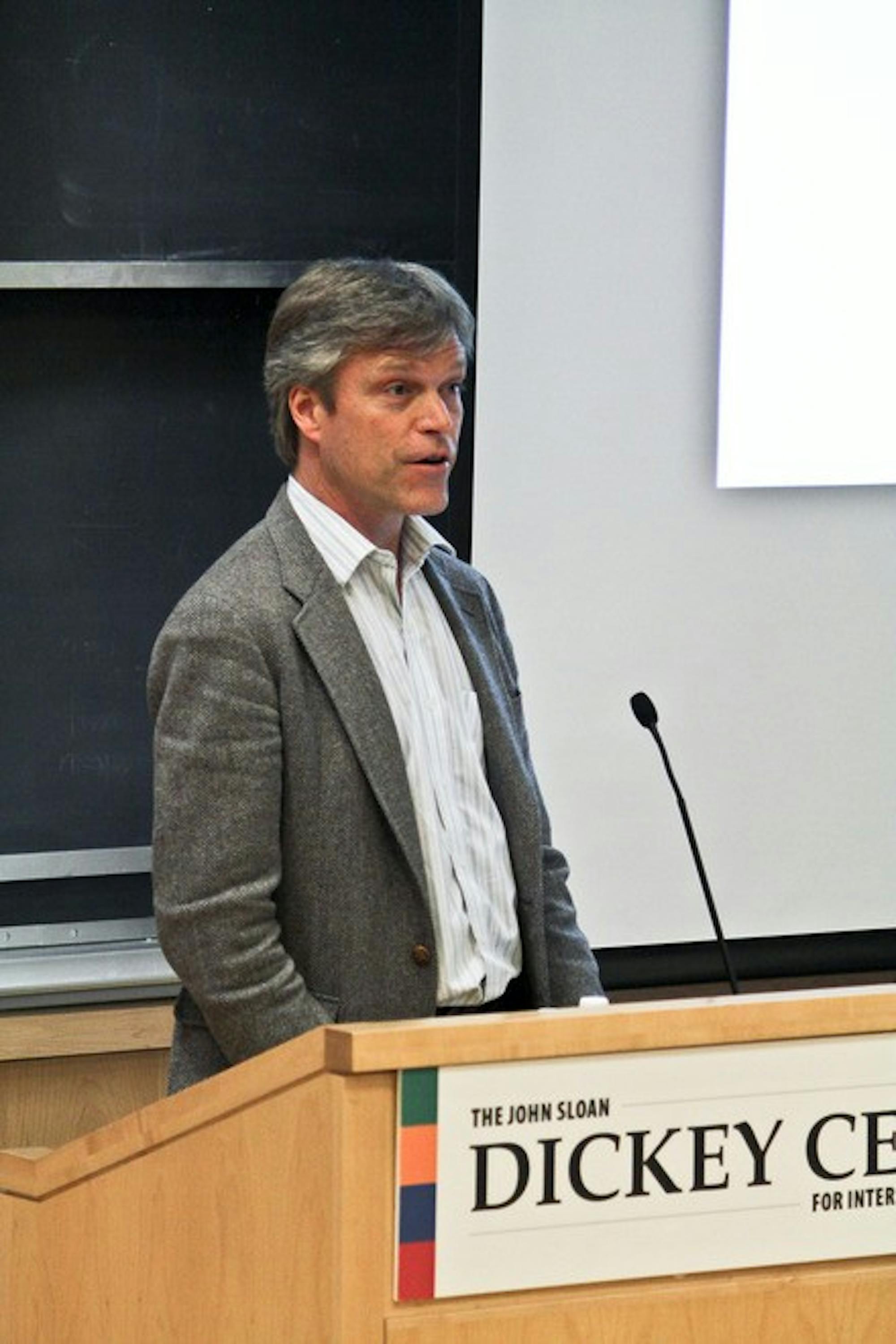
Panelist and John Sloan Dickey Center for International Understanding Director Kenneth Yalowitz described the difficulties associated with efforts to help victims as the tragedy was occurring.
"Donations and assistance were provided to at-risk populations in Belarus," said Yalowitz, who served as the ambassador to Belarus and Georgia during his 36 years as a career diplomat. "Yet aid was threatened by petty bureaucracy. Customs officials tried to collect customs on aid until I threatened to go public."
Relief was also threatened by downsizing of Western offices after the Cold War and political problems between Belarus and the United States, according to Yalowitz.
"Depending on where you stood, the Belarusian government thought everything was fine," Yalowitz said. "There were children with thyroid cancer, and politics reared its ugly head."
Despite the harmful side effects of radiation still experienced at the Three Mile Island in Pennsylvania, the amount of radioactive material that was actually released remains contested, Kamps said. Most people at the time did not believe there had been a meltdown until the reactor cap was lifted and innards of the reactor were examined, according to Kamps.
"Nuclear engineers say the containment are partially collapsed," he said. "Epidemiologists have determined that cancer spread with the direction of the wind. Interviews with the people of Three Mile Island reveal hair loss and burns. Radioactivity was 100 times more than the initial reports indicated."
A reception in Haldeman displayed 25 photographs taken by award-winning artist Gabriela Bulisova which depicted youth, orphans and other Belarusians who had been affected by the disaster either by being evicted from their homes in the "dead zone" or by choosing to continue living in "dead villages."
The panel discussion was co-sponsored by the Dickey Center and the Vermont chapter of the Sierra Club.