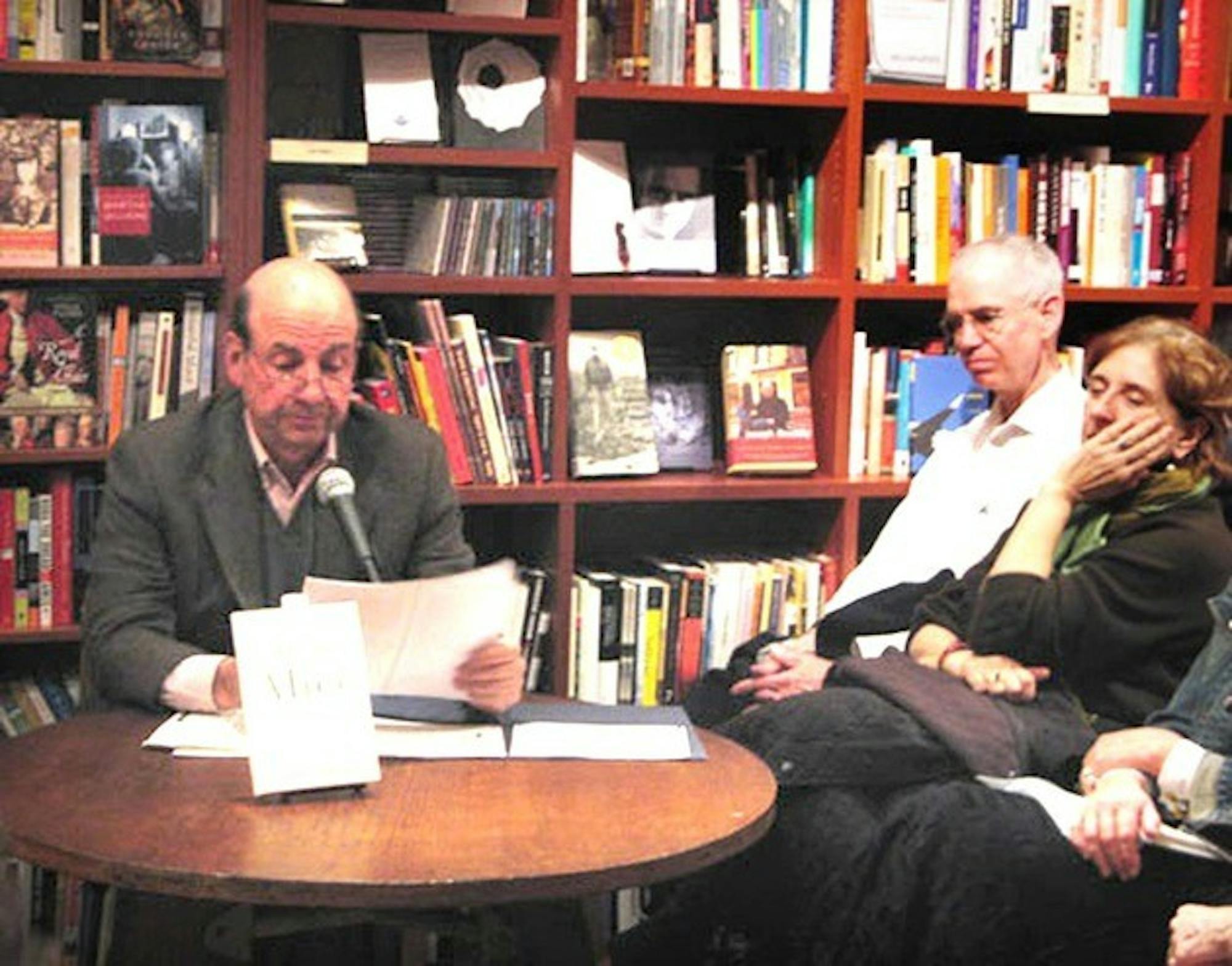
A self-described "professional eater," journalist Calvin Trillin whose subject matter has ranged from New York City parking to the George W. Bush administration will discuss his work in the media industry during his residence as a Montgomery Fellow from Jan. 31 to Feb. 4.
Although he often writes about American eating practices, Trillin who has written for Time Magazine and The New Yorker said he is not a "glutton."
"I'm not sure I eat that much, but I'm curious about food," he said in an interview with The Dartmouth. "I'm not an expert on food. I just sort of enjoy eating."
A novelist, humorist, essayist and journalist, Trillin started his career by covering segregation at the Atlanta bureau of Time Magazine.
"Most people in my era sort of backed into journalism because they didn't know what else to do," Trillin said. "I didn't know how to do anything else other than write."
Trillin has worked for The New Yorker since the 1960s and The Nation since the 1970s. Over the years, he said he witnessed a dramatic change in transmission of news from larger news outlets to smaller publications.
Trillin said his views toward nonfiction writing were influenced most heavily by New Yorker writer Joseph Mitchell.
"[Mitchell] somehow was able to tell stories, nonfiction stories, and he also sort of got the marks of writing off of what he wrote," Trillin said. "I don't write the way he writes, I don't think our styles are similar. But, I think he gave me an idea of the possibilities."
Increased use of technology by journalists has had both negative and positive consequences, Trillin said. Trillin cited a story he covered in Virginia when then-Sen. George Allen, R-Va., called an audience member a derogatory name "macaca." Allen lost the subsequent race, which some political analysts attributed to his seemingly-racist outburst.
"In the old days, if Allen who was then a leading Republican presidential candidate had called someone a macaca,' it wouldn't have come out," Trillin said. "The fact that someone was there with a cell phone, or some way of recording, means more stuff is coming out."
Trillin said he has also noticed that newspapers and magazines now have fewer resources to devote to long-term investigations.
"Two investigative reporters for The Village Voice just left," he said. "One canned, the other left in sympathy."
Trillin's writing frequently tackles unconventional subject matters, such as parking in New York City the focus of his 2001 novel, "Tepper Isn't Going Out." In the book which Trillin said may be "the first parking novel" Trillin tells the story of Murray Tepper, who spends his days reading newspapers in his car and disregarding drivers searching for parking spots, he said.
Trillin will explore the eating culture in America in a lecture entitled "Eating with the Pilgrims" next Tuesday, according to Richard Stamelman, executive director of the Montgomery Endowment.
"It's something he's written about in the past, about the practices of American eating rituals, like Thanksgiving," Stamelman said. "He's not a food critic he'll be dealing with customs of eating in America."
Trillin's lecture is part of this year's food-themed Montgomery Endowment Lecture Series, "Tell Me What You Eat, I'll Tell You Who You Are." This theme was selected in order to appeal to students' interests, Stamelman said.
This term, Stamelman chose the list of seven to eight potential Fellows, he said. Nominations were then considered by a steering committee for the Montgomery Endowment, which is comprised of administrators, faculty and representatives of the Montgomery family, he said.
In the past, anyone in the Dartmouth community could nominate a Fellow after seeking two letters of nomination, each from a different department, according to Stamelman.
Fellows are permitted to attend or teach classes, based on the duration of their stay, he said.
"Ideally we like to have Montgomery Fellows come for an entire quarter so they can teach, but that can be hard to negotiate," Stamelman said.
The Montgomery Endowment qas established in 1977 by Ken Montgomery '25 and Harle Montomery. Since the program's inception, over 180 Fellows have visited Dartmouth.
Alison Polton-Simon contributed to the reporting of this article.