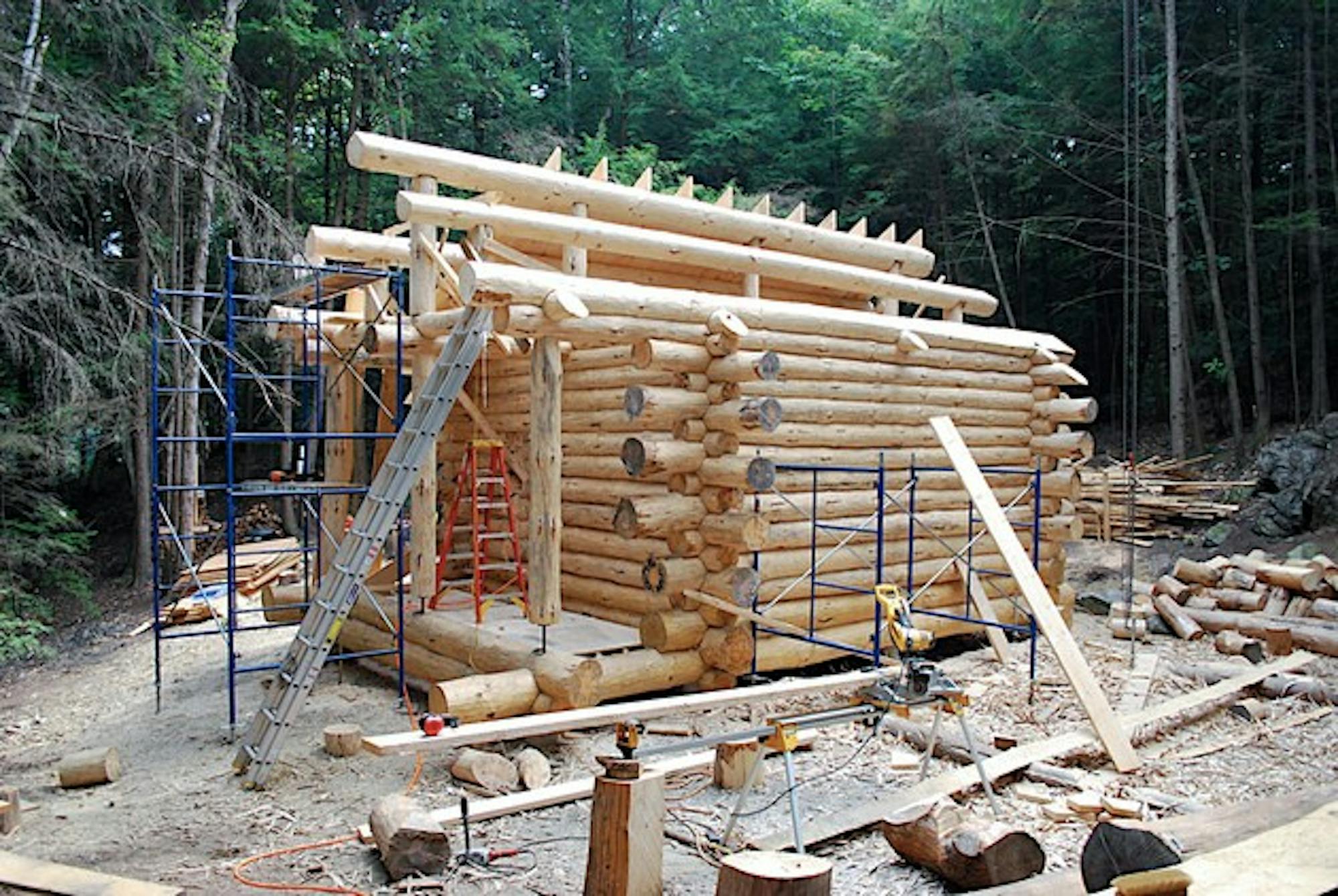
The project is "not completely finished," but the main structure has been completed, Greg Sokol '10 Th '11 said. Group members will install windows, a door and the cabin's floor, and make other improvements to the cabin's interior through the fall, Sokol said, adding that the group hopes to have the cabin completed by spring.
Insurance money collected after the fire financed the project, The Dartmouth previously reported.
The new cabin, built on the site of the former cabin, is located on Gilman Island, immediately south of the Ledyard Bridge.
The location of construction site posed the biggest challenge for the team, as the site is a considerable distance uphill from the river, Lucas Schulz '08 Th '09, who helped with the construction, said.
The site also has no electricity, The Dartmouth previously reported, which prevented the group from using power tools.
The new cabin was built "almost like Lincoln Logs," Sokol previously told The Dartmouth. The group floated 60 red pine and spruce logs down the Connecticut River in bundles of 10 and dug a sluiceway with hand tools to transport the logs from the river to the build site, according to the Union-Leader. The notched logs fit together without any need for fasteners.
The logs originally came from College-owned property in Corinth, Vt. and were taken to the Dartmouth Organic Farm to be peeled. They were then sent downriver to the building site in June.
Before the cabin could be reconstructed, students had to clear the site of debris from the original cabin, as well as nearby brush, The Dartmouth previously reported. Crews poured the foundation for the new cabin after the site was readied for construction.
Zoning laws required that students build the new cabin on the same site as the original, The Dartmouth reported.
The College leases the island from the TransCanada Corporation, a natural gas and electricity company.
Sokol, who discovered the remains of the cabin the morning after the fire, said he enjoyed the experience of rebuilding the cabin and that he could see himself embarking on a similar project again. He placed particular emphasis on the group's dedication, noting that students stayed an extra week past their original timetable to finish the cabin's roof.
"We had a great crew," he said. "We improved ourselves a lot working on it."
Dartmouth students constructed the original Titcomb Cabin in 1952 on behalf of the Dartmouth Outing Club, and the cabin was later opened for public use, The Dartmouth previously reported.
A police press report originally called the fire "suspicious," but no arrest in the case has been reported.