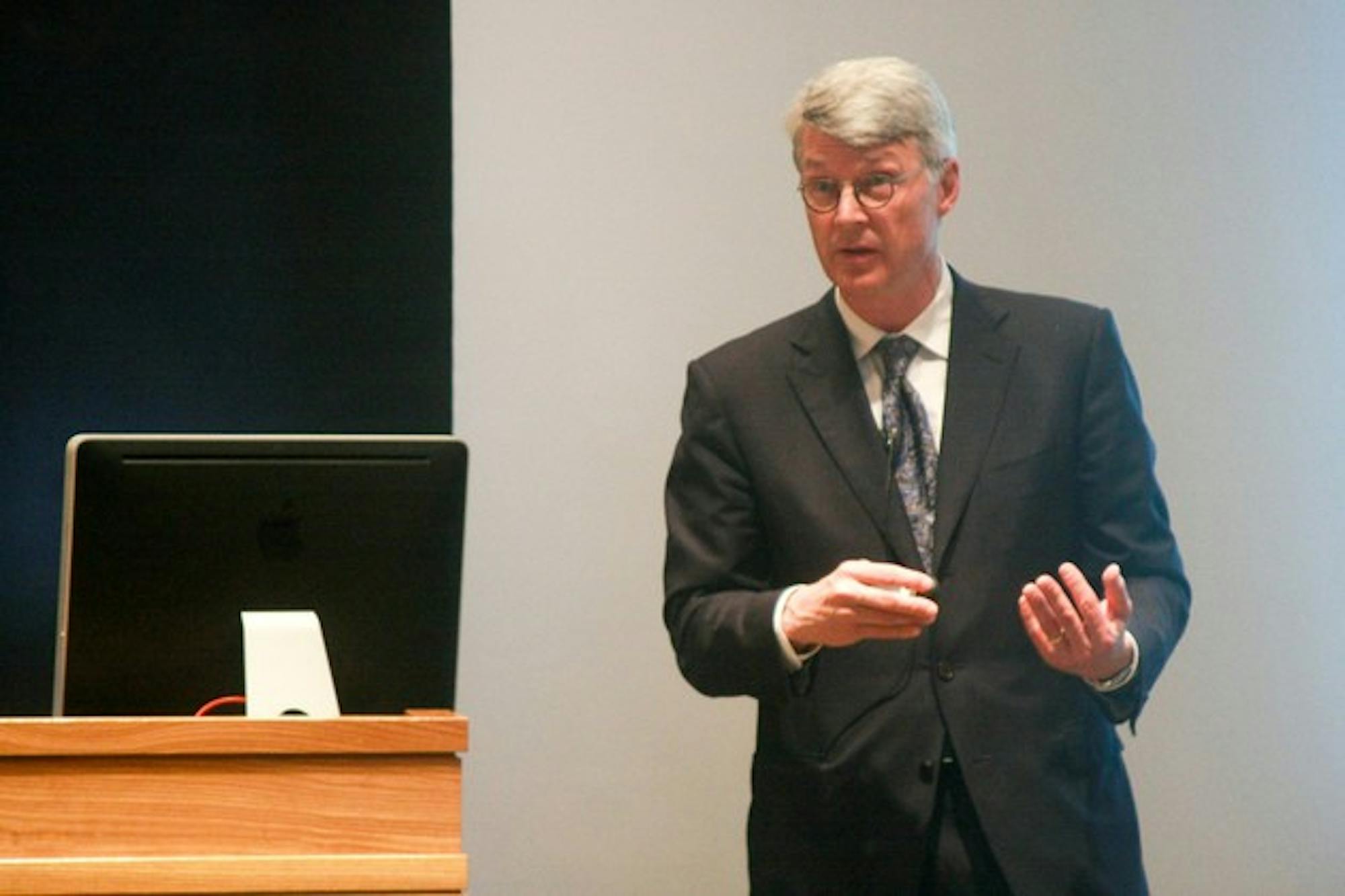
Sagan who co-directs the University's Center for International Security and Cooperation, examined current nuclear proliferation policies and their potential flaws in his talk. These flaws must be addressed as more and more countries seek nuclear power, Sagan said.
Many nations with nuclear aspirations struggle with political problems including corruption and ineffective government regulation, which may present a problem in the global drive toward nuclear power, Sagan said. These sources of instability present a "real challenge from a global security perspective," he said.
"One thing we cannot do is decide to not give them nuclear power," Sagan said. "[Nuclear states] need to think about the international institutions that manage nuclear power and more importantly nuclear fuel."
While the Nuclear Non-Proliferation Treaty is a "crucial" reason why many countries have chosen to give up their nuclear weapons programs, the treaty has several flaws, Sagan said.
"Like any international treaty, it has multiple parts and different countries each value different parts of the treaty more than others," Sagan said.
Sagan highlighted several articles of the treaty that he considered "cracked pillars." These poorly drafted articles left loopholes that have hindered rather than enhanced security, he said.
Article X of the Treaty is a particular threat to global security because it allows countries "a right of withdrawal" from the treaty after they have acquired officially sanctioned nuclear technology, Sagan said. He cited North Korea which entered into the agreement to begin a nuclear program and later left in order to start a nuclear weapons program as an example of the flawed article's consequences.
In order close this loophole, Sagan suggested implementing a "return to sender clause," which would force states withdrawing from the treaty to return their nuclear materials to the nation that originally supplied them. Sagan expressed doubt, however, that the clause would be approved by the Nuclear Proliferation Treaty review board, which requires a unanimous consensus among members of the treaty.
"I personally am not optimistic that the NPT review conference will approve any significant changes," Sagan said.
Sagan identified the Nuclear Suppliers Group a multinational body that oversees the sale and export of nuclear materials to non-nuclear countries as a potential leader in nuclear reform.
"The Nuclear Suppliers Group could decide unilaterally that they would not sell to anybody unless they agree to these reforms," Sagan said.
States that possess nuclear weapons need to show the rest of the world that they are willing to reform the international nuclear security network by spearheading programs to make their facilities more secure, according to Sagan. Today, the International Atomic Energy Agency assumes new nuclear facilities are safe if they are constructed in a state that already possesses nuclear weapons, Sagan said.
"One thing that [nuclear weapon states] could do that would help is to make sure our new facilities have model safeguard programs," Sagan said.
Sagan applauded President Barack Obama's recent nuclear summit which brought over 40 heads of state to Washington, D.C., to discuss the problems of uncontrolled nuclear proliferation and nuclear terrorism as a positive step, even though it was criticized by some media outlets as an event where "nothing happened."
"The real benefit of this summit is that there are now 44 heads of state who have agreed to start paying attention to the security of their nuclear programs," Sagan said.
Basic international security standards for all nuclear facilities should go beyond basic background and psychological checks for employees, and should defend against the ever-increasing threat of terrorism, Sagan said.
"The best things we can do is to improve security programs by having new standards for what is the minimum threat that each state should be prepared to defend against," Sagan said.
The burden for securing nuclear weapons cannot simply be left to countries with nuclear capabilities, and it is not as some developing nations claim "a problem of the United States," Sagan said
"We need to remind other non-nuclear weapon states and developing states that we are all in this together," he said.
The Dickey Center's War and Peace Studies Program sponsored the event.