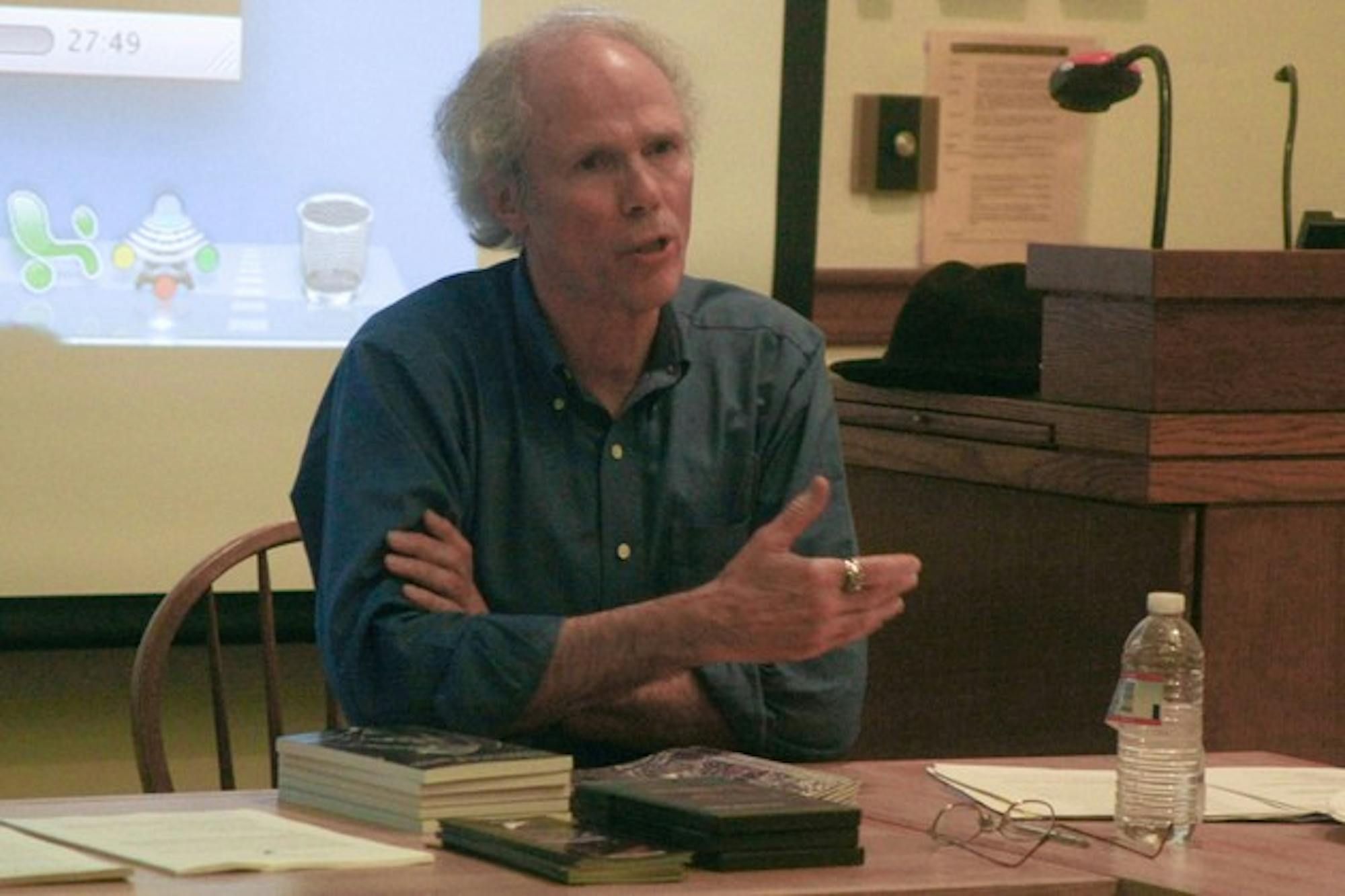
Long-incarcerated individuals lose fundamental stages of life, as many miss out on a basic high school education, marriage, holding a job and, ultimately, being a part of the economy and a contributing member of society, according to Alexander.
Alexander also works as the founder and leader of University of Michigan's Prison Creative Arts Project.
Those released from prison are often ill-equipped to enter the work force or maintain serious relationships, according to Alexander. Because "one in every 100 adults" is in prison, drastic reforms are needed so that reformed inmates can assimilate back into society, Alexander said.
"Mass incarceration devastates communities," he said.
Alexander emphasized that the purpose of a prison arts project is not just to give inmates a venue for expression and self-development. Through open art exhibits, plays and public readings, these projects help inmates build ties with local communities.
Prison art projects are about much more than creative expression, Alexander said. While incarceration generally hurts communities out of the three million children affected by incarceration, 50 percent ultimately become prisoners themselves the plays and art exhibits allow prisoners to give back to society, according to Alexander.
Alexander criticized different aspects of the U.S. prison system, citing that America is the "most incarcerated nation in the world" and imposes the "longest [prison] sentences of any country in the world," he said.
Protective legislation such as the 1997 Safe Family Act which limits the amount of time a child of an incarcerated person can remain in foster care before being put up for adoption can actually prove detrimental to families who have already been so negatively impacted by the incarceration system, according to Alexander.
"If you are a mother and went to prison for any length of time, your children are sent to foster care," he said. "This has been called the Great Baby-snatching Era.' Others have called this the greatest separation of family since slavery."
In 1999, 42 percent of unskilled African-American youth were in prison up 28 percentage points from 1981, according to Alexander.
The increasing number of young people entering prison each year has led to an elevated need to offer parole to juvenile offenders, which would allow them to mature and become productive and functional citizens in society, according to Alexander.
Alexander shared his own experiences with the University of Michigan's Prison Creative Arts Project, which in 20 years has held 39 public readings, 40 creative writing workshops and helped inmates write, perform in and produce 250 plays, according to Alexander. The Project also holds the largest art exhibit in the United States, showing art collected from correctional and juvenile facilities all over the nation.
Alexander began the Project in 1990, when two female inmates approached him and two colleagues, asking to take one of his classes.
The lecture, "Is William Martinez not our Brother? Twenty Years of the Prison Creative Arts Project," was cosponsored by Voices, the Dartmouth Theater Visiting Arts Program and the Women's and Gender Studies Program.